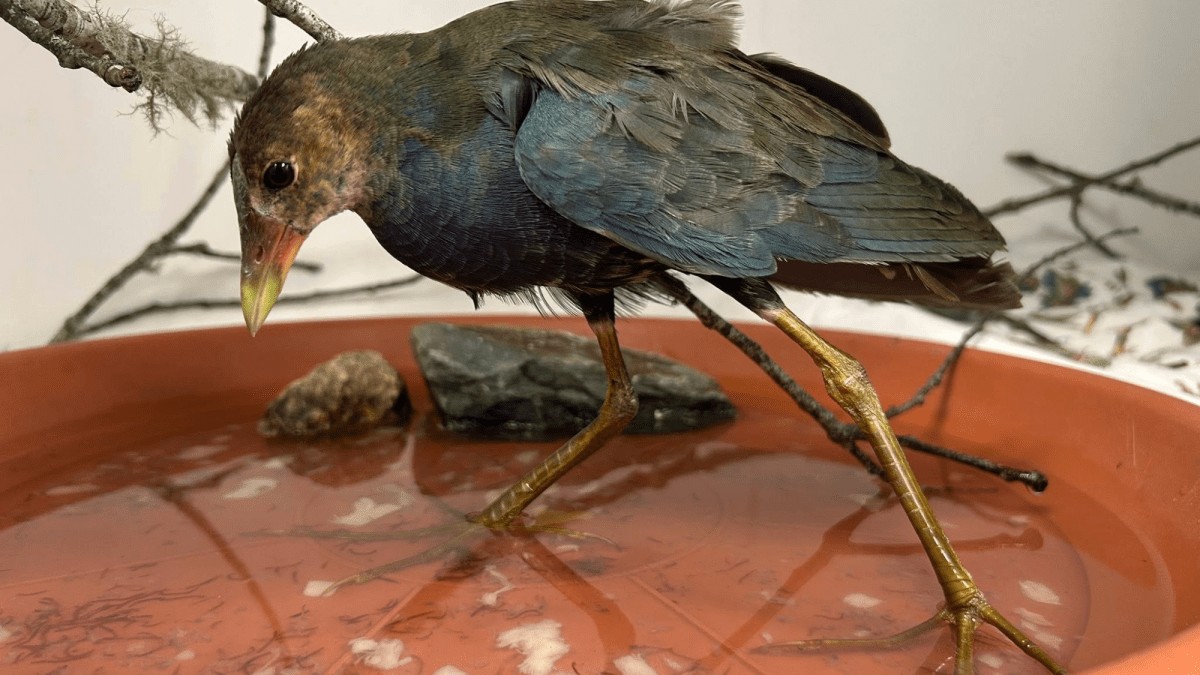
A strikingly colored purple gallinule – a bird typically found in marshes from the southeastern United States to South America – recently turned up far outside its natural range in New Bedford, Massachusetts. The unusual sighting highlights how extreme weather can disrupt wildlife patterns, pushing species into unexpected territories.
Unexpected Arrival
The bird was discovered during a winter storm, carried north by shifting low-pressure systems. These storms can force birds off course, sometimes resulting in individuals ending up hundreds of miles from their usual habitat. The New England Wildlife Center, which received the gallinule, reports that such sightings are rare, with only a few documented cases in the last decade.
Critical Condition & Specialized Care
Upon arrival, the bird was severely underweight and weak. However, initial examinations revealed no major injuries. Wildlife professionals emphasize the danger of improper feeding in such cases. Rapid reintroduction of food to a starving animal can trigger refeeding syndrome, a life-threatening condition where the body redirects resources too quickly, causing organ failure. Instead, the center administered fluid therapy to stabilize the bird before gradually reintroducing nutrients.
“The best thing to do for these cases is fluid therapy, and rehydrating the patient often by giving injectable fluids,” explains Priya Patel, wildlife medical director at the New England Wildlife Center.
Successful Return to Habitat
After recovery, the gallinule was transported via a small private plane, along with another bird found in Vermont, to South Carolina on January 8th. Volunteers from the Carolina Wildlife Rehabilitation Center are now monitoring them before release, ensuring they can continue their migration south.
This event underscores how climate patterns and extreme weather events can increasingly impact wildlife distribution. The gallinule’s journey is a reminder that animals are not immune to environmental shifts, and conservation efforts must adapt to these changing conditions.