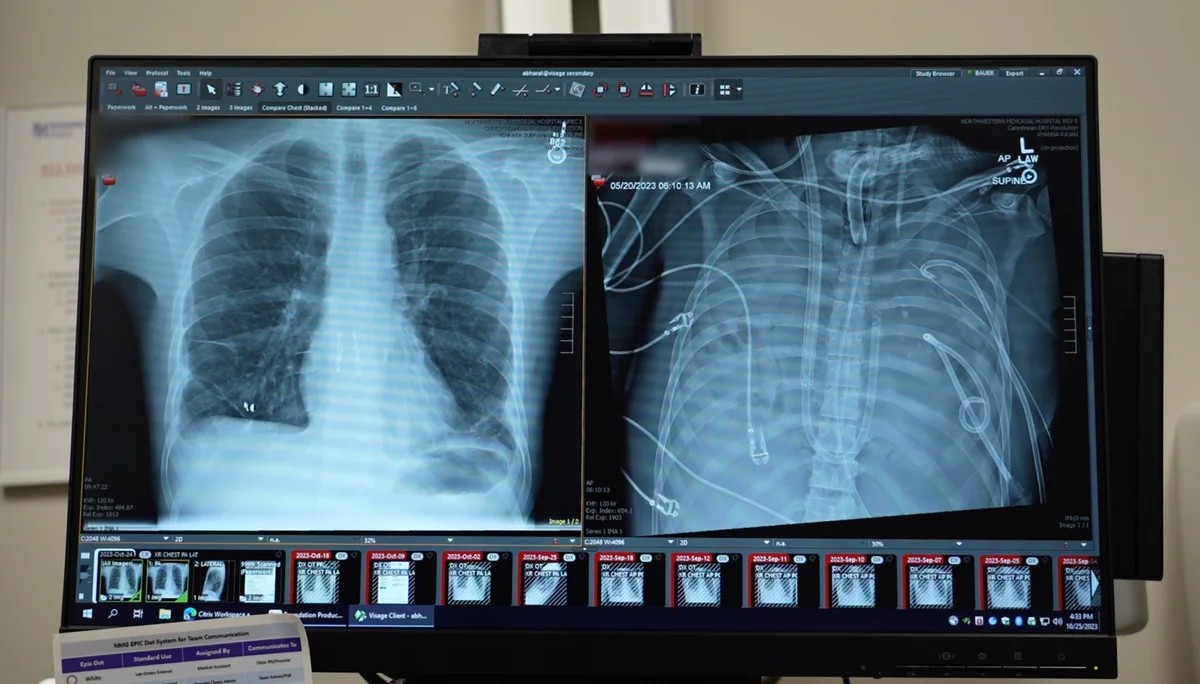
A thoracic surgeon at Northwestern Memorial Hospital, Ankit Bharat, recounts a case from 2023 where a 33-year-old influenza patient was on the brink of death due to a severe Pseudomonas infection. The man’s condition rapidly deteriorated, with failing kidneys, a barely functioning heart, and lungs filling with fluid and pus. After his heart stopped, doctors faced a critical challenge: the patient needed a double-lung transplant but was too ill for the procedure.
Standard life support, extracorporeal membrane oxygenation (ECMO), requires functioning lungs to work effectively. Without them, the system cannot oxygenate blood properly. Bharat and his team developed an experimental solution—an “artificial lung” system designed to bypass the patient’s failed organs. This system essentially acted as a bridge, pumping blood from the right side of the heart to oxygenate it and deliver it to the rest of the body.
The key innovation was a closed-loop system: Blood was moved through the artificial lungs, then returned to the right side of the heart, mimicking natural circulation. This prevented a “traffic jam,” as Bharat described it, ensuring continuous blood flow. The system sustained the patient for two full days, allowing his body to begin healing from the infection.
“It was almost like a curse or something that just got lifted,” Bharat said. “And suddenly everything started to heal.”
Within hours of being stabilized, the patient received a lung transplant offer. After weeks of recovery, he was discharged, weak but alive. More than two years later, he continues to do well.
While similar concepts have been explored before, according to Duke University professor Matthew Hartwig, Bharat’s method provides a “novel approach” to a long-standing problem in critical care. His team has openly published their methods in Med so other hospitals can replicate the system. This represents a potentially life-saving tool for patients too sick for traditional treatments.
The ultimate goal is to expand access to this technology, enabling more success stories like this one. Even saving just one additional life would be a significant victory.