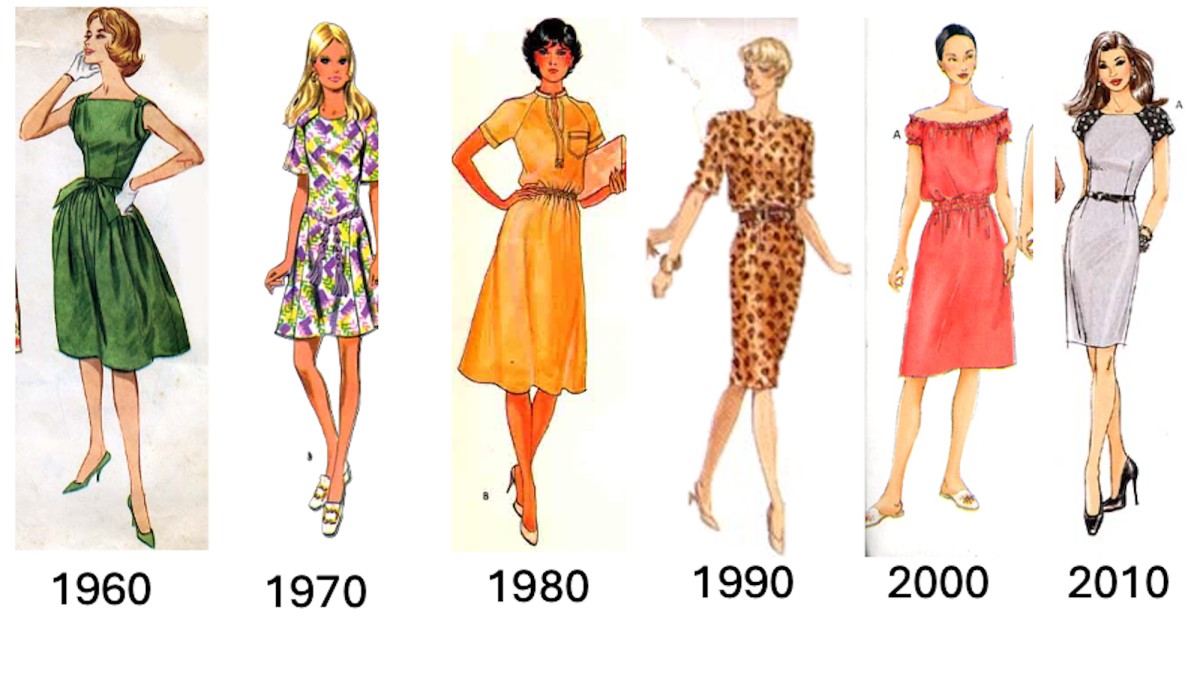
For decades, fashion insiders have observed a recurring pattern: styles tend to resurface roughly every 20 years. Now, rigorous mathematical analysis has validated this so-called “20-year rule,” revealing that the fashion industry operates on predictable cycles of novelty and revival. This isn’t just anecdotal; data proves it.
The Science Behind the Trend
Researchers at Northwestern University meticulously analyzed 160 years of women’s clothing data – over 37,000 garments, sourced from historical pattern archives and modern runway collections. They quantified stylistic features like hemlines, waistlines, and necklines, converting them into measurable metrics. This allowed them to model the industry’s push-and-pull between originality and tradition.
The study confirms that fashion operates as an oscillating system. When a style becomes too dominant, designers deliberately shift aesthetics to differentiate themselves… only to inevitably revisit earlier themes two decades later. As study co-author Daniel Abrams explains, “The system intrinsically wants to oscillate, and we see those cycles in the data.”
Hemlines as a Case Study
A prime example is skirt length. Short hemlines dominated the 1920s (think flapper dresses), yielded to longer styles in the 1940s and 50s, then swung back to mini-skirts by the 1960s. This oscillation isn’t random; it’s a mathematically demonstrable pattern.
The Cycle May Be Changing
However, the predictability of this cycle appears to be waning. Since the 1980s, the strict dichotomy between short and long skirts has blurred. Today, designers and consumers embrace a wider range of lengths – from ultra-short to floor-length to midi – leading to greater stylistic variance.
Lead author Emma Zajdela notes, “There is an increase in variance over time and less conformity.” The fashion system may be evolving beyond simple repetition, though the underlying forces of trend recycling remain.
The research suggests that keeping old clothes might be smart – not just for your closet but for sustainability. Fashion’s cyclical nature means what’s outdated today could be in demand again soon.