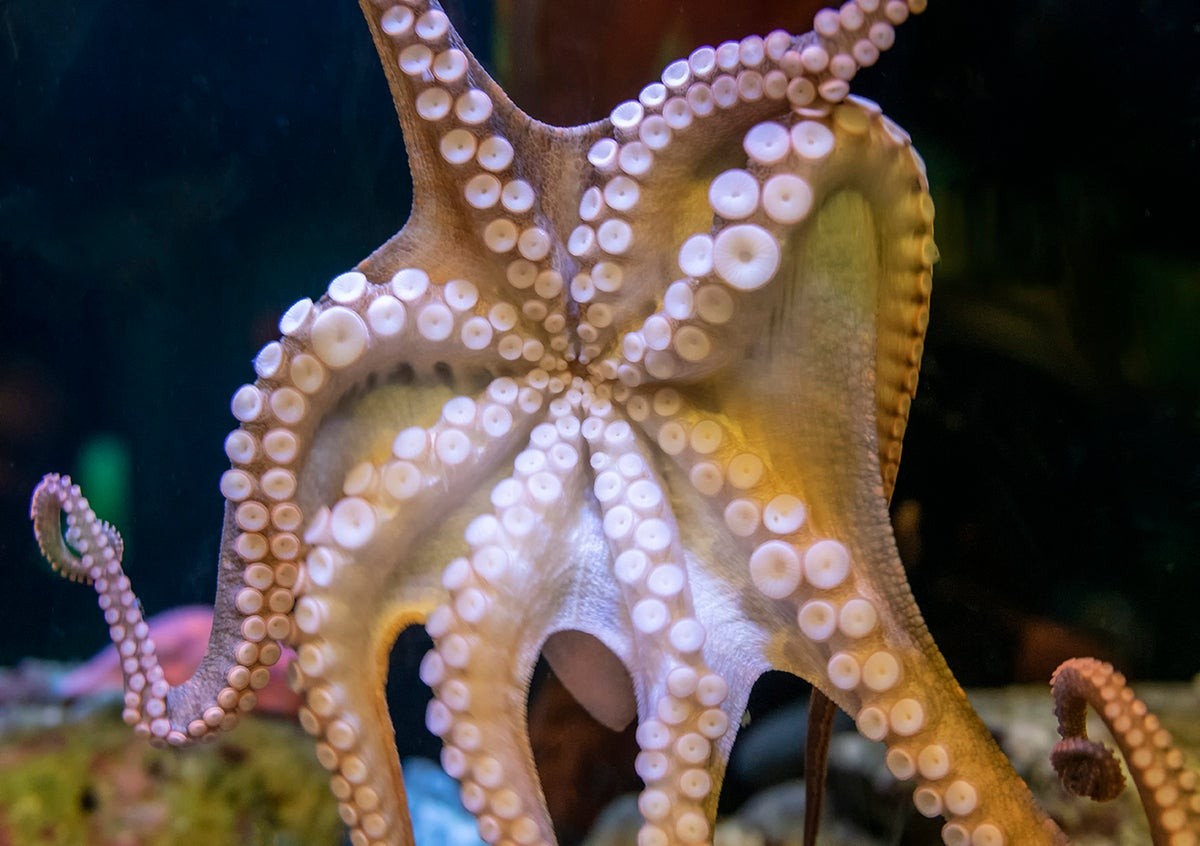
Octopus mating is a remarkable process driven by an unusual sensory mechanism. Male octopuses lack a traditional penis, instead using a specialized mating arm called a hectocotylus to deliver sperm. This arm isn’t just blindly groping; recent research confirms it actively detects female sex hormones to pinpoint the ovaries for fertilization.
The Role of Chemotactile Receptors
The hectocotylus, like all octopus arms, is covered in suckers equipped with chemotactile receptors. These receptors allow the octopus to “taste” through touch, but the mating arm’s function is unique. Unlike other arms used for hunting or exploration, the hectocotylus seems dedicated to reproduction, holding close to the body when not in use.
Researchers at Harvard University demonstrated this through laboratory observation. Octopuses, even when separated by a barrier with small holes, were able to mate effectively. Males reached across the divider and successfully deposited sperm, even in total darkness. This proved visual cues weren’t essential; chemical signals were the key.
How Hormones Guide Sperm Delivery
The key lies in progesterone, a sex hormone released by the female octopus’s oviduct. The hectocotylus’s receptors are specifically tuned to detect this hormone. Experiments showed that when researchers presented different chemical substances through holes in the tank divider, males were drawn immediately to progesterone.
This is significant because the hectocotylus both senses the hormone and delivers the sperm, ensuring precise placement. Most animals separate these functions, but octopuses have integrated them into a single organ.
Implications for Species Isolation and Evolution
This chemically guided mating could play a crucial role in maintaining species boundaries. If each octopus species releases a unique hormonal signature, males will only respond to females of their own kind. This mechanism could also drive speciation, as subtle shifts in hormonal profiles lead to reproductive isolation.
As zoologist Anna Di Cosmo points out, “Species boundaries are shaped not only by the genes organisms carry, but by the molecular systems that determine how organisms perceive one another.”
The study’s findings suggest evolution isn’t just about genes—it’s about how organisms perceive each other chemically. While further research is needed to confirm whether this mating strategy is universal across all octopuses, this discovery marks a major step toward understanding the intricate sensory world of these intelligent invertebrates.
The research represents a beautiful convergence of behavioral observation and molecular analysis, proving that even in the depths of the ocean, reproduction is guided by the power of chemistry.