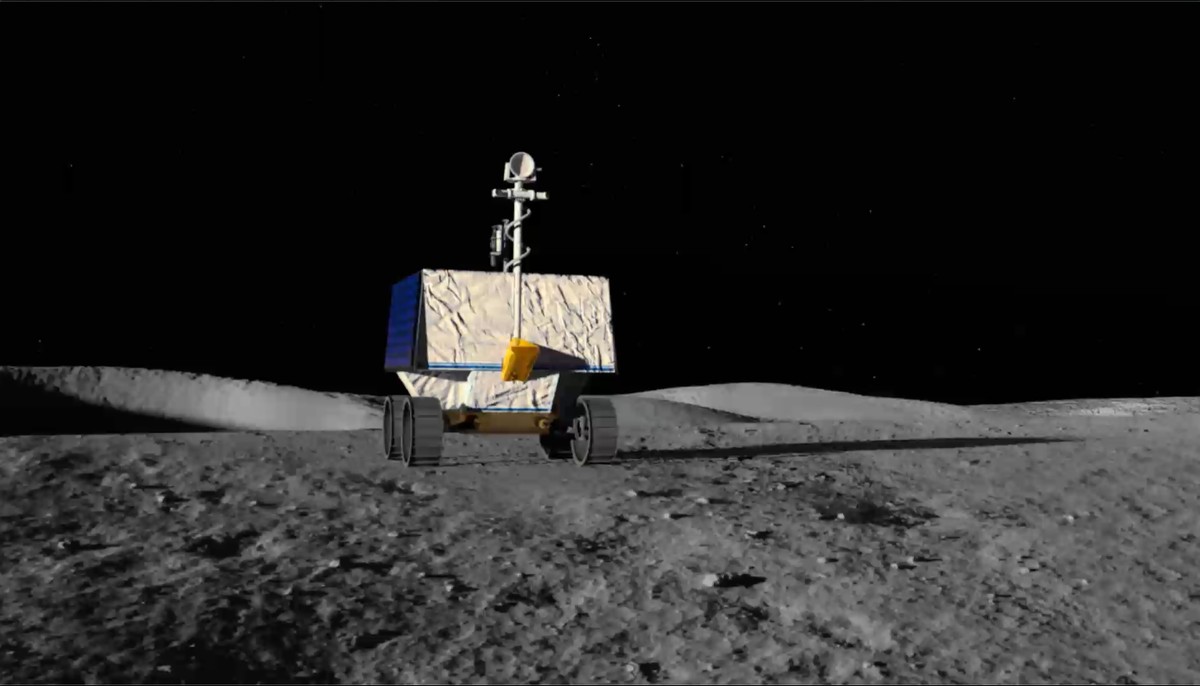
While NASA’s Artemis program prepares to return humans to the lunar surface for the first time since 1972, a surprising gap remains in the American space legacy. Despite being the first nation to land humans on the Moon, the United States has yet to successfully deploy and operate a robotic rover on the lunar surface.
As international competitors like Russia, China, India, and Japan have already established themselves in the “lunar rover club,” the U.S. is now engaged in a high-stakes commercial race to close this gap.
A History of Missed Opportunities
The pursuit of lunar mobility is not a new concept. In the 1960s, NASA explored the idea of using small robotic rovers to scout landing sites for astronauts. However, as the Apollo program accelerated toward its goal of a human landing, these robotic programs were deemed non-essential and were eventually cut.
This decision left a void that modern space agencies are now rushing to fill. Today, the race is being driven not just by government agencies, but by private companies under NASA’s Commercial Lunar Payload Services (CLPS) program.
The Current Contenders
The race to become the first American robotic rover to successfully operate on the Moon is currently a three-way competition involving several upcoming missions:
- Lunar Vertex (Intuitive Machines): Scheduled for the second half of 2026, this small rover aims to investigate “lunar swirls”—mysterious, bright patterns on the Moon’s surface. This mission follows a recent setback where an Intuitive Machines lander arrived safely but landed at an angle, trapping its payload, the MAPP rover, inside.
- CubeRover (Astrobotic): A diminutive rover slated to launch later this year as part of a mission to the lunar south pole.
- FLIP (Astrolab): A much larger, nearly 500-kilogram platform that will also target the south polar region.
The focus on the lunar south pole is strategic; scientists and commercial entities are racing to locate water ice, a critical resource for sustaining long-term human presence and fueling future deep-space travel.
The “Dark Horse”: NASA’s VIPER
Beyond the commercial race, NASA has its own heavy hitter in waiting: the VIPER (Volatiles Investigating Polar Exploration Rover).
The VIPER mission has faced a turbulent development cycle, including a temporary cancellation due to budget concerns that was only reversed following significant public and congressional pushback. If all goes according to plan, VIPER could launch as early as next year aboard Blue Origin’s Blue Moon MK1 lander, tasked with the high-priority mission of scouting for water ice.
Why Robotic Mobility Matters
For NASA, rovers are more than just scientific tools; they are the precursors to permanent habitation. Even when astronauts are present, many of the vehicles they use—such as lunar buggies—will likely be teleoperated (controlled remotely) when not in active use by humans.
However, the rapid expansion of the CLPS program raises new questions. NASA aims to launch 25 missions by 2028, with a goal of at least 21 successful landings. As these missions shift toward building a permanent lunar base, experts warn of a potential tension between infrastructure and science :
“A heavy outpost-focused CLPS push could leave scientific objectives sitting on the lunar sidelines,” warns Casey Dreier of the Planetary Society.
Conclusion
The race for lunar rovers represents a fundamental shift in space exploration, moving from “flags and footprints” to long-term presence. Whether through commercial ventures or NASA’s own VIPER, the successful deployment of these machines will determine how effectively humanity can eventually inhabit the Moon.