For many, the concept of a “mummy” evokes images of perfectly preserved ancient Egyptian royalty resting in ornate, gold-laden tombs. However, the archaeological reality is often much more fragmented and fragile. Many ancient remains consist of mere scraps—limbs, skulls, or even small fragments—that are too delicate for traditional physical examination.
At the MNMKK Semmelweis Museum of Medical History in Budapest, Hungary, researchers are finally overcoming these preservation challenges, using modern technology to breathe new life into ancient mysteries.
The Power of Non-Invasive Discovery
Since its opening in 1965, the museum has housed a collection of archaeological fragments, some dating back over 2,300 years. While these specimens have been known to experts for decades, studying them has always been a high-stakes gamble. Physical handling risks destroying the very history scientists aim to preserve.
The game has changed with the recent installation of a high-resolution CT scanner. This technology allows researchers to peer inside the remains without ever touching them, providing a way to “see” through layers of decay and ancient wrappings.
“Modern imaging technology opens up new perspectives in mummy research. It can reveal information hidden in finds that are thousands of years old without damaging them,” says collection curator Krisztina Scheffer.
Misidentifications and Medical Mysteries
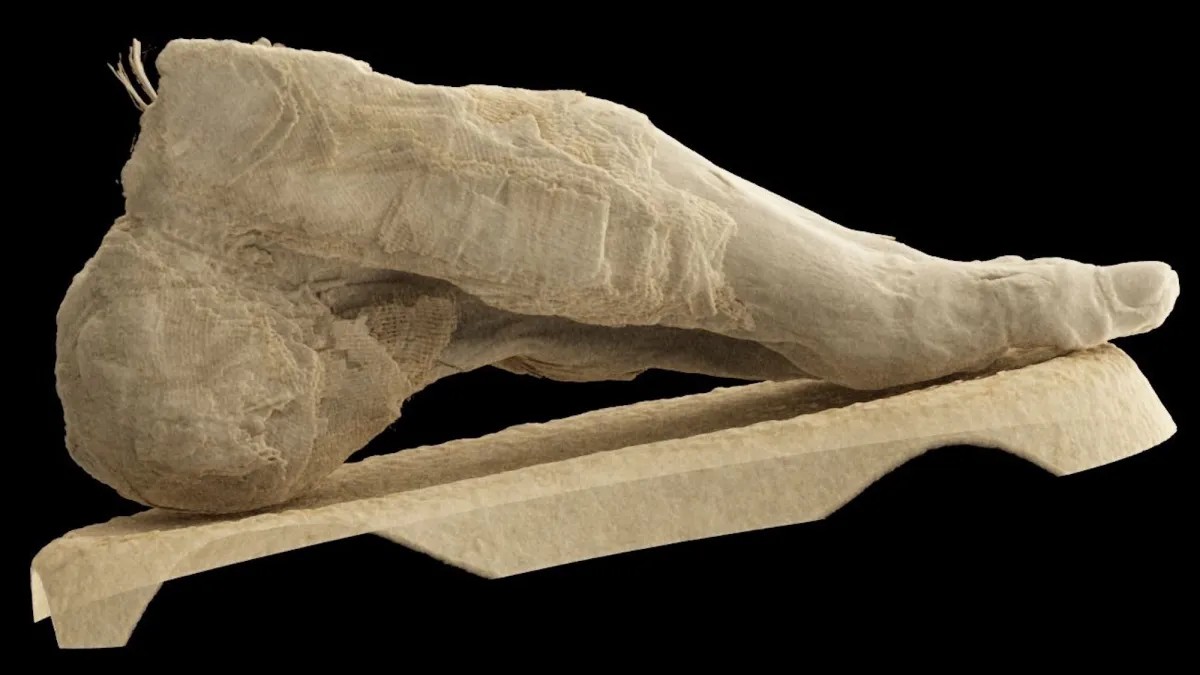
The precision of CT scanning has already corrected long-standing misconceptions within the museum’s collection. One of the most striking examples involves a specimen that experts had previously identified as either a mummified human head or perhaps even a bird. Through high-resolution imaging, the mystery was solved: it was actually an adult foot.
Beyond correcting errors, the technology is providing new biological insights:
- Bone Health: Imaging of partial limbs has led researchers to believe that one individual was relatively young yet suffered from osteoporosis, a finding that raises questions about the nutritional or environmental stressors of that era.
- Anatomy and Aging: The team has successfully analyzed teeth, skull sutures (the joints between the bones of the skull), and various other skeletal fragments to better understand the demographics of the ancient population.
Why This Matters
This shift toward digital archaeology is part of a broader trend in the scientific community. As imaging technology becomes more accessible and precise, the “unseen” parts of history—the fragments that were once considered too broken or too small to be useful—are becoming primary sources of data.
By digitizing these remains, museums can study them indefinitely without the risk of physical degradation, ensuring that even the smallest piece of bone can tell a complete story.
Conclusion
The integration of high-resolution CT scanning at the Semmelweis Museum marks a turning point in how fragmented ancient remains are studied. By replacing physical guesswork with digital precision, researchers are uncovering new medical and historical truths from specimens that have been misunderstood for decades.