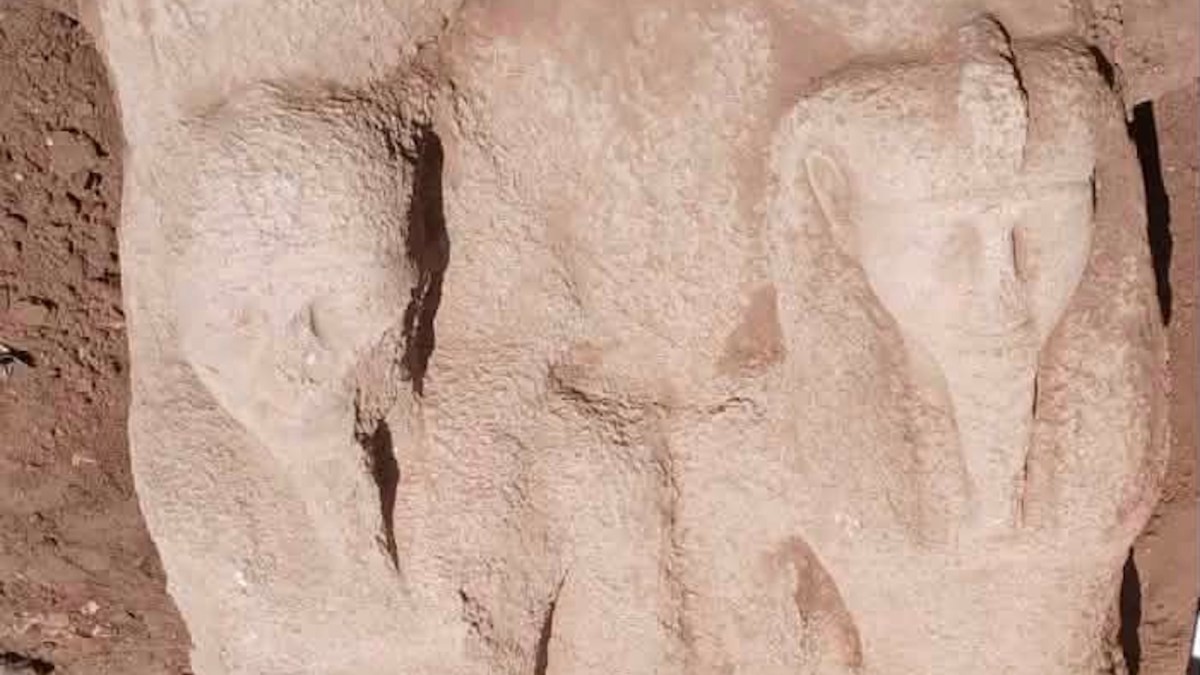
Archaeologists have unearthed a massive, 7-foot-tall fragment of a statue believed to represent Ramses II, one of ancient Egypt’s most formidable and iconic rulers. The discovery was made at the ancient site of Imet, located at what is now known as Tel Faraoun in the eastern Nile Delta.
A Monument to Grandeur
The recovered portion of the sculpture is substantial, standing over 7 feet tall and weighing between five and six tons. While the artifact is in a weathered condition due to its age, experts from the Egyptian Ministry of Tourism and Antiquities are confident in its origins.
The scale and artistic style of the piece align perfectly with the known “brand” of Ramses II. Known as Ramses the Great, he reigned for approximately 66 years during the New Kingdom, a period defined by Egypt’s peak imperial power. He was a ruler obsessed with legacy, commissioning massive temple complexes and monumental statues to ensure his image dominated the landscape.
Logistics and Craftsmanship
The discovery provides fascinating insight into the logistical capabilities of the ancient Egyptian state:
- Centralized Production: Researchers believe the statue was not carved locally at Imet. Instead, it was likely crafted in Pi-Ramsesse, the capital city established by the pharaoh himself.
- Transport Feats: After being completed in the capital, the multi-ton monument was transported roughly 15 miles north to its final destination in Imet.
- Divine Context: Archaeologists suspect this fragment was not a standalone piece. It may have once been part of a “triad” —a common sculptural arrangement where a pharaoh is depicted flanked by two deities to symbolize divine legitimacy and protection.
Why This Discovery Matters
Finding such a massive fragment in the Nile Delta helps fill in the geographical map of Ramses II’s influence. It reinforces the idea that his architectural propaganda was not confined to major religious centers like Luxor or Karnak, but was spread across the delta to assert his presence in strategic regions.
The fragment has been moved to a secure storage facility for stabilization. Once archaeologists complete the restoration process, the piece may eventually be put on public display, offering a tangible connection to a man who lived over 3,000 years ago and left an indelible mark on human history.
Historical Context: Ramses II was a figure of immense biological and political vitality; historical records suggest he lived to the age of 90 and fathered upwards of 100 children, presiding over an era of unprecedented Egyptian expansion.
Conclusion: This discovery offers a rare, physical glimpse into the massive scale of Ramses II’s building programs and the sophisticated logistics used to spread his image across the empire.