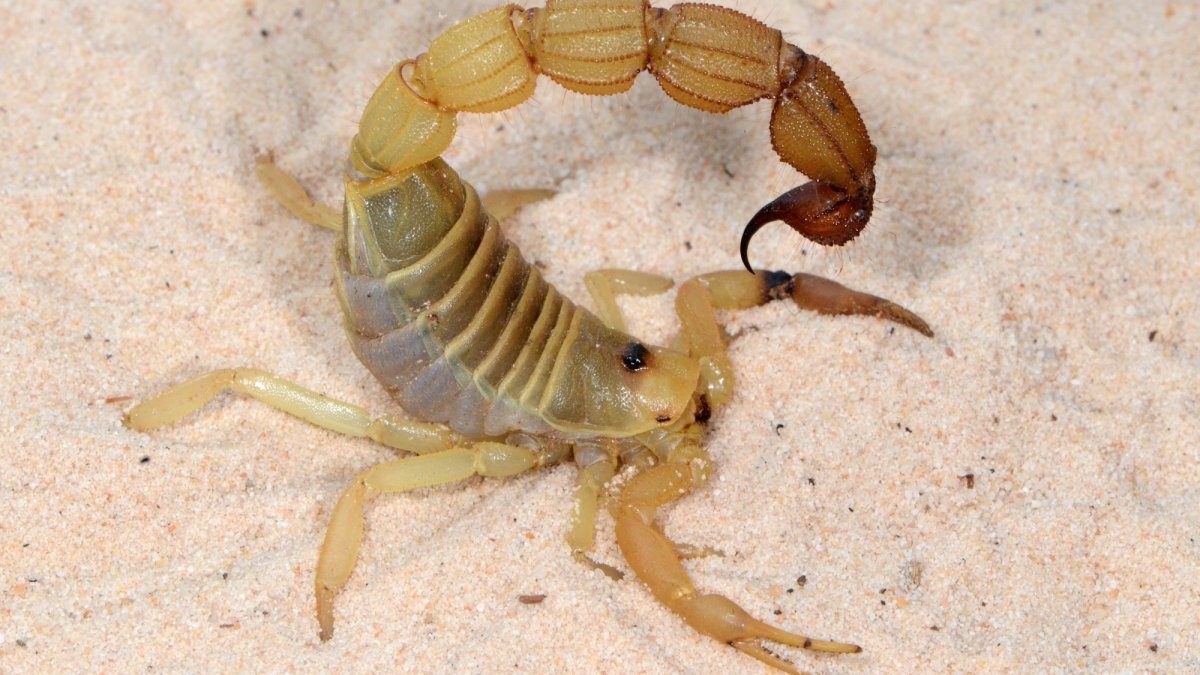
Scorpions are among the most efficient hunters on the planet, their anatomy refined over millions of years of evolution. From their armored exoskeletons to their venomous stingers, nearly every feature serves a dual purpose: capturing prey or defending against predators like birds and snakes. Yet, for decades, entomologists suspected these arthropods possessed a hidden advantage embedded within their very biology—metallic reinforcements.
While trace metals had been detected in the exoskeletons of some scorpion species, the exact distribution, concentration, and functional purpose of these metals remained a mystery. A new study published in the Journal of The Royal Society Interface sheds light on this biological engineering, revealing how different metals reinforce specific parts of a scorpion’s weaponry based on hunting style.
The Science Behind the Sting
The research, led by Sam Campbell, an environmental scientist at the University of Queensland, sought to answer a critical question: Do all scorpions use metal to strengthen their weapons, and does this correlate with their hunting methods?
Scorpion species generally fall into two categories: those that rely heavily on their pincers to crush prey, and those that prefer to use their stingers for venom delivery. Campbell and his colleagues hypothesized that the presence of metals would align with these distinct strategies.
To test this, the team utilized a diverse collection of specimens from 18 different scorpion species housed at the Smithsonian National Museum of Natural History in Washington D.C. Using advanced microanalytical techniques, including high-resolution electron microscopy and X-ray analysis, they mapped the chemical composition of the scorpions’ pincers and stingers with unprecedented detail.
Zinc, Manganese, and Iron: A Biological Alloy
The findings revealed a consistent pattern of metal enrichment across the species studied. The researchers identified two distinct layers of metal in the scorpions’ weapons:
- Stingers: The needle-like tips contained high concentrations of zinc, followed by a layer of manganese.
- Pincers: The movable portion of the claw, known as the tarsus, featured cutting edges reinforced with either zinc or a combination of zinc and iron.
These metals act as natural alloys, hardening the chitin in the exoskeleton to prevent wear and tear during hunting and combat. However, the specific distribution of these metals challenged the researchers’ initial assumptions.
Durability Over Strength
Contrary to expectations, the study found that zinc was not primarily associated with crushing power. Researchers had predicted that species with large, powerful pincers used for crushing prey would exhibit the highest zinc levels. Instead, higher concentrations of zinc were found in the thinner, longer claws of species that rely more on their stingers.
“This points to a role for zinc beyond hardness, perhaps playing a bigger role in durability,” explained Campbell. “Long claws need to grasp prey and prevent it from escaping before being injected by venom.”
This discovery suggests an intricate evolutionary relationship between a scorpion’s hunting behavior and the mechanical properties of its weapons. For species that use long, delicate claws to hold struggling prey steady for a sting, durability and resistance to bending are more critical than raw crushing strength. Zinc appears to provide this resilience, ensuring the claw does not snap under stress.
Implications for Arthropod Evolution
The implications of this study extend far beyond scorpions. Many arthropods, including bees, wasps, and spiders, also incorporate trace metals into their anatomy. By establishing a clear framework for analyzing metal enrichment in scorpions, this research provides a foundation for understanding how these microscopic adaptations evolve across the insect world.
Edward Vincenzi, a research scientist at the Museum Conservation Institute and co-author of the study, highlighted the precision of nature’s design. “The microscopic-scale methods we used allowed us to identify individual transition metals in extremely high detail, showing us how nature skillfully engineered these metals in the scorpion’s weapons,” he noted.
Conclusion
This research transforms our understanding of arthropod biology, revealing that scorpions do not merely use metal for hardness, but for specific mechanical advantages tailored to their survival strategies. By linking metal distribution to hunting behavior, scientists have uncovered a sophisticated example of evolutionary engineering, offering new insights into the hidden complexities of the natural world.