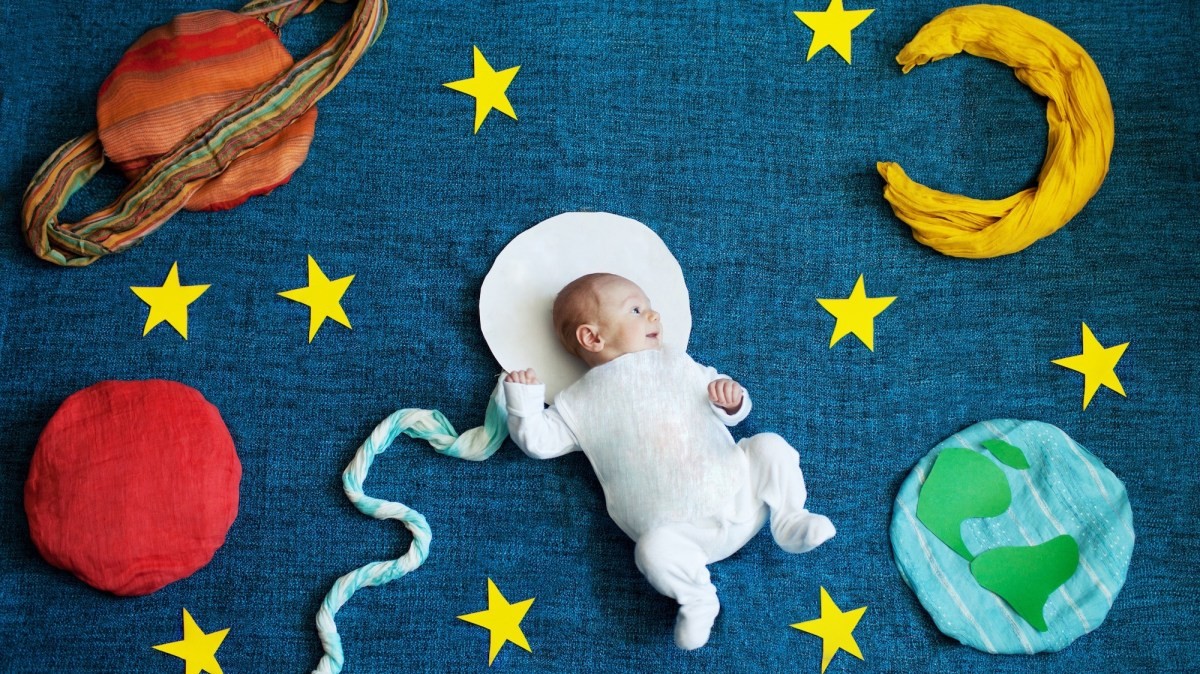
The Social Security Administration (SSA) has released its latest baby name data for 2025, revealing a clear celestial trend among new parents. While many names draw inspiration from mythology, history, or nature, this year’s data shows a distinct preference for our solar system’s planets. Among the major planets, Mars emerged as the most popular choice, followed closely by Jupiter.
This shift suggests that parents are increasingly looking to the cosmos for inspiration, blending scientific curiosity with traditional naming conventions. However, the data also highlights a practical filter: while space-themed names are rising, certain planetary names remain firmly off-limits due to their pronunciation or cultural associations.
The Planetary Breakdown
The SSA tracks names given to at least five children to protect privacy. Within this threshold, the distribution of planet names reveals interesting gender patterns and popularity spikes.
Mars leads the pack with a total of 132 babies named after the Red Planet. The name is significantly more popular for boys (105) than for girls (27), perhaps reflecting the planet’s historical association with war and masculinity in Roman mythology.
Jupiter follows as the second most popular planetary name, with 121 total births. Unlike Mars, Jupiter is nearly evenly split between genders, with 84 girls and 37 boys. This balance may appeal to parents seeking a name that feels grand yet gender-neutral.
Other planets see much lower usage, but still register on the charts:
* Venus : 96 girls
* Saturn : 26 total (18 girls, 8 boys)
* Pluto : 11 boys (classified as a dwarf planet)
* Neptune : 8 boys
* Earth : 8 girls
* Mercury : 10 boys
Notably, Uranus has zero recorded births in the dataset. Given the name’s awkward pronunciation and adult connotations, it is no surprise that parents continue to avoid it, despite its place in the solar system.
Dwarf Planets and Mythological Roots
While the major planets dominate the conversation, dwarf planets are making a quiet appearance. Eris, named after the Greek goddess of strife, was given to 154 babies (128 girls, 26 boys). This figure actually surpasses the totals for both Mars and Jupiter, suggesting that unique, mythologically rich names are gaining traction among parents seeking distinctiveness.
It is important to contextualize these trends: most planet names originate from Roman and Greek deities. Therefore, a name like Venus or Jupiter may be chosen for its classical elegance rather than solely for astronomical reasons. This dual meaning allows parents to honor both heritage and science.
The Rise of Artemis and the Fall of Tesla
Beyond the planets, other space-related names are shifting in popularity. Artemis, the name of NASA’s ambitious mission to return humans to the Moon, was given to 332 babies in 2025. With Greek origins meaning “safe” or “butcher,” the name carries both historical weight and modern scientific relevance. Its rising popularity mirrors public interest in space exploration milestones.
In contrast, the name Tesla has effectively vanished from the SSA data. After peaking in 2016 with 180 births, the name declined steadily, appearing only 13 times in 2023. Its absence in 2025 suggests that brand-associated names may have a shorter lifespan in the naming cycle, falling out of favor as trends evolve.
*The data reflects a broader cultural moment: parents are choosing names that