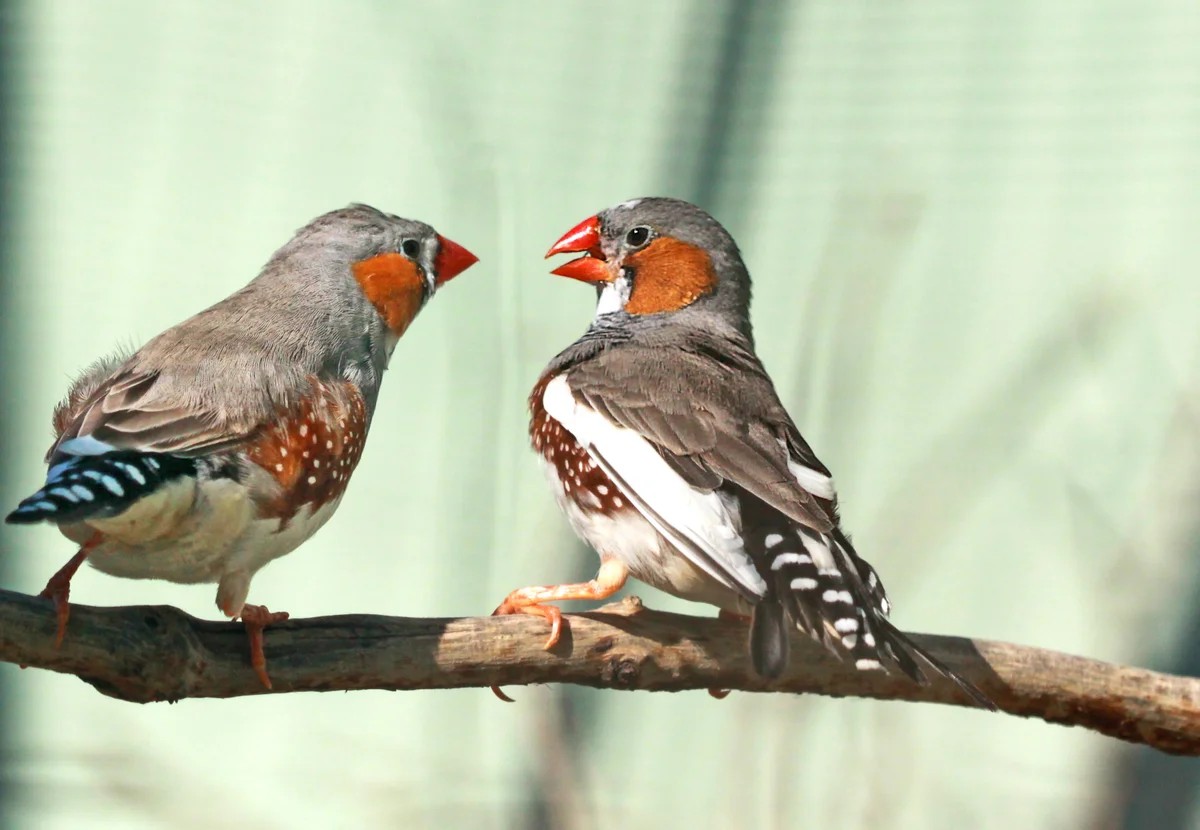
Julie Elie listens to birds. Specifically zebra finches. Tiny, noisy things. Most researchers ignore them. Or at least, they ignore the quiet parts. Everyone looks at the male songs. Complex. Pretty. Performative.
Elie looks at the rest.
The quotidian chirps. The hello’s. The cries. The background noise of bird life.
At UC Berkeley she spends years listening. Just listening. And parsing. The data piles up. Painstakingly collected. Hour by hour. Call by call.
What came out?
Eleven core calls.
A vocabulary. Distress. Hunger. Greeting.
It’s not just generic noise either. The birds sign their messages. Individual signatures. You can tell who is calling and what they’re doing. It’s almost like they have names. And manners.
Did they trust her?
They tested the birds themselves.
They played recordings. Distance calls first. Can you hear your friend’s voice in the mix?
Then she expanded it. “Okay let’s export that to other call types.” Did it hold up? Yes. Sure. Above chance. Always above chance. They got it wrong sometimes. Humans do too.
“I’ve not been hallucinating for all theseyears.”
That was her reaction.
She showed the birds her categorization scheme. Their agreement validated hers. Not based on how the sounds sounded. But what they meant. They mixed up aggression with distress. Makes sense. High arousal states. They didn’t confuse those with something pleasant that sounded similar. Meaning beats acoustics.
This matters.
A lot.
Elie won the 2026 Coler-Dolittle Prize. One hundred thousand dollars.
Why?
She made progress toward interspecies comms. Not just translation. Dialogue. The grand prize is ten million. For total breakthroughs. We’re not there. Yet.
She used machine learning. Obviously. Too much data for human brains. Alone.
The algorithm parsed audio. Matched sound to behavior. “The zebra finch is the right level of complexity.” Simple enough. But rich enough.
See a laugh and a smile? You know they’re happy.
See a zebra finch chirp and crouch? You might know the same thing.
The AI struggled sometimes. It couldn’t tell aggressive calls apart from distress calls by audio alone. It needed context. The physical state of the bird.
Communication isn’t just waves in the air.
It’s body language. It’s context.
“Having information about the behavior… puts some more light onto the language.”
Dolphins? Much harder. They live underwater. Everywhere is the same. Zebra finches? Easy. Lab accessible. Contained.
She’s climbing up from there.
Level by level.
The goal? Two-way street. Not us interpreting them. Them interpreting us. Us speaking to them.
Can it be done?
She thinks so.
Achievable.