“Acquiring diagnostically useful X-rays is something anyone can do.” — Sheyna Gifford
For decades, we stuck it out with ultrasounds. Forty years. That’s how long ultrasound reigned supreme in space medicine. It wasn’t a design choice. It was just what worked. And barely.
Operating it took extensive training. Sound waves hate noisy, cramped cabins. Maintaining a clear signal up there? Nightmare.
So why didn’t we pack an X-ray machine?
Mass. Heat. Radiation. Stillness. Everything floats. Everything vibrates. Getting a crisp diagnostic image while orbiting at 17,500 miles per hour seemed technically impossible. A conceit, really. A hard limit.
Sheyna Gifford from the Mayo Clinic says it has always been the dream of aerospace medicine. One modality. Just one. How fragile is that?
Enter the MinXray TR90B. It’s small. About the size of an ice cooler. Commercial grade. Off-the-shelf stuff. Gifford and her team didn’t wait for perfect conditions. In 2022 they tested it on parabolic flights, simulating microgravity. The scans held up.
But ground tests are comforting lies. Space is the real exam.
The Fram2 Experiment
They partnered with SpaceX. Not another aircraft hop. Real orbit. The mission was Fram2. Last year. March 2025 saw the launch.
Here is the kicker: no months of med-school prep for the astronauts.
Four hours.
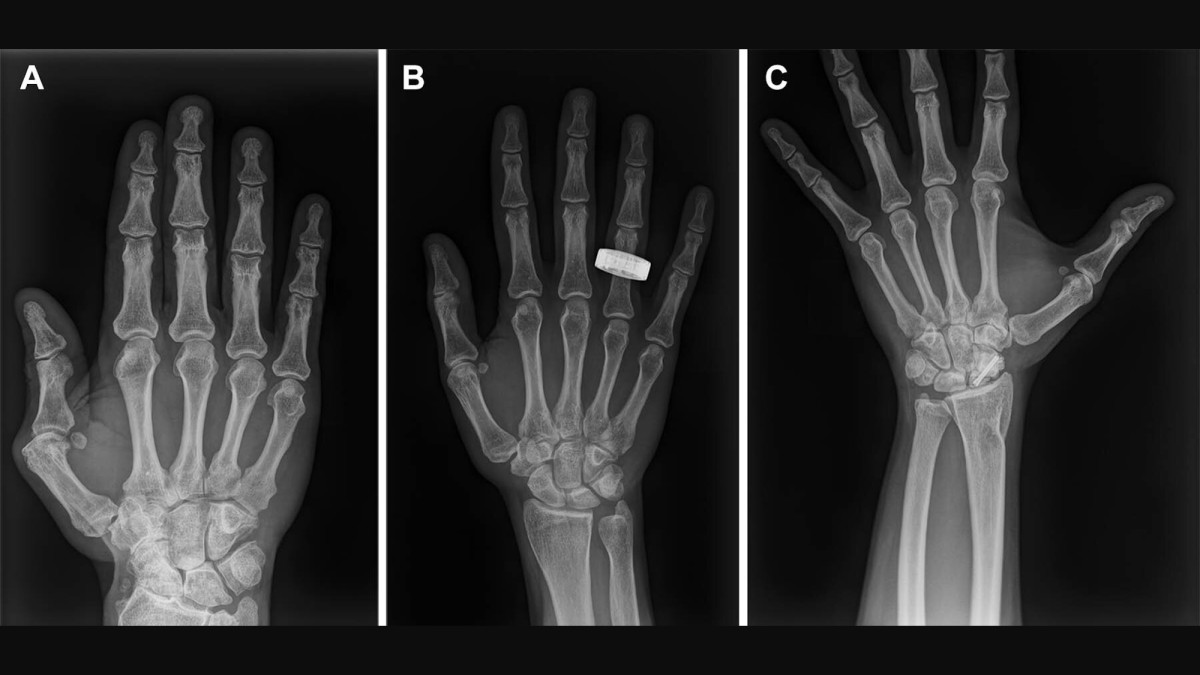
That was the total training time for the crew on this portable radiography device. Short, right? Then they launched. Pre-flight scans covered hands, forearms, chests, bellies, and pelvises. Baselines on Earth.
Up in space, the routine repeated. Calibration. Scan. Hand. Forearm. Chest. Abdomen. Pelvis.
Wait. Why scan a watch?
They X-rayed a smartwatch too. Just to prove the system works on hardware as well as human tissue. Electronics matter. Spacesuits matter. You can’t take a spacesuit apart to check for internal wear. You need to see inside without the teardown.
Did It Work?
Three independent radiologists got their eyes on the orbital data back on the ground.
Positioning for the central body shots? Slightly off. Floating makes “stand still” a challenge.
But everything else? Sharp. Resolution and contrast matched Earth-standard scans.
“Three very talented non-medical people with four hours of training… did it right.”
Gifford isn’t letting anyone downplay it. In one of the harshest, most unforgiving environments in existence, non-medical crew members used medical gear. They nailed it.
There are hiccups. The machine took some cosmetic damage during the rocket ride. Up and down forces are brutal on consumer-grade hardware. That needs fixing.
The future? Smaller machines. More routine scans. Not just for broken bones. For checking the life-support suits that keep you alive.
We aren’t on the Moon yet with X-ray booths. But we aren’t blind in orbit anymore either.