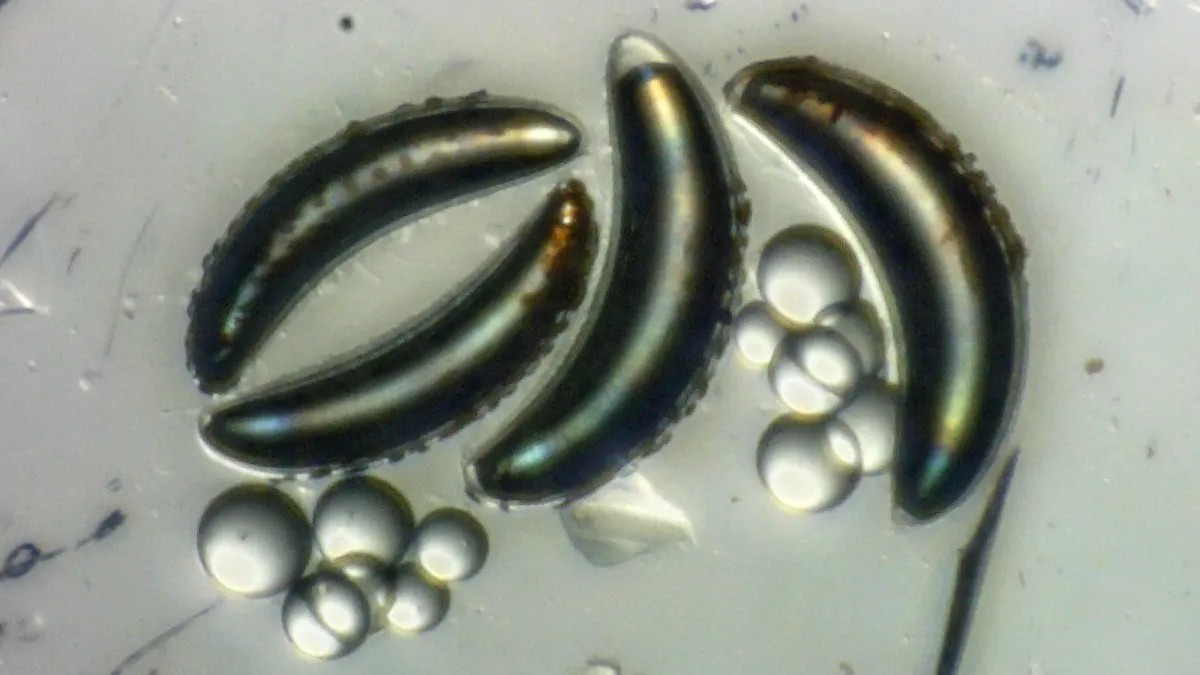
Insects hate the ocean.
It’s not just a preference. It’s biology. The prevailing theory for centuries has been simple: water pressure crushes them. Deep down, the squeeze fills their tiny respiratory tubes with fluid. They cave in. Game over.
Unless you are a Chaoborus edulis larva.
These midges, known locally in East Africa as lake flies, don’t care about physics. Billions of them live in Lake Malawi. They dive. Deep.
They spend their daylight hours over 656 feet—200 meters—below the surface. At night, they swim up to eat. Then back down.
It defies the old rules.
Why don’t insects live in the deep ocean?
We used to think pressure was the barrier. The logic held water. Air sacs compress. Lungs fail. Implosion.
But Philip Matthews from the University of British Columbia looked closer.
“The gas inside an air sac is not pressured… This begged the question: how deep can these insects dive before their secretions cannot expand against the pressure?”
Matthews and his team wanted to know where the breaking point was. They tracked the larvae in Lake Malawi using sonar. They watched them dive. Then they put them in pressure chambers.
They cranked up the squeeze.
How Chaoborus midge larvae control buoyancy
The trick isn’t muscle. It’s chemistry.
Inside the Chaoborus midge larvae, you find two pairs of air sacs. These aren’t rigid shells. They’re flexible. The walls are coated in resilin.
Resilin sounds passive. It’s often called the rubber of the insect world. Flexible. Durable. But here, it’s active.
The larvae change the pH level of the sac walls. Acidic? Basic? It changes the volume. The sac swells or shrinks. It’s a distinct “chemo-mechanical” system.
Think of it like a biological bellows.
“By regulating the pH of the air sacks’ walls, they cause them to expand,” Matthews tells Popular Science.
This lets the larvae control their float. They sink. They rise. No fins needed.
Can insect air sacs withstand deep-sea pressure?
This is where the numbers get weird.
The larvae dive 656 feet regularly. But what is the limit?
The researchers tested it. They pressed them to depths equivalent to over 1,213 feet (400 meters).
They didn’t break.
The air sacs held. The resilin didn’t fail. The larvae survived pressure way deeper than their daily routine requires.
This changes everything.
Which factors keep insects out of open water?
If pressure isn’t the problem, what is?
The study suggests the old excuse is dead. Insects can handle the crush. Their bodies are built for it.
So why aren’t there midges in the Atlantic?
The answer might be elsewhere. Salinity? Food? Predators? We don’t know yet. But the physics barrier is gone.
There’s more to it, though.
Evan McKenzie, a PhD student and co-author, sees something else entirely. He doesn’t just see a bug. He sees engineering.
“Resilin… generates force of its own… changing the shape and volume,” McKenzie says.
This isn’t just about bugs. It’s about materials.
Scientists can now look at resilin as a dynamic substance. One that morphs based on chemical changes. Soft robotics. Medical devices. Sensors.
The insect survives the deep. The material might survive our factories.
We thought we knew why insects avoid the ocean. We were wrong. Or at least, we were missing the point. The pressure doesn’t kill them.
It makes them flexible.