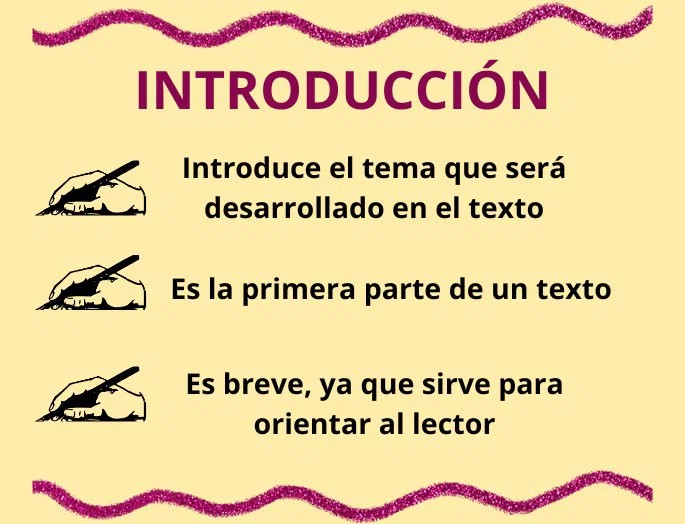
The intro is the hook. This is the first thing the reader sees and sets the stage for everything that follows. Think of it as a prelude. Don’t just start typing. Give your readers a map before they set foot in the area.
The goal is simple, but difficult. Before your reader finishes reading the first paragraph, you need to answer three questions: What is it about? How did you approach it? Why should we care?
A good intro is more than just a dump of information. It creates context. It prepares the mind.
This is not one size fits all
This is a mistake most people make. They treat every introduction the same. You shouldn’t.
The content of your self-introduction will vary greatly depending on the genre you’re writing about. Context is king.
Take a scientific paper. The presentation here is practical. You can see exactly what the study is about. It outlines the hypothesis. Results are previewed so you know what evidence to look for in the results section. There is no room for ambiguity.
The scientific introduction explains what the research is about and what is expected.
Go ahead and read the novel. The intro works differently. You aren’t getting a summary of the plot. You meet the characters. You’re being dropped into a scene. The mood is more important than the facts. Before you can understand the story, you need to feel the setting.
Why this matters to your writing
If you’re writing a blog post, an article, or even a long email, you need to match your tone to the format.
Readers decide within seconds whether to continue reading. Your introduction will influence this decision.
- Academic or professional documents: Be direct. Name the subject. Specify the scope. Give readers the tools they need to evaluate the information.
- For creative or narrative texts: Be immersive. Introducing the world. Allow the reader to empathize with the characters and feelings.
Don’t waste your first paragraph on fillers. Every sentence should have a purpose. Either you tell the reader what’s going to happen or you pull them in emotionally.
There is no middle ground. You can either preparing them or captivating them. And sometimes, you’re doing both. But you have to be intentional about it.
Most people skip this step. They immediately jump into the body. This is wrong. An introduction is a handshake. Make it firm. Clarify. Make it count.
Why you should wait until the end to write the introduction
Most people think you should write the introduction first. they are wrong.
This is contradictory.
But here’s the thing: drafting the opening paragraph before you’ve finished the body is a trap. You will likely rewrite it three times. Or five.
The wisest strategy is to write the introduction last.
Decide the topic now
The first priority is clarity.
Readers need to know exactly what they are signing up for. Do not bury the lead. If your article is about “The Impact of Social Media on Teen Sleep”, say so.
Examples of clear topics:
– Trends in ocean acidification
– Workplace stress and burnout
– Medieval fantasy in literature
Be specific. Vague topics create vague readers.
State purpose and method
Why are you writing this?
What did you want to find out?
If you are researching shortage of nurses in public hospitals, your motivation may be to identify staffing shortages or to propose hiring solutions.
State your goals clearly. Next, explain your approach.
How did you get your data?
Have you checked the monograph? Analyzing professional articles? do interviews?
“To achieve this, we rely on books, special articles and various publications.”
This builds trust. It shows readers that your work has weight.
Mapping structure
Give the reader a map.
Tell them how the text is divided. This builds expectations.
If you tell them it has three main parts, they’ll know what to look for.
- Current situation (or “state of the question”).
- Detailed analysis or development.
- Conclusions and observations.
Without this roadmap, readers can get lost. They may not know where you are going.
Structure helps them follow your argument.
It reduces cognitive load.
Rule of three
An introduction is only one part of a larger whole.
This is the first part.
The next two are the body (or “nudo”) and the conclusion (or “desenlace”).
Keep it brief.
The length depends on the complexity. A short blog post requires a shorter introduction than a thesis. But always make sure it’s tight.
Let it charm them
This is your first impression.
It should be very attractive.
It must be interesting.
If the reader is not interested in the first few lines, he will leave.
Do not just dump information. Engage them.
Show them why this topic is important.
Show them why your results are worth their time.
Practical steps to success
- **Finish the draft. ** Write the main body and conclusion first.
- **Identify the core theme. What is the one thing you want them to remember?
- **State the motivation. Why did you choose this topic?
- **Explain the method. How did you research it?
- **Outline the structure. Briefly list the sections.
- Refined for drilling holes. Cut out the fluff. Make it attractive.
Avoid common mistakes
- **Develop the discussion in the introduction. ** I don’t want to. Save body information.
- ** Draw conclusions quickly. **Make sure the reader wins the ending.
- **Being too long. ** Respect their time.
- **Being boring. ** Wake them up.
Actual example
Imagine a paper on “Main Artistic Avant-Gardes”.
The introduction clarifies the goal of tracing the innovations of 20th century art.
I would like to mention the starting point of breaking away from tradition.
The purpose is: It is a comparison of movements and their mutual effects.
Source: Means books and special articles.
We present the current situation, detailed analysis and conclusion.
This is obvious.
This is easy.
it works.
Final thoughts
You can save time by writing the introduction last.
Guaranteed accuracy.
Stay focused.
The topic should be clear.
The purpose should be clearly stated.
You need to map the structure.
The shade should be attractive.
Don’t overthink it.
Just do it right.
Then proceed to the next section.