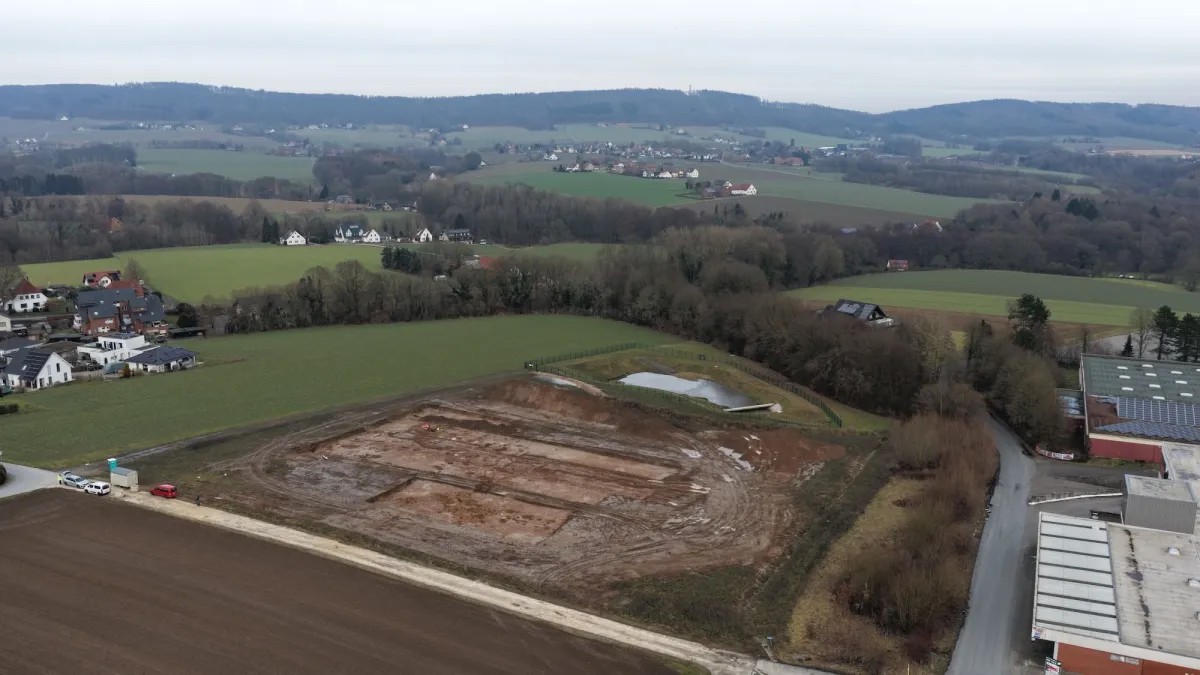
Archaeological excavations in Hüllhorst, Germany, have uncovered a remarkably well-preserved Iron Age settlement dating back to between 800 and 600 BCE, causing temporary delays in the construction of a new fire station. The discovery, made during routine pre-construction surveys, is significant because such settlements from this period are rare in the region. It provides a valuable window into life in Germany before Roman influence.
Context of the Discovery
The site’s location near Wöhrsiek, a consistently used freshwater spring, explains why people settled there thousands of years ago. Construction projects in the area routinely include archaeological surveys – a standard practice given the region’s long history of habitation. When researchers began removing topsoil in the summer of 2025, they quickly found evidence of past refuse pits, storage areas, and postholes. These features allowed archaeologists to reconstruct the layout of buildings.
Architectural Insights
The excavation revealed at least two smaller structures alongside a larger residential building. This house was intentionally oriented northeast-to-southwest, minimizing exposure to prevailing winds. According to excavation director Hisham Nabo, this demonstrates a sophisticated understanding of environmental factors and architectural design within the Iron Age community.
Artifacts Recovered
In addition to structural remains, researchers unearthed fragments of terrines (handled cups) and decorated pottery. Radiocarbon dating confirms the settlement’s age, aligning with similar, recently discovered sites in Werther and Minden. Scientific advisor Sebastian Düvel noted that the Hüllhorst discovery, combined with these other finds, will provide unprecedented insights into everyday life during this period.
“For us, this is a real stroke of luck… we hope to gain exciting insights into everyday life during this time.”
This discovery underscores the importance of archaeological surveys before construction, even in areas where settlements are suspected. The delay caused by the excavation is a small price to pay for the historical knowledge gained. This site is expected to offer valuable data for understanding pre-Roman life in Germany for years to come.