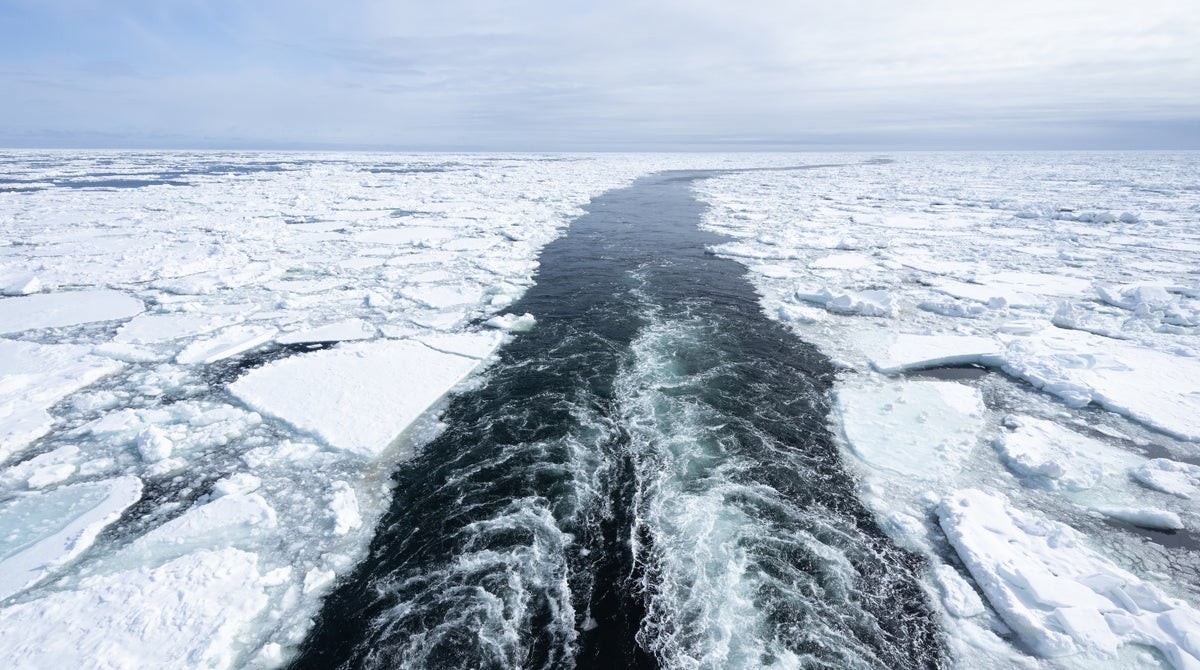
Arctic sea ice has hit its lowest winter maximum on record, signaling an accelerating trend of ice loss driven by global warming. Data from the National Snow and Ice Data Center (NSIDC) shows the ice cap reached 14.29 million square kilometers (5.52 million square miles) this year, matching the previous low set in 2023.
The Shrinking Arctic
The annual winter maximum, which typically occurs in March, provides a crucial baseline for tracking ice decline. This year’s figure is just slightly below last year’s record, within the margin of error for satellite measurements. However, the broader context is alarming: the current extent is 1.36 million square kilometers (525,000 square miles) below the 1981–2010 average – an area roughly twice the size of Texas.
Why This Matters
The shrinking Arctic ice cap has far-reaching consequences beyond the polar region.
- Accelerated Warming: Ice reflects sunlight, keeping temperatures lower. As ice melts, darker ocean water absorbs more heat, creating a feedback loop that speeds up warming.
- Habitat Loss: Polar bears, seals, and other Arctic wildlife rely on sea ice for survival. Declining ice threatens their populations.
- Climate Disruption: Arctic changes can influence weather patterns in lower latitudes, potentially leading to more extreme weather events.
Long-Term Trends
While individual record lows might seem like anomalies, the persistent downward trend since 1979 paints a clear picture. According to Walt Meier, senior research scientist at NSIDC, “One or two record low years don’t necessarily mean much by themselves, but in the context of the significant downward trend that we’ve observed since 1979, it reinforces the dramatic change to Arctic sea ice throughout all seasons.”
The loss of Arctic sea ice is a direct result of human-caused global warming, and its continued decline will amplify climate change impacts worldwide. The record low winter maximum serves as a stark reminder that the Arctic is changing rapidly, with potentially irreversible consequences.