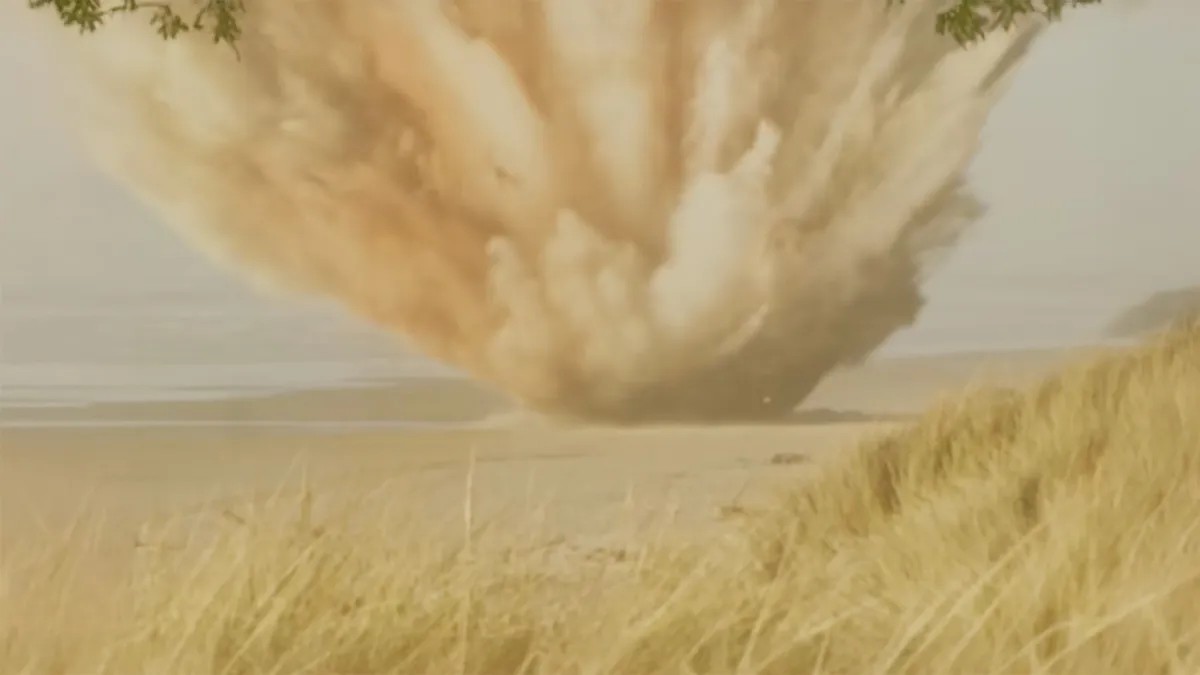
In November 1970, a 45-foot sperm whale washed ashore near Florence, Oregon, creating a biohazard that local officials couldn’t wait to resolve. The stench was overwhelming, and rather than allow nature to take its course—a process that would have taken roughly two years—the state opted for a drastic solution: dynamite. This wasn’t an isolated incident; mid-20th century approaches to “problem solving” often involved explosives, even at sea, where dynamite was used to harvest sharks and aid in whaling.
The State Highway Division, responsible for Oregon’s coastline, treated the whale carcass like an obstacle. On a Monday, the bloated body settled into the mouth of the Siuslaw River, and by Thursday, crews were excavating holes to plant 20 cases of 50-pound dynamite. The goal was to blast the whale into manageable chunks that would be carried out to sea by the tide. The reality was… messy.
When the explosives detonated, the result wasn’t controlled fragmentation. Instead, a “blubber snowstorm” erupted, sending blood and muscle 100 feet into the air, raining down on spectators a quarter-mile away. A three-foot piece of the whale even caved in the roof of a car in the parking lot. Despite the chaos, assistant district highway engineer George Thornton declared, “It went exactly right,” apparently unfazed by the carnage. The stench, remarkably, remained. Bulldozers buried the larger chunks, while seagulls were left to finish the job.
Why This Matters: The incident highlights a shift in how we handle environmental issues. In the past, immediate, forceful solutions were common, even if ecologically unsound. Today, leaving a whale to decompose naturally is considered the most effective and safest approach, returning nutrients to the food web. However, increased whale strandings due to human factors (malnutrition, collisions, entanglement) sometimes necessitate intervention. Current practice favors burial above the high tide line, though concerns remain about chemical leaching and potential shark attraction.
The story of the exploding whale is more than just a bizarre anecdote; it’s a reminder of how our relationship with nature has evolved. The town of Florence, Oregon, now commemorates the event with Exploding Whale Memorial Park, a dark but humorous acknowledgment of a uniquely explosive chapter in coastal management.