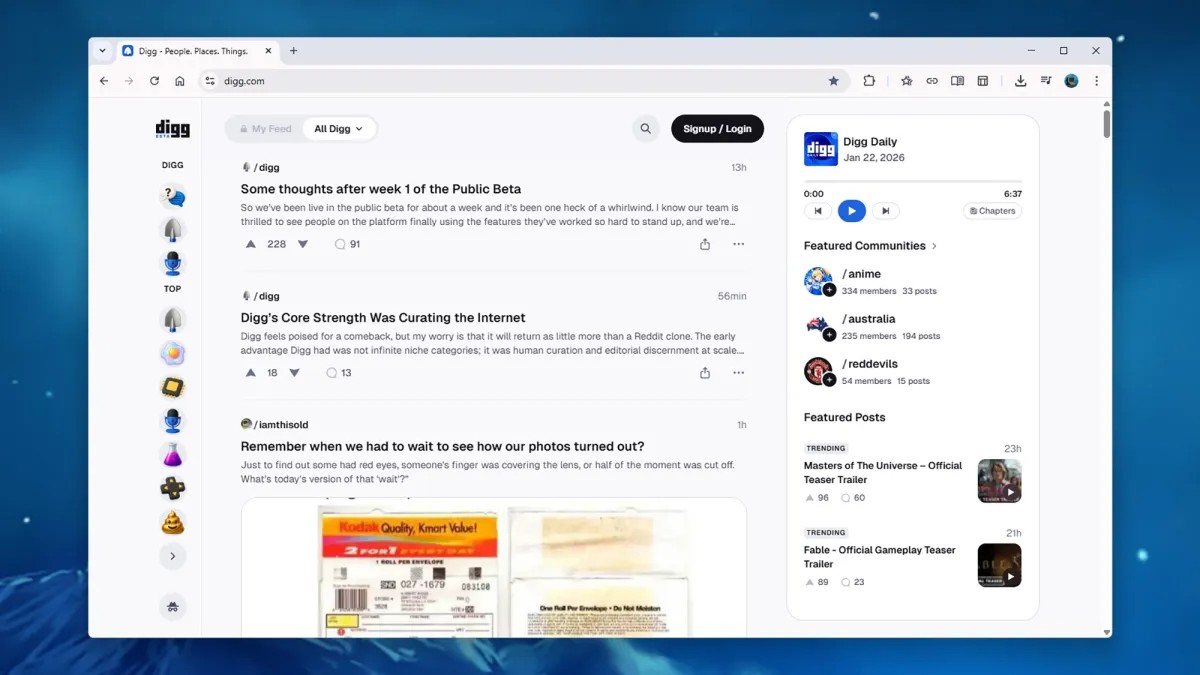
Digg, a once-dominant web aggregator from the early 2000s, has officially relaunched, aiming to recapture its former glory and challenge Reddit’s reign as the internet’s primary link-sharing platform. The revival is spearheaded by original co-founder Kevin Rose alongside Reddit co-founder Alexis Ohanian, signaling a direct competitive move in the crowded social media landscape.
The Comeback Story
Digg initially thrived by allowing users to curate and discuss web content, but a controversial redesign in 2010 led to a mass exodus of users toward Reddit. Now, the platform is back with a familiar formula: a space for showcasing and discussing the most engaging content on the web. The site entered public beta in April 2025, and is now fully accessible to anyone.
Getting Started with Digg
The interface mirrors the structure of both classic Digg and modern Reddit. A central feed displays user-submitted posts, while featured content and community sections occupy the right sidebar. Communities are represented by icons on the left, allowing users to easily navigate their interests.
To participate fully—voting, commenting, and submitting posts—users must create a free account. Registration requires only an email address and a chosen username, though optional profile customization (including an avatar) is available.
Navigating Digg’s Features
Digg emphasizes community engagement:
- Joining Communities: Users can subscribe to specific communities to receive targeted updates in their personalized “My Feed.” The “All Digg” feed displays content from across the entire platform.
- Upvoting and Downvoting: Posts can be promoted or demoted based on user feedback, similar to Reddit’s karma system. Upvoted content gains wider visibility.
- Commenting: Users can engage in discussions beneath posts, using text, GIFs, or images. Comments are also subject to upvotes and downvotes, reinforcing constructive participation.
- Submitting Posts: A “New Post” button allows users to share content within specific communities. The platform automatically populates post titles from linked URLs, though editing is permitted.
Why This Matters
Digg’s re-entry highlights the ongoing struggle for dominance in the social content aggregation space. Reddit, despite its longevity, faces growing criticism over moderation policies and API changes. Digg’s revival offers users a potential alternative, particularly those dissatisfied with Reddit’s recent shifts. The competition could force both platforms to innovate and improve user experience.
The success of Digg’s second act hinges on its ability to foster a healthy community, maintain consistent moderation, and avoid the missteps that led to its initial downfall. For now, the platform provides a familiar, albeit evolving, space for sharing and discussing what matters on the internet.