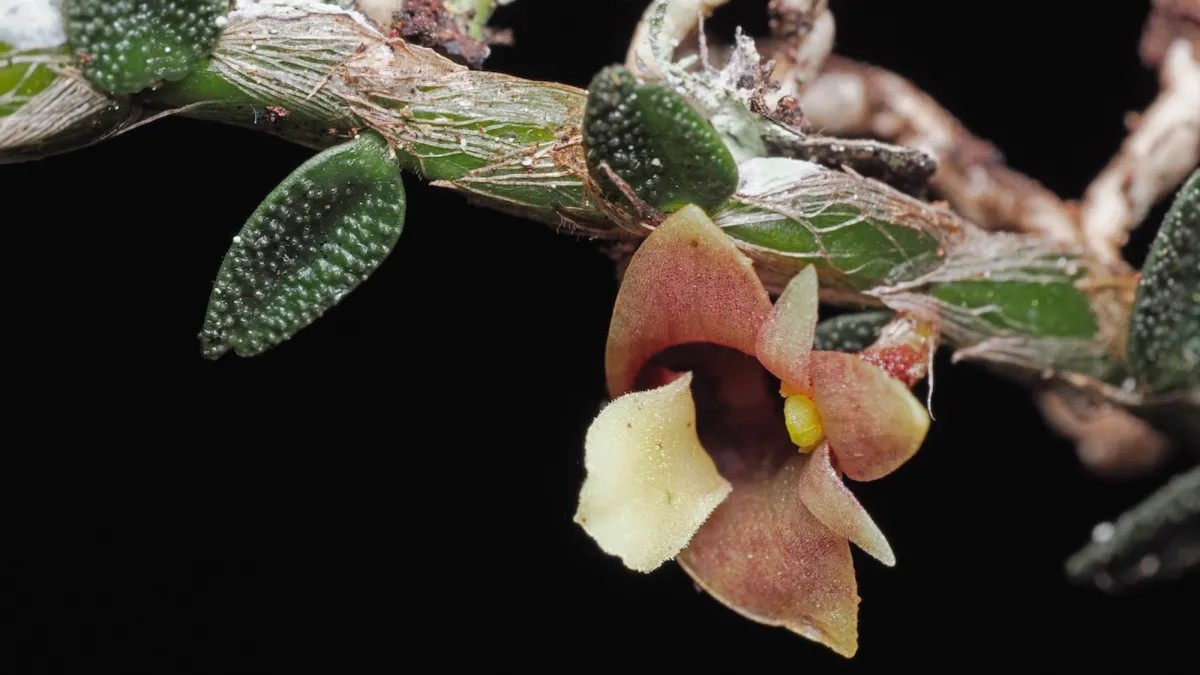
The natural world continues to surprise us with its hidden biodiversity. Each year, scientists uncover thousands of previously unknown plant and fungi species, revealing just how much remains undiscovered on our planet. In 2025, researchers from the Royal Botanic Gardens, Kew (RBG Kew) highlighted several particularly striking discoveries – from a parasite that turns spiders into walking incubators to plants so camouflaged they resemble pebbles. These findings underscore the urgency of taxonomic research and conservation efforts.
The Deadly Dance of Purpureocillium atlanticum
In the rainforests of Brazil, botanists have described Purpureocillium atlanticum, a fungus with a horrifying life cycle. This parasite infects trapdoor spiders, effectively turning them into “zombies.” The fungus spreads mycelial threads across the spider’s body, eventually killing it and sprouting a fruiting body from the burrow entrance. This structure then releases spores, ensuring the cycle continues.
This discovery is significant because it demonstrates the complex and sometimes brutal interactions within ecosystems. Parasitic fungi play a crucial role in regulating populations and shaping evolutionary pressures. Ignoring these dynamics would mean missing a vital piece of the rainforest’s delicate balance.
A “Fire Demon” Blooms in Peru
Researchers in Peru have identified Aphelandra calciferi, a shrub with vibrant red, yellow, and orange flowers reminiscent of the fire demon Calcifer from Hayao Miyazaki’s Howl’s Moving Castle. The plant, reaching up to 10 feet tall, is not only visually striking but also holds potential as an ornamental species.
This example illustrates how aesthetic and scientific value can coexist. While the plant may appeal to gardeners, its discovery also contributes to a deeper understanding of floral diversity in the Peruvian landscape.
The Art of Disguise: Namibia’s “Living Stones”
Namibia’s woodlands feature Lithops gracilidelineata subsp. mopane, a succulent subspecies nicknamed the “living stone.” These plants look so much like pebbles that they blend seamlessly into the landscape. Growing only a pair of sunlight-collecting leaves, they represent an extreme form of camouflage.
The survival strategy of these lithops is remarkable. In harsh environments, blending in is often the best defense. Their existence underscores the power of natural selection in shaping unique adaptations.
Why This Matters: A Race Against Extinction
Martin Cheek, RBG Kew’s senior research leader, emphasizes the critical role of taxonomy: “It is difficult to protect what we do not know, understand and have a scientific name for.” Each newly identified species adds to our understanding of ecosystems, which is essential for effective conservation.
The stakes are high. RBG Kew estimates that roughly 100,000 plant species and up to 3 million fungi remain undiscovered. Worse, a 2023 report suggests that 75% of these undiscovered plants are already threatened with extinction. The rapid pace of habitat destruction means scientists are struggling to keep up.
As Cheek warns, “Wherever we look, human activities are eroding nature to the point of extinction… If we fail to invest in taxonomy, conservation and public awareness of the issues now, we risk dismantling the very systems that sustain our life on Earth.”
The discoveries of 2025 serve as a stark reminder that the natural world holds countless secrets, many of which are disappearing before we even know they exist. Protecting this biodiversity requires immediate investment in scientific research, conservation, and public awareness.