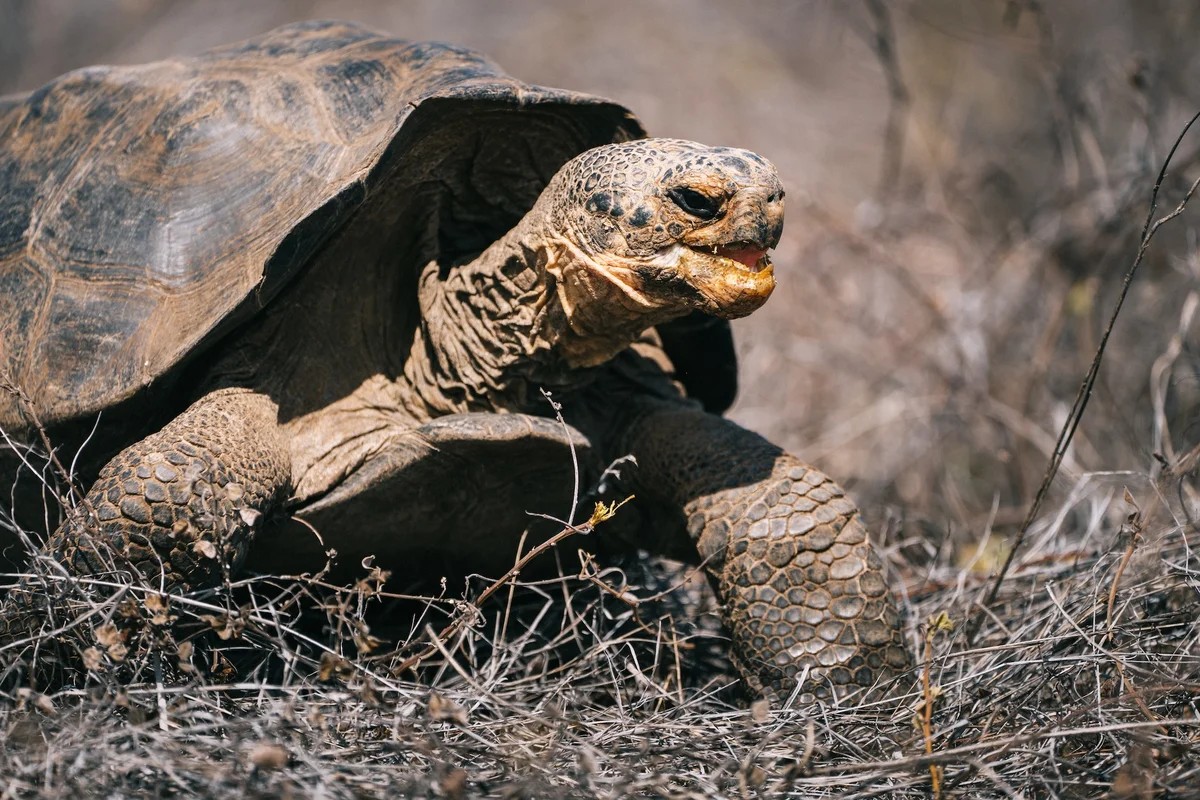
For nearly two centuries, the Floreana giant tortoise (Chelonoidis niger niger ) was believed extinct. A unique subspecies of the Galápagos tortoise, it vanished from Floreana Island in the early 1800s due to hunting by sailors and pirates, alongside the introduction of invasive species. However, a remarkable discovery in 2000 revealed the species’ survival – not on Floreana, but 70 miles away on Isabela Island.
Scientists found tortoises there with distinctive saddle-shaped shells that matched descriptions of the lost Floreana variety. Genetic testing confirmed these animals were hybrids, descended from Floreana tortoises taken aboard ships for food, and then left behind. This accidental relocation provided a lifeline for the species’ genetic material.
A Captive Breeding Program and Historic Return
Last week, 158 tortoises bred in a dedicated captive program were released back onto Floreana Island, marking the first time in almost 200 years that Floreana-ancestry tortoises have roamed the land. The breeding program, led by James Gibbs of the Galápagos Conservancy, paired individuals from Isabela Island based on genetic testing to maximize the Floreana lineage in their offspring. While not exact replicas of the original tortoises, these animals carry significant traces of the original DNA.
“Watching the tortoises step onto Floreana and start exploring was incredibly moving. It felt like the end of a 26-year effort but at the same time, a beginning,” says Gibbs.
Why This Matters: Keystone Species and Ecosystem Restoration
The return of these tortoises isn’t just a symbolic victory. The Galápagos tortoise is a keystone species —meaning its presence has a disproportionately large impact on the environment. These tortoises act as seed dispersers and contribute to forest regeneration. Their reintroduction is expected to nudge Floreana Island closer to its original ecological state.
Rick Hudson, president emeritus of Turtle Survival Alliance, points to similar successes: “Any time you can return an ‘ecosystem engineer’ like giant tortoises to an environment where they once roamed, we expect good things to happen.” The Aldabra tortoise’s reintroduction to Mauritius, for example, led to the recovery of native plants and the decline of invasive species.
The return of the Floreana tortoise is a powerful demonstration that even seemingly irreversible losses can be undone. The island’s ecosystems, shaped by millions of years of evolution, are now getting a second chance, and the biological processes that once defined Floreana are beginning to revive. This is a testament to the power of conservation and the unexpected resilience of nature.