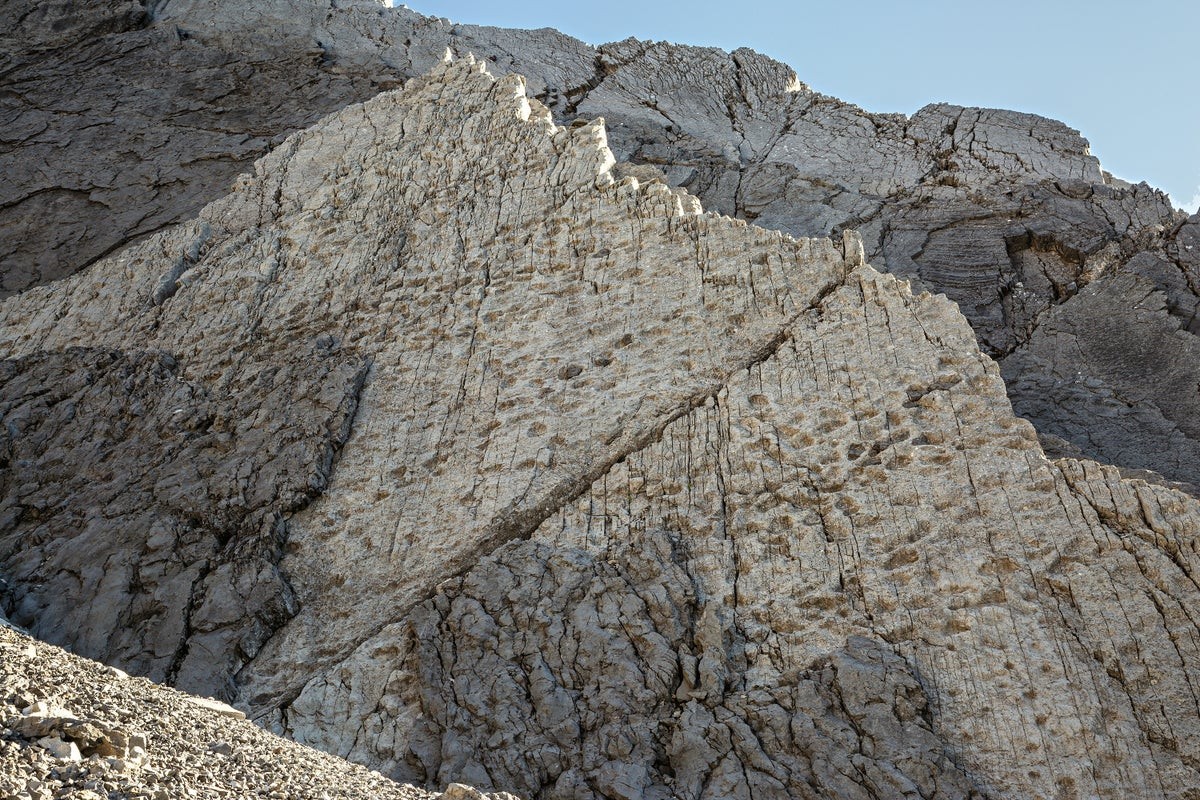
Thousands of remarkably preserved dinosaur footprints, dating back 210 million years to the Triassic Period, have been discovered high in the Italian Alps. The site, located in the Fraele Valley of Stelvio National Park, is now considered one of the most significant Triassic dinosaur track deposits globally.
The Discovery
Photographer Elio Della Ferrera first noticed the tracks last September while exploring the sheer rock faces. The prints, some measuring up to 40 centimeters in diameter, are so clear that paleontologists initially struggled to confirm their authenticity.
“It took me a few seconds to realize the photos were real,” says Cristiano Dal Sasso, a paleontologist from the Natural History Museum of Milan, leading the investigation. “Now we can go back in time and study the evolution of dinosaurs in this place.”
What the Footprints Reveal
Preliminary analysis suggests the prints were left by herds of large, plant-eating dinosaurs – likely early prosauropods, ancestors of the iconic Jurassic sauropods like Brontosaurus. These dinosaurs walked across ancient tidal flats when the area was submerged by the Tethys Ocean, a precursor to the modern Mediterranean Sea, long before the Alps formed.
Why this matters: The preservation quality is exceptional. Most Triassic dinosaur tracks are fragmented or eroded, but these have been preserved in almost pristine condition by the surrounding rock. This provides an unprecedented opportunity to study dinosaur behavior, herd movements, and the evolution of these prehistoric giants.
The Challenges Ahead
The site’s steep, inaccessible terrain presents significant research hurdles. Researchers will rely heavily on drones and remote sensing technologies to document and digitally preserve the footprints without disturbing the fragile environment.
Studying these tracks helps fill a critical gap in our understanding of dinosaur evolution. The Triassic Period is less studied than the Jurassic or Cretaceous, but it was a time of rapid evolutionary change as dinosaurs first began to dominate terrestrial ecosystems. The “Triassic Park,” as the site has been nicknamed, will be invaluable in tracing those early steps.
The discovery confirms that the Alps were once a thriving prehistoric landscape, and offers a unique window into a lost world.