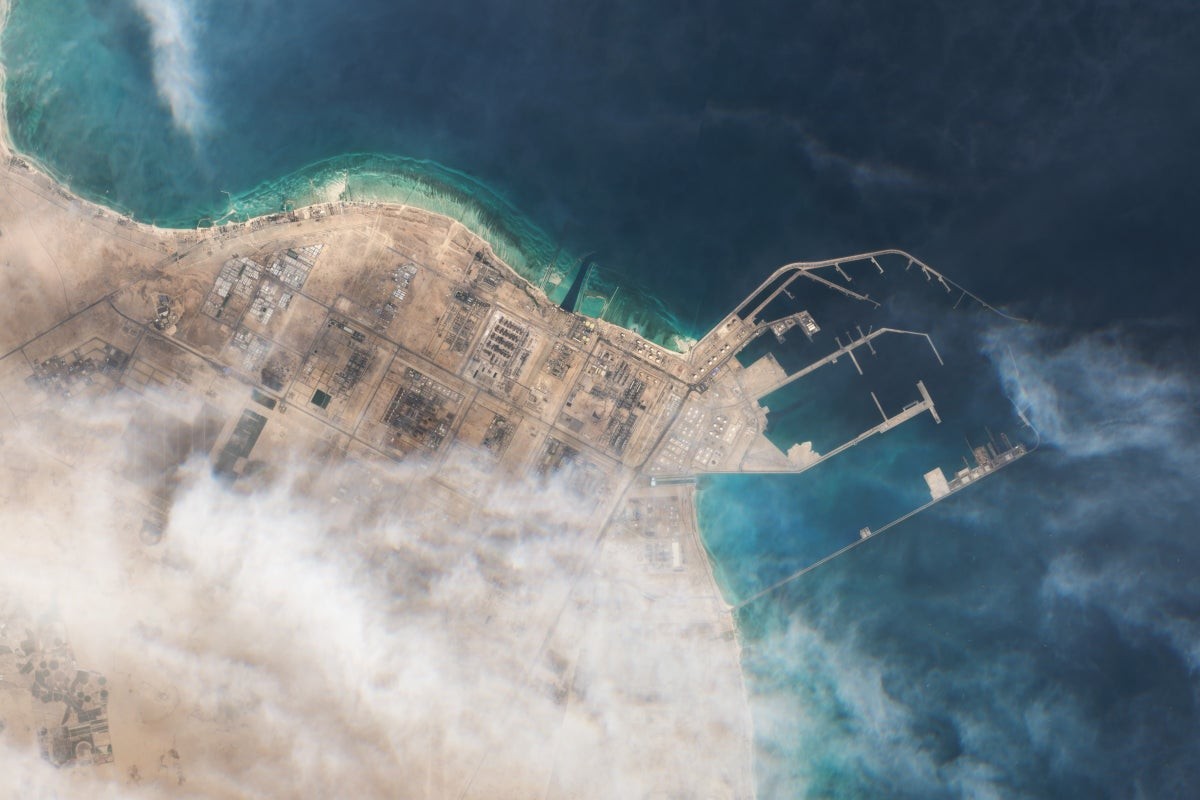
An Iranian military strike against Qatar’s liquefied natural gas (LNG) infrastructure has severely impacted global energy supply, knocking out approximately 17% of the country’s export capacity. The damage, first reported by Reuters, is just one facet of a broader destabilization of energy markets triggered by escalating tensions in the region, particularly the conflict involving the U.S. and Israel.
Critical Infrastructure Under Attack
The most immediate consequence is the effective closure of the Strait of Hormuz, a vital chokepoint through which roughly 20% of global LNG transit took place in 2024. This closure has already driven up prices for both oil and gas. Experts anticipate a prolonged disruption: Chuck McConnell, executive director at the University of Houston’s Center for Carbon Management in Energy, estimates that the LNG processing capability setback will likely last “two to three years.”
How LNG Works and Why This Matters
Natural gas, extracted from deep underground, is converted into liquid form for efficient overseas transport. The process involves cooling the gas to extremely low temperatures (-260°F or -162°C) in specialized facilities called “LNG trains.” These trains compress the gas into a liquid state, reducing its volume by a factor of 600. The destroyed trains in Qatar processed roughly 12.8 million metric tons of LNG annually — an energy equivalent to over a year’s worth of electricity for New York State.
The disruption is particularly acute because LNG is becoming a critical fuel for nations transitioning away from coal, especially in Europe and Asia.
Ripple Effects Across Industries
The impact extends beyond electricity: Qatar also produces naphtha (used in plastics and gasoline) and helium (vital for semiconductor manufacturing). Moreover, natural gas is a key component in nitrogen-based fertilizers, meaning this attack could raise global food costs.
Looking Ahead: Price Dynamics and Supply Expansion
While the situation is severe, the long-term picture is more complex. The global LNG market is expanding, with both the U.S. and Qatar investing in new production capacity. The U.S. alone is expected to increase LNG output by 19 billion cubic meters this year.
However, oil prices are likely to remain elevated due to industry reluctance to invest in long-term projects amid geopolitical uncertainty. If Asian and European nations respond by reverting to coal or accelerating renewable energy expansion, gas prices could eventually decline.
The Bottom Line: The Iranian attack on Qatari LNG facilities represents a significant shock to the energy system, with consequences likely to last for years. While global supply is expanding, the immediate impact will be felt worldwide through higher prices and potential disruptions in multiple industries.