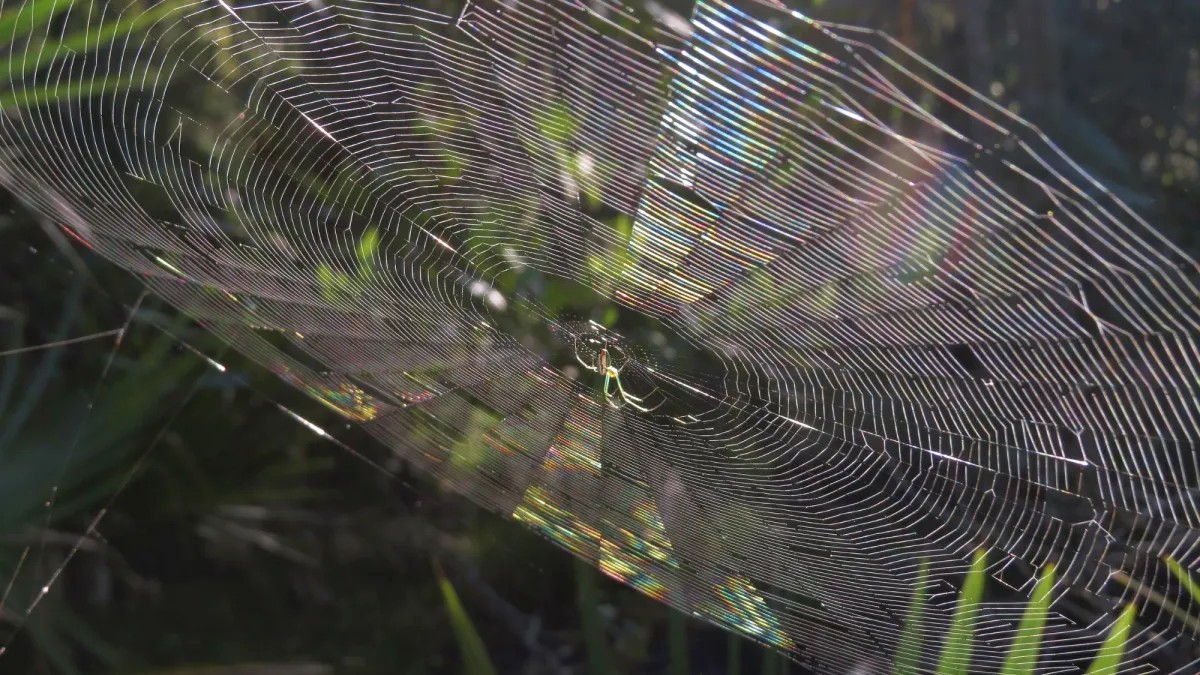
There is perhaps no sensation quite as jarring as walking confidently down a trail, only to feel thin, sticky filaments brush against your skin or face. For many hikers, this moment triggers an immediate, frantic reaction—a desperate attempt to shake off the web that often only makes the experience more distressing.
While these encounters are rarely dangerous, they are undeniably unpleasant. To help adventurers avoid these “arachnid home wrecker” moments, the National Park Service (NPS) has shared several practical strategies for navigating trails more effectively.
Strategic Pathfinding and Timing
The best way to deal with a spiderweb is to never encounter one in the first place. The NPS suggests focusing on two main factors: where you walk and when you walk.
- Stick to the center: Spiders tend to weave their intricate webs near greenery and dense vegetation. By staying on the well-traveled, cleared center of a path, you significantly reduce the likelihood of hitting a web stretched across the trail.
- Mind the clock: Spiders are not equally active throughout the day. They are most active during dawn and dusk. Planning your hikes for the middle of the day—when sunlight is at its peak—can help you avoid the most active weavers.
Proactive Gear and Techniques
If you are exploring areas where webs are more likely, you can use your equipment to “scout” the path ahead of you.
- Use a hiking pole: One of the most effective methods is to sweep a trekking pole or a sturdy stick in front of you as you move. This catches any low-hanging webs before they touch your body.
- Wear a brimmed hat: A hat serves a dual purpose; it acts as a physical shield for your face and hair, intercepting webs before they reach your skin, while also providing essential sun protection.
- The “Tall Leader” strategy: A common piece of social wisdom among hikers is to let the tallest member of the group lead the way. Because they have a higher vantage point, they are more likely to encounter and clear webs for the rest of the group.
What to do if you hit a web
Despite your best efforts, sometimes a web finds you. The key is to remain calm. While the instinct is to flail or backtrack wildly, this often causes the sticky silk to wrap more tightly around your clothing or hair.
“One does not simply become a master of karate. First, you must accidentally walk into a spider web.” — National Park Service
The NPS uses humor to remind hikers that these encounters are a standard, albeit annoying, part of the outdoor experience. If it happens, simply brush it off, stay calm, and continue your journey.
Conclusion
By staying on cleared paths, hiking during midday, and using tools like trekking poles or hats, you can significantly minimize the chance of an unwanted encounter with a spiderweb.