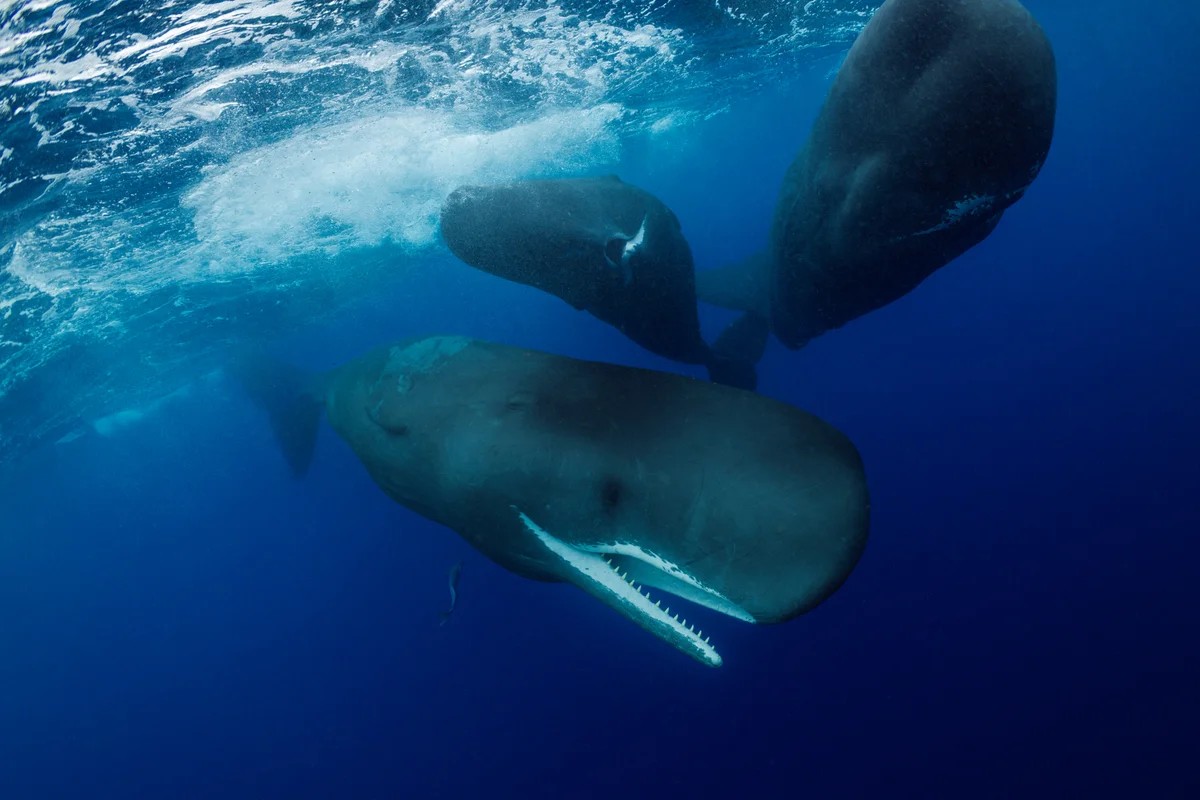
Sperm whales have demonstrated a remarkable and previously undocumented behavior: assisting one another during childbirth. Researchers witnessed and documented a birth event off the coast of Dominica in July 2023, revealing that multiple female whales actively cooperated to bring a calf into the world. This discovery challenges previous assumptions about animal social behavior, suggesting that such coordinated assistance may not be unique to humans or closely related primates.
The Observation: An Unexpected Event
Whale biologist Shane Gero first noticed unusual calm behavior in a known sperm whale group (“Unit A”) near the surface of the Caribbean Sea. The whales were not socializing or resting in the typical manner, and then suddenly began diving and rolling in the water. This was followed by a surge of blood, initially leading the team to suspect an attack by aggressive pilot whales, which are known to harass sperm whales. However, a calf’s head and fluke soon emerged, confirming that this was a birth event.
Cooperative Assistance Documented
The team swiftly documented the event with photographs and drone footage, capturing how two separate female-led groups (“matrilines”) within Unit A worked together to support the mother, Rounder, during labor. All 11 whales participated at some point, with Rounder’s half-sister Aurora and a young unrelated female, Ariel, providing the most direct assistance. The whales physically lifted and held the newborn calf near the surface, likely to help it breathe – young sperm whales tend to sink and must work harder to reach the surface.
Broader Implications: A Shift in Understanding
This behavior is significant because it expands our understanding of complex social behavior in marine mammals. While humans and some primates are known to assist in births, it was previously assumed this level of cooperation was limited to those species. The study suggests that sperm whales have a level of coordination and support during childbirth that has been previously unrecognized.
The exact reasons behind this cooperative behavior remain unclear. Possible explanations include defense against predators (such as the pilot whales later observed at the scene) or assisting the calf in remaining afloat. Researchers are now analyzing vocalizations (clicks) alongside the video footage to determine how the whales communicated during the event.
The calf remains alive and well in the Caribbean, and researchers continue to monitor its progress. This discovery emphasizes the ongoing need for detailed observation and analysis to fully understand the complex social lives of cetaceans.