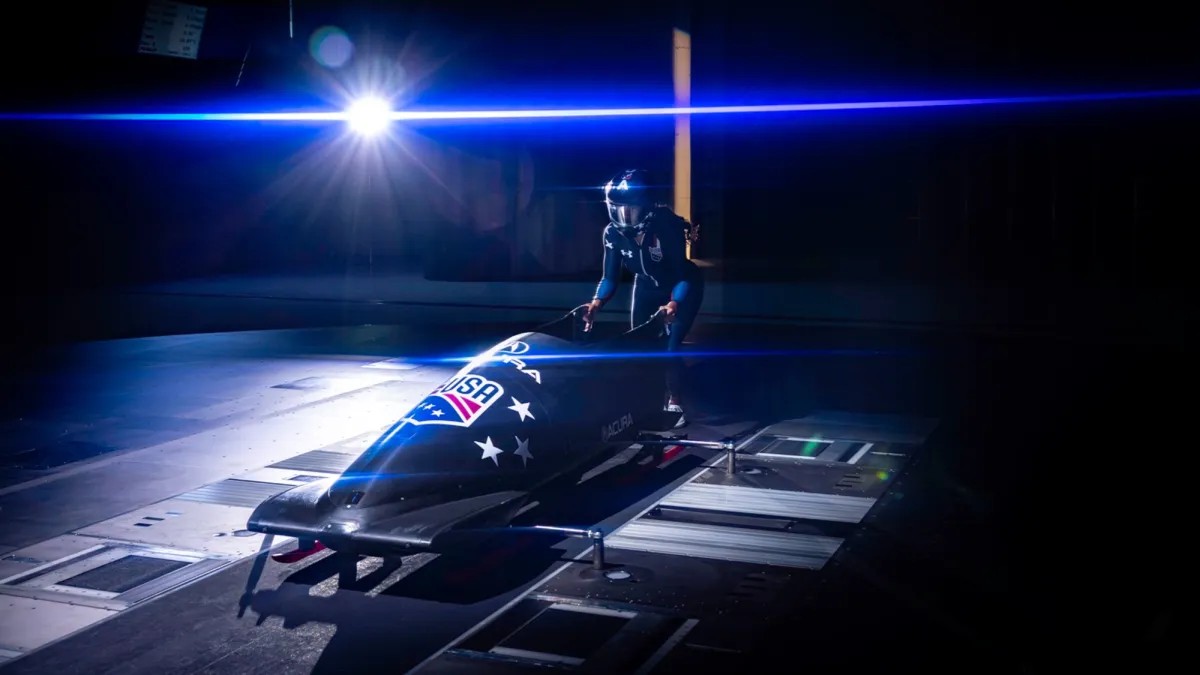
The U.S. Olympic bobsled and skeleton teams have partnered with Honda to leverage its advanced wind tunnel technology, seeking marginal gains in a sport where victory can hinge on hundredths of a second. The collaboration, born from an informal suggestion, saw athletes and engineers working together to refine aerodynamics in ways previously unexplored. This isn’t just about speed; it’s about applying high-precision engineering to a sport historically reliant on raw athleticism and instinct.
The Pursuit of Marginal Gains in Extreme Conditions
Bobsledding is brutal: sleds reaching over 90 mph, athletes enduring up to 5g forces. The sport is often called “Formula One on ice” for its high stakes and technical demands. Every advantage matters. Honda’s $124 million wind tunnel, capable of simulating winds up to 193 mph, provided the ideal environment to dissect the physics of bobsledding.
The partnership wasn’t just about raw speed. Honda’s engineers initially asked a simple question: “How can we help you win gold?” The answer unfolded through rigorous testing that challenged assumptions about optimal athlete positioning.
Debunking Myths and Optimizing Performance
For years, conventional wisdom held that bobsledders needed to maintain perfect alignment throughout a run. Honda’s tests revealed this wasn’t necessarily true. Subtle shifts in position—such as tilting helmets or slightly offsetting athletes—had measurable effects, though some were minimal.
The most significant finding? The position of an athlete’s head played a crucial role. Tilting the head up or down even slightly impacted aerodynamic drag more than minor body adjustments. This insight is critical because athletes under extreme G-forces can’t maintain perfect form constantly. The documentation provided by Honda allows them to strive for optimal positioning when possible.
“There was this thought that you had to have all the athletes in perfect alignment all the time… What we learned was while it is a very slight aerodynamic negative, it’s not as bad as anyone thought.” —Mike Unger, Wind Tunnel Lead for Honda America
Innovation as a Side Effect
The project isn’t just about bobsledding. Honda engineers treat it as a passion project that pushes them to think differently. The team developing the next Honda Pilot or Acura MDX also applies their expertise to improving gravity-powered vehicles. This “side project” fosters innovation by forcing engineers to apply their skills in unconventional ways.
Honda is committed to this partnership through the 2030 Winter Olympics. The team is already working on new sled designs, with further aerodynamic testing planned. The goal isn’t just marginal gains; it’s sustained, scientifically driven improvement in a sport where milliseconds separate champions from also-rans.
The U.S. bobsled team’s experience demonstrates how unexpected collaborations can unlock performance advantages. The partnership with Honda proves that even in a sport steeped in tradition, data-driven science can reshape the pursuit of speed.