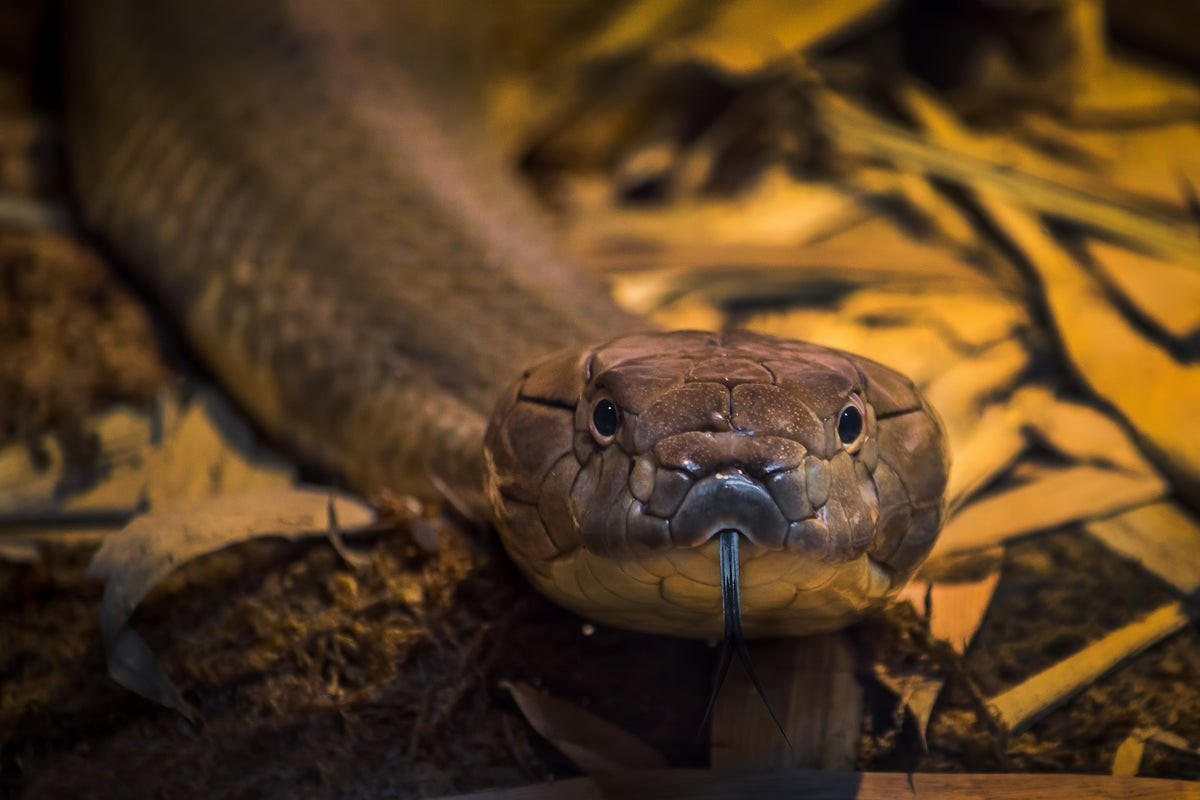
King cobras, among the world’s most venomous snakes, are turning up in unexpected locations across India, and a new study suggests they may be using trains to get there. This phenomenon isn’t just alarming passengers—it also raises questions about how these reptiles are expanding their range and what it means for both wildlife and human safety.
Unexpected Passengers
Reports of king cobras and other snakes on trains and in railway stations have been increasing in India. One incident from 2017 involved a cobra found coiled around a train window, hissing at passengers. While the snake was ultimately removed safely, the event highlights a growing concern: snakes ending up far outside their natural habitats.
The Study: Trains as Transport
Researchers from the Leibniz Institute for the Analysis of Biodiversity Change and Victor Valley College examined 47 king cobra rescue locations in Goa between 2002 and 2024. They found that five snakes were discovered in areas completely unsuitable for their survival, all within close proximity to railway tracks or stations.
The Western Ghats king cobra, a species formally recognized only in 2024, prefers cool, moist montane forests. However, the rescued snakes were found in dry, lowland areas, far from ideal breeding conditions. The study suggests the snakes may be hitching rides on trains, possibly during prolonged stops for goods collection or due to weather delays.
Why Are They Doing This?
The motivation behind these journeys remains unclear. Researchers speculate the snakes may be hunting prey (like rodents or other snakes) or seeking shelter before settling down on the train to digest. While the hypothesis is difficult to prove, it opens new avenues for research.
“This is what good science does—provides a strong hypothesis that we can continue testing as new evidence accumulates.” – Emily Taylor, biologist at California Polytechnic State University.
Are They Dangerous?
Despite their potent venom and speed, king cobras are unlikely to attack humans unless cornered or provoked. As herpetologist Hinrich Kaiser explains, “You are not food, so they much prefer to get out of your way.” Nonetheless, the presence of these snakes in human-populated areas presents a potential risk, especially if they feel threatened.
The study highlights how wildlife may adapt to human infrastructure in unexpected ways. While further research is needed to confirm the extent of train-assisted snake dispersal, the findings offer valuable insight into how species are responding to an increasingly fragmented world.