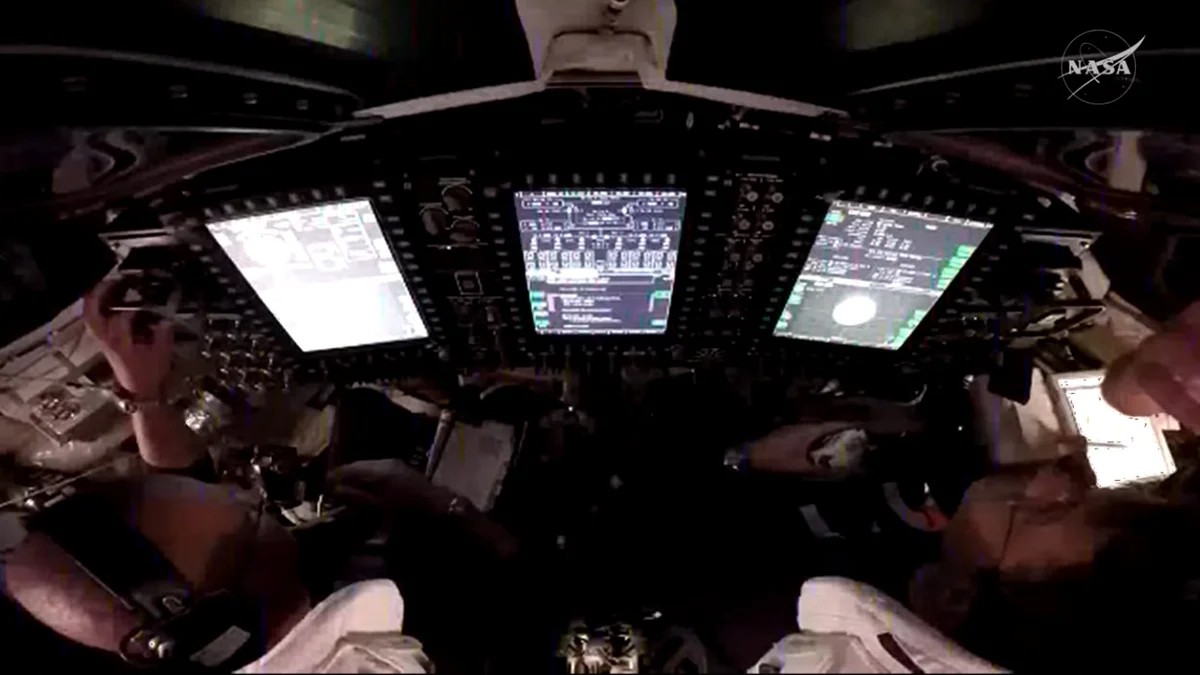
NASA’s Artemis II mission is progressing on schedule, having completed a critical engine burn on Thursday evening that propels the Orion spacecraft toward a planned lunar flyby. The maneuver, known as a translunar injection (TLI) burn, successfully adjusted the spacecraft’s trajectory, increasing its velocity by approximately 867 miles per hour. This adjustment was achieved using 6,700 pounds of monomethyl hydrazine propellant over a six-minute period, delivering roughly 6,000 pounds of thrust—comparable to accelerating a car from 0 to 60 mph in under three seconds.
The burn’s completion marks a pivotal step in the mission, confirming the spacecraft is on the correct path for a lunar return. Houston Mission Control confirmed the success, with astronaut Christina Koch responding, “With this burn to the moon, we do not leave Earth, we choose it.” This statement highlights the mission’s dual purpose: testing future lunar capabilities while reasserting humanity’s connection to Earth.
Currently, Orion is traveling at approximately 22,670 mph, the fastest speed it will reach during the mission. The spacecraft remains roughly 246,000 miles from the Moon, with an estimated arrival in the Moon’s gravitational sphere of influence within three days.
The trajectory allows for a gravity-assisted return to Earth, minimizing the need for additional large burns. While minor course corrections are planned over the next few days, the current schedule anticipates a splashdown in the Pacific Ocean on April 10.
Following the burn, the crew is now focused on testing life-support systems and rehearsing procedures for when they reach the lunar far side on Monday. This will allow them to observe previously unseen lunar features, capturing images and video for scientific analysis. Moreover, the mission is set to push the crew farther from Earth than any human has ever traveled.
The Artemis II crew’s successful completion of TLI allows them to shift focus towards experimentation and communication with families. With critical maneuvers completed, the mission enters a phase of operational testing before the return journey begins. The astronauts are scheduled to splashdown in the Pacific Ocean at approximately 5:30 PM on April 10, marking the conclusion of this historic lunar flyby.
The Artemis II mission is a critical step toward sustainable lunar exploration, and its smooth execution demonstrates NASA’s continued progress in deep-space human spaceflight.