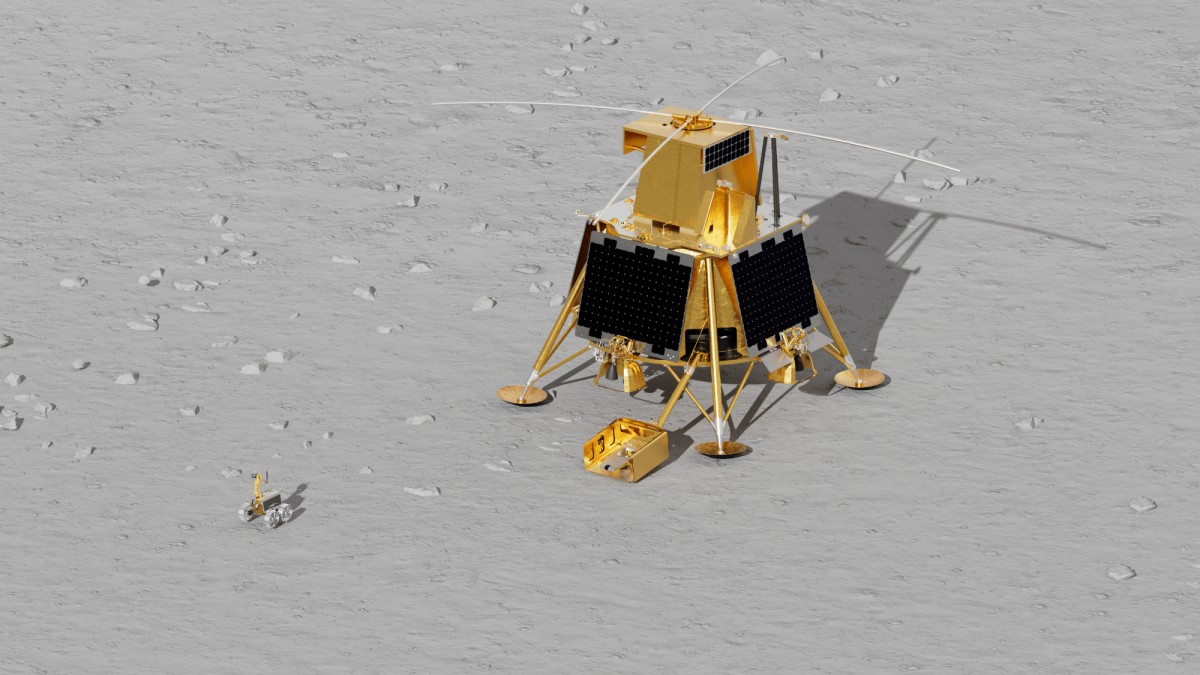
The race to establish a reliable power infrastructure on the Moon is accelerating. A Canadian aerospace startup, Volta Space Technologies, is set to test its wireless power transmission system aboard Firefly Aerospace’s Blue Ghost lander, slated to launch towards the lunar South Pole by the end of 2026. This marks a crucial step toward realizing a functional “power grid” that will be essential for sustained lunar exploration and, eventually, human settlements.
The Challenge of Lunar Power
The Moon presents unique power challenges. Unlike Earth, it experiences prolonged periods of darkness—roughly 14 Earth days at a time—during which solar panels become useless. Lunar nights can plunge temperatures to as low as -410°F (-246°C), making conventional energy storage difficult. Reliable power is not just about keeping lights on; it’s about heating equipment, preventing failures, and ensuring continuous operation during these harsh conditions.
Volta’s Wireless Solution: LightGrid
Volta’s approach, dubbed LightGrid, involves beaming solar energy from orbiting satellites to receivers (LightPorts) mounted on lunar rovers, landers, and other vehicles. The company claims this system could provide a steady power supply even during long lunar nights. The upcoming Firefly mission will serve as a critical test, validating whether the technology can function in a real lunar environment.
Volta CEO Justin Zipkin stated, “This collaboration allows us to prove our LightPort receiver in a real lunar environment and move one step closer to delivering a fully integrated power grid for the moon.” While details on expected energy output remain unclear, the company estimates that three small satellites in low lunar orbit would be sufficient to power a rover. Scaling this up for wider coverage would require a larger fleet.
Competing Approaches: LunaGrid and Nuclear Power
Volta isn’t alone in pursuing lunar power solutions. Astrobotic is developing LunaGrid, a system of solar-generating stations connected by transmission cables and serviced by small mobile robots. Meanwhile, NASA is aggressively pursuing a 100-kilowatt fission reactor for deployment by the end of the decade, a directive spurred by the need for dependable energy. China and Russia are also actively developing their own lunar nuclear reactors, underscoring the strategic importance of securing lunar power resources.
The Expanding Lunar Landscape
The rapid maturation of private aerospace companies like Firefly, Intuitive Machines, and ispace is accelerating lunar access. NASA alone has contracts for 15 commercial lunar deliveries by 2030. These missions aren’t limited to power solutions; they also include establishing lunar cell networks and spectrum rollout, signaling the beginning of a more crowded, interconnected lunar environment.
The development of a fully-functioning lunar habitat will likely require a hybrid approach, integrating wireless transmission, wired grids, and potentially nuclear power to create a resilient and reliable energy system. Volta’s early lead with the Firefly mission may not last long, but it is a critical step toward making the Moon a viable destination for long-term human presence.