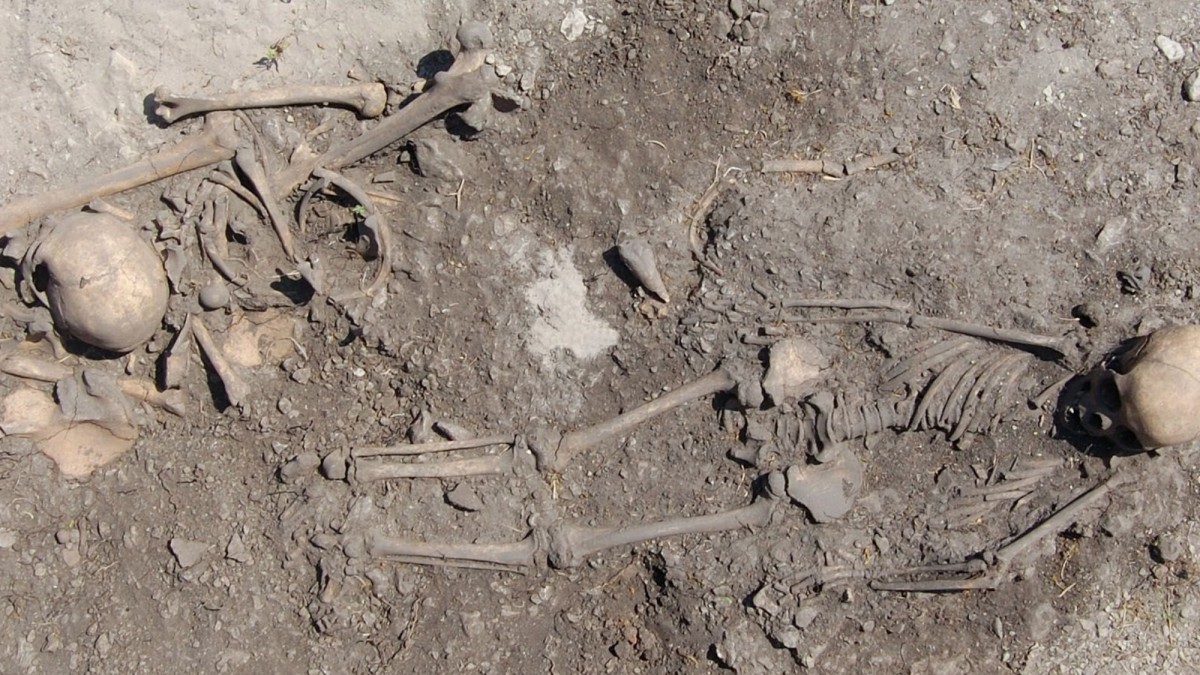
New genetic research from a 5,500-year-old burial site in Sweden is rewriting our understanding of Stone Age family structures. Researchers have discovered that individuals buried together weren’t always the closest relatives—instead, many were second or third-degree kin, indicating a deliberate recognition of broader familial ties. This finding challenges the assumption that ancient burials primarily honored immediate family, suggesting a more complex social organization than previously thought.
Beyond Immediate Kinship
The study, conducted by scientists at Uppsala University and published in Proceedings of the Royal Society B Biological Sciences, analyzed DNA from four graves at the Ajvide archaeological complex on the Swedish island of Gotland. This region was home to hunter-gatherer cultures while agriculture spread across much of Europe.
Genetic analysis revealed surprising relationships:
- One grave contained a young woman, a four-year-old child, and a toddler. The children were full siblings, but the woman was likely their aunt or half-sister.
- Another grave held a young girl next to the remains of her adult father, who had been moved there from another location.
- Two other graves contained third-degree relatives, such as cousins or great-aunts.
These arrangements suggest that people in this culture carefully tracked lineage beyond the nuclear family—a finding that could reshape interpretations of Stone Age society.
Why This Matters: Challenging Assumptions About Ancient Social Structures
For decades, archaeologists have assumed that ancient burial practices prioritized immediate family. The Ajvide site shows a more nuanced picture. The fact that these hunter-gatherers recognized and honored relations beyond parents, children, and siblings suggests a society where extended kinship played a significant role in social cohesion.
This discovery also raises new questions: Was this intentional arrangement a way to strengthen bonds between distant relatives? Did it reflect a complex system of inheritance or social obligations? Further research may reveal whether this pattern was unique to the Ajvide culture or representative of broader Stone Age practices.
Future Research and the Preservation of Ancient Knowledge
The team plans to expand their investigation to include the remains of over 70 individuals from the same site. This interdisciplinary approach aims to uncover more details about the lives, burial customs, and social structures of these ancient hunter-gatherers. As studies of kinship in archaeological cultures are rare, each discovery adds invaluable insight into how our ancestors lived and interacted.
“As it is unusual for these kinds of hunter-gatherer graves to be preserved, studies of kinship in archaeological hunter-gatherer cultures are scarce and typically limited in scale,” explains Tiina Mattila, a population geneticist.
The preservation of these ancient burial grounds provides a unique window into the past, helping us understand the evolving complexities of human social organization.