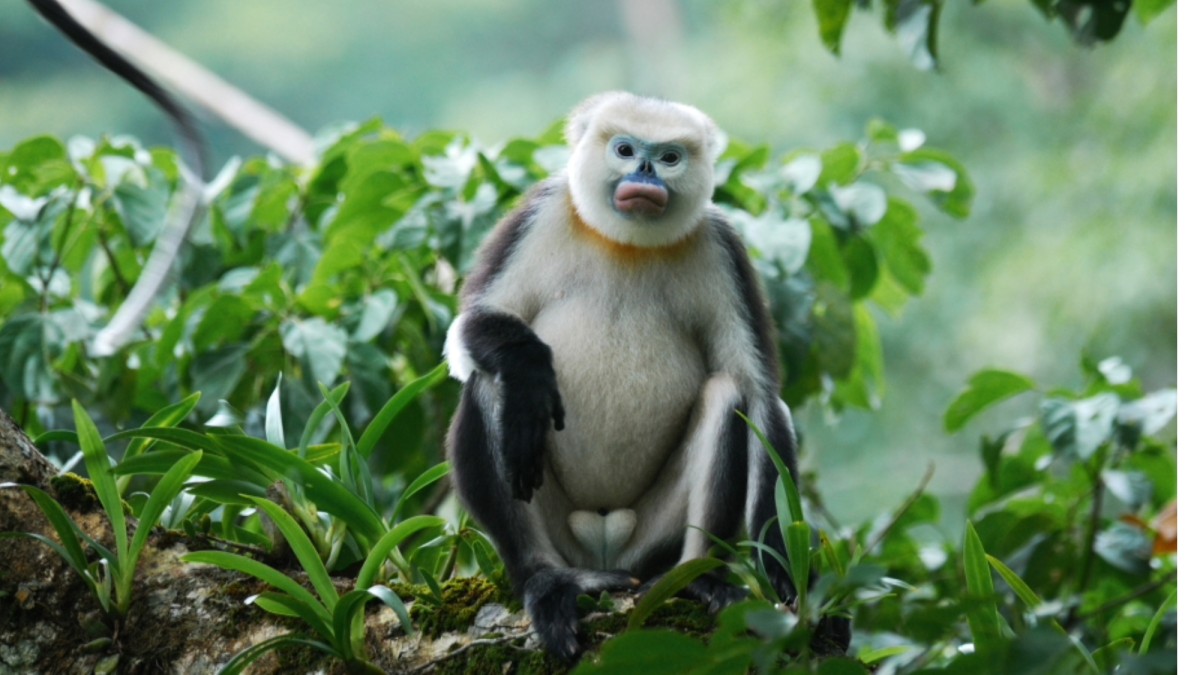
The critically endangered Tonkin snub-nosed monkey (Rhinopithecus avunculus )—a primate known for its striking blue face and swollen lips—is showing signs of population stability in a key conservation area in northern Vietnam. This is a significant, albeit fragile, victory in the ongoing battle against primate extinction.
The Species at Risk
The Tonkin snub-nosed monkey is among the world’s most endangered primates. Its entire remaining population is fragmented across just two primary habitats: Quan Ba Forest and the Khau Ca Species and Habitat Conservation Area. With an estimated global population of around 250 individuals, the species remains critically vulnerable. The monkeys’ restricted range and small numbers make them exceptionally susceptible to habitat loss, poaching, and disease.
Recent Findings: Stability in Khau Ca
A recent census by Fauna & Flora, a wildlife conservation charity, confirmed that the approximately 160 Tonkin snub-nosed monkeys inhabiting the Khau Ca conservation area are stable. The 19-day survey, conducted outside the breeding season, also recorded the presence of infant monkeys, suggesting ongoing reproduction within the population.
The survey employed a combination of modern and traditional methods—binoculars, thermal drones, camera traps, and a novel grid-based mapping approach. This strategy improved efficiency by assigning dedicated teams to specific survey areas, eliminating overlaps and ensuring more accurate counts.
Challenges Remain: Habitat Loss and Community Engagement
While poaching has decreased thanks to conservation efforts, habitat loss remains the primary threat to the species. Agricultural expansion continues to drive deforestation, shrinking the monkeys’ already limited range. Fauna & Flora is working with Vietnamese authorities to strengthen conservation area protections and restore forest corridors—vital for allowing the monkeys to move between fragmented habitats.
Community engagement is also critical. Tran Van On, a member of the local Community Conservation Team, notes that awareness has grown significantly. Locals are now more conscious of protecting the species, as well as the broader forest ecosystem. The project has introduced alternative income streams for local households, reducing dependence on exploiting forest resources.
“These numbers still aren’t big. But it is reassuring that we have been able to identify various family groups in Khau Ca and that there is no evidence of trapping or hunting,” says Canh Xuan Chu, the Tonkin snub-nosed monkey project manager at Fauna & Flora.
Despite the encouraging stability, the future of the Tonkin snub-nosed monkey remains precarious. The population is still dangerously small. Continued, coordinated conservation efforts are essential to ensure that this unique and charismatic primate survives.