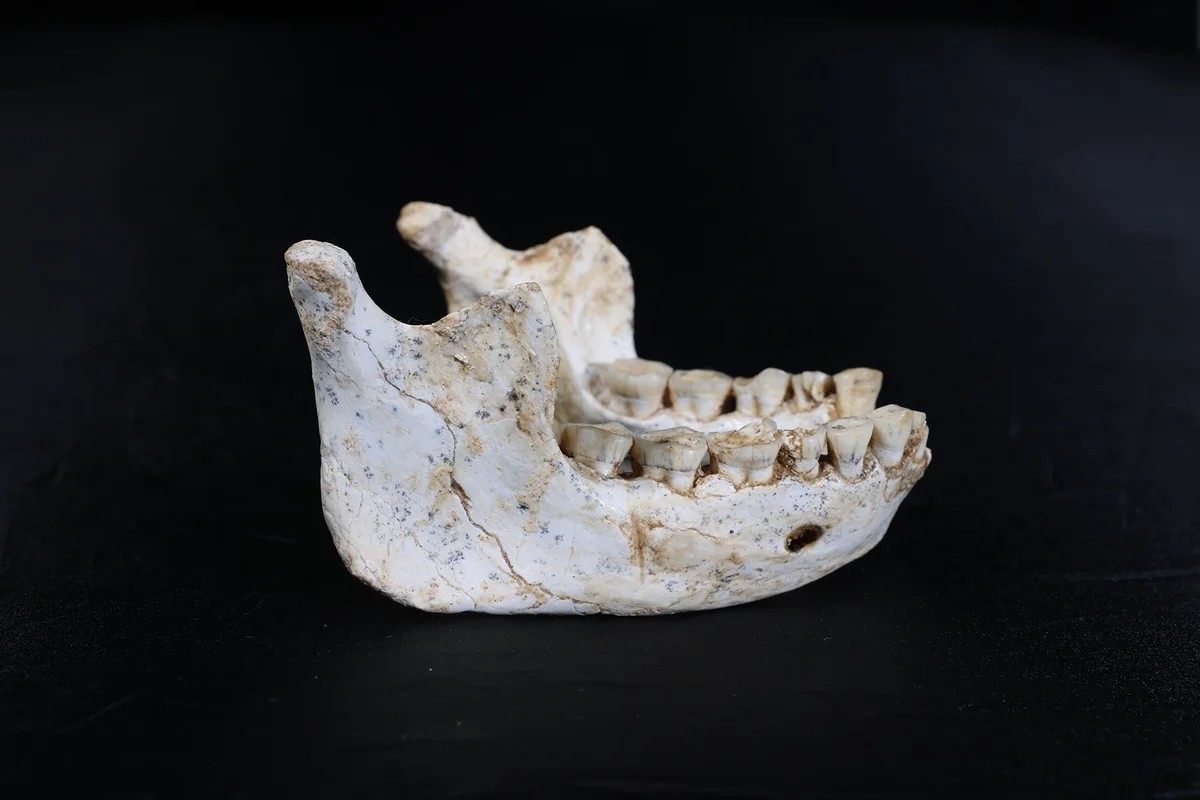
A recent discovery in Morocco may rewrite our understanding of human evolution, pinpointing a potential last common ancestor of modern humans, Neanderthals, and Denisovans. The fossils – including jawbones, a leg bone, vertebrae, and teeth – were excavated from the Grotte à Hominidés cave over decades and have now been dated to approximately 773,000 years ago.
The Significance of the Find
This dating is critical because it places the fossils squarely within the timeframe of the last shared ancestor of Homo sapiens, Neanderthals, and Denisovans. While previous theories posited a European origin for this ancestor (such as the Homo antecessor fossils found in Spain), the Moroccan specimens exhibit a unique blend of primitive and advanced traits.
According to Abderrahim Mohib, co-author of the research, “We can say that the shared ancestry between these three species is perhaps in Grotte à Hominidés in Casablanca.” This suggests North Africa played a more central role in human evolution than previously thought.
How the Dating Was Achieved
Determining the age of the fossils wasn’t straightforward. The research team used a technique called magnetostratigraphy, which relies on the fact that Earth’s magnetic field flips periodically. By analyzing iron-rich minerals within the sediment surrounding the bones, they matched the fossils to a known magnetic reversal that occurred 773,000 years ago.
The Cave’s History and Fossil Context
The Grotte à Hominidés cave sits within a quarry, and the first mandible was discovered as early as 1969. Additional finds, including vertebrae and another mandible, followed in 2008 and 2009. Notably, the fossils were found mixed with animal remains, including evidence of scavenging by predators like hyenas – one leg bone even bears teeth marks. This suggests the cave served as a den for large carnivores, which may have contributed to the fossil accumulation.
What Makes These Fossils Different?
The Moroccan fossils aren’t just old; they’re a mosaic of traits. They combine features reminiscent of older African hominins, like Homo erectus, with characteristics seen in later African and Eurasian specimens. This “in-between” morphology suggests a transitional species, potentially representing a crucial step in the divergence of the human family tree. The fossils are more complex than the previously proposed Homo antecessor fossils from Spain, displaying a greater mix of ancestral and modern features.
“They display a combination of primitive and more advanced traits, indicating human populations close to this phase of divergence,” Mohib explains. “They thus confirm the deep antiquity of our species’ African roots and highlight North Africa’s key role in the major stages of human evolution.”
This discovery reinforces the idea that human evolution wasn’t a linear progression but a complex branching process. It underscores the importance of continued fossil exploration in Africa, which may hold further clues to our species’ origins. The Moroccan fossils serve as a powerful reminder that our evolutionary story is far from complete.