For decades, “Gifted and Talented” programs have often functioned as exclusive clubs. Traditionally, these programs relied on teacher recommendations or parental requests, a system that frequently favored affluent, white, and Asian students while leaving many others behind.
However, a significant paradigm shift is underway across U.S. school districts. Educators are moving away from merely “labeling” a small group of high achievers and are instead embracing “talent development” —a data-driven approach designed to identify and nurture potential in all students, regardless of their background.
The Equity Gap in Traditional Testing
The move toward new identification methods is a direct response to systemic inequality. Historically, gifted programs have not reflected the diverse demographics of the general student population.
According to Scott Peters, director of research consulting at NWEA, the issue isn’t necessarily that students of color aren’t performing well, but rather that societal inequities prevent them from reaching the same benchmarks as their more affluent peers.
“You can change tests all day long, but at the end of the day, you can’t give some kids three years of $40,000-a-year preschool and also wonder why this kid that’s never been to school until first grade doesn’t do as well.” — Scott Peters, NWEA
This disparity has led to intense political debate. In New York City, for example, Mayor Zohran Mamdani has advocated for phasing out traditional gifted programs entirely to ensure high-quality, curiosity-driven education is accessible to every child.
A New Strategy: “Strength or Stretch”
To combat these inequities, districts are shifting their focus from finding “the gifted child” to developing “talent” in the classroom. This involves two primary strategies:
1. Universal Screening
Instead of waiting for a teacher to notice a student or a parent to ask for testing, schools are moving toward universal screening. By testing every student in a specific grade, districts can catch “hidden” talents that might otherwise be missed due to socioeconomic barriers.
In Charleston County, South Carolina, transitioning from a nomination-based system back to universal testing for fourth graders resulted in a massive increase in identified students—jumping from 40 to 150 pupils.
2. Data-Driven “Talent Scouting”
Rather than using heavy, standardized IQ tests as the sole gatekeeper, educators are using data to identify specific cognitive strengths and weaknesses.
Elizabeth McLaurin Uptegrove, an assistant academic director in Charleston, utilizes a “strength or stretch” system. By analyzing aptitude test data—which breaks down verbal, quantitative, and nonverbal abilities—teachers can group students by their specific needs.
The Role of Gamification in Learning
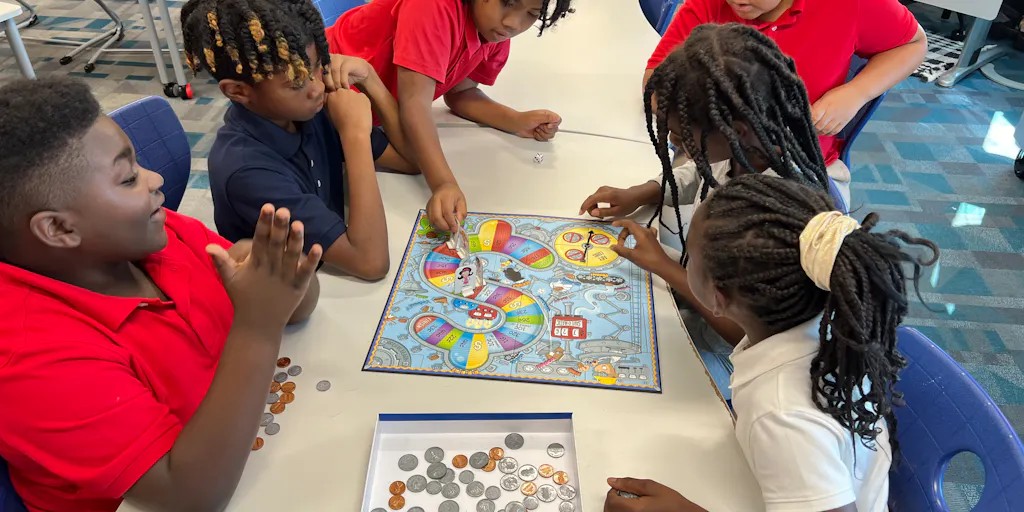
One of the most innovative aspects of this shift is the use of specialized games to facilitate learning. Rather than relying on repetitive worksheets, which can stifle engagement, teachers are using game-based models to make “rigorous, hard thinking almost irresistible.”
- Active vs. Passive Learning: Games allow students to apply critical thinking and reasoning in real-time.
- Targeted Skill Building: If data shows a student has high verbal skills but struggles with math, teachers can use math-based vocabulary games to bridge the gap.
- Proven Results: In the Amphitheater Public School District in Arizona, schools implementing these game-based strategies have reported higher rates of “proficient” and “highly proficient” scores compared to those using traditional methods.
Challenges Ahead: Funding and Scale
Despite the success of these programs, significant hurdles remain. The “talent development” model is resource-intensive, requiring specialized training for teachers and investment in high-quality educational tools.
Vanessa Hill, a gifted education coordinator in Tucson, notes that financial constraints are a constant threat, with some schools facing closure due to budget cuts. Furthermore, experts like Scott Peters argue that while small-scale gifted programs are a start, the real challenge lies in creating a massive, school-wide “development pipeline” that integrates advanced learning into the core curriculum for everyone.
Conclusion
The transition from exclusive gifted labeling to inclusive talent development represents a major evolution in American education. By using data and engaging, game-based instruction, districts aim to dismantle historical inequities and ensure that academic potential is nurtured in every student, not just a privileged few.