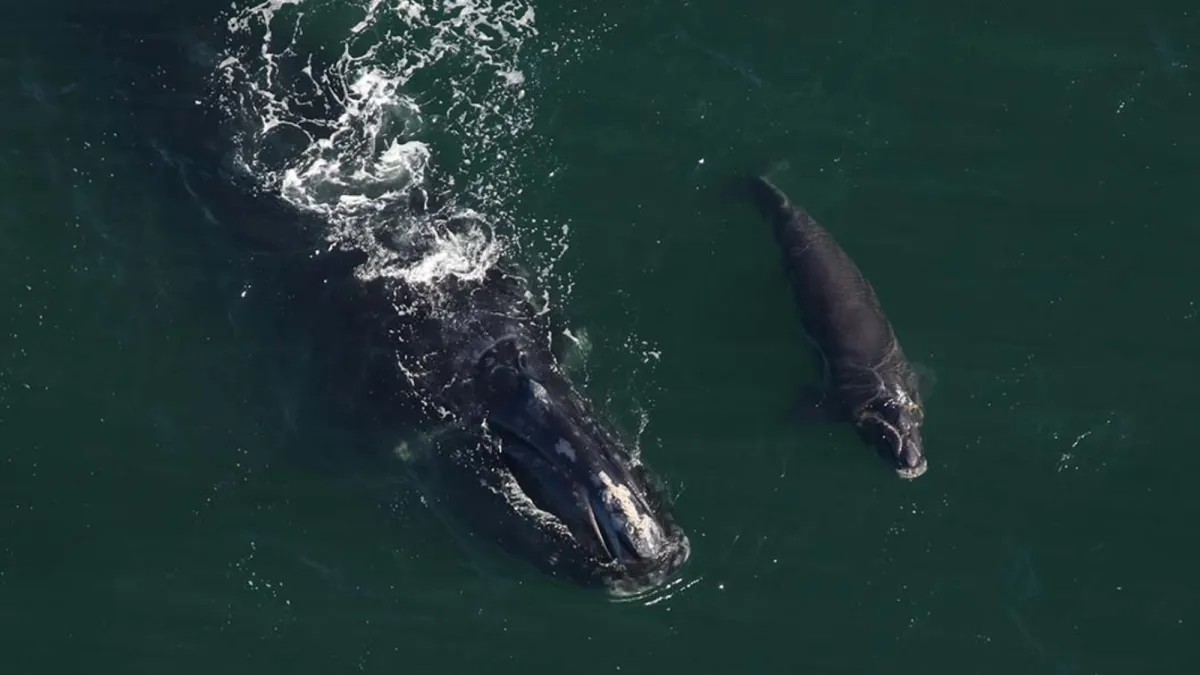
The New Year has brought encouraging news for the critically endangered North Atlantic right whale (Eubalaena glacialis ). Recent surveys conducted by the New England Aquarium and the Clearwater Marine Aquarium reveal a robust calving season along the coasts of Florida, South Carolina, and Georgia. As of January 8th, 18 new mother-calf pairs have been documented, a critical development for a species on the brink.
A Rare Success Story in Conservation
The increase in births is particularly significant given the ongoing “Unusual Mortality Event” (UME) declared in 2017, which has plagued the population with increased deaths. Despite this, the overall population has seen a gradual, though modest, rise, with a 2.1% increase between 2023 and 2024.
Notable sightings include Juno, a 40+ year-old whale with her ninth documented calf, and Catalog #4610, a younger mother (born in 2016) who has produced her first calf.
Why This Matters
North Atlantic right whales are not just majestic creatures; they play a vital role in the marine ecosystem. These massive mammals – reaching up to 52 feet long and 140,000 pounds – contribute significantly to nutrient cycling through their waste and provide sustenance to other marine life upon death.
The current population stands at approximately 384 individuals, with fewer than 80 actively reproducing females. This makes every successful birth crucial for the species’ long-term survival.
Human Impact and Cautious Optimism
Despite the positive trend, the whales still face significant threats from human activities. Entanglement in fishing gear and ship strikes remain major causes of injury and death.
As Heather Pettis, a senior scientist at the New England Aquarium, stated, “We’re seeing increases… but we still are seeing injuries to animals from human activities. So, you know, I say that we’re cautiously optimistic.”
Continued protection efforts are essential to prevent these whales from slipping back towards extinction. The calving season, which lasts from mid-November to mid-April, provides a critical window for observing and safeguarding these vulnerable animals.
The recent increase in calf numbers serves as a beacon of hope, but sustained conservation efforts are needed to ensure the future of the North Atlantic right whale.