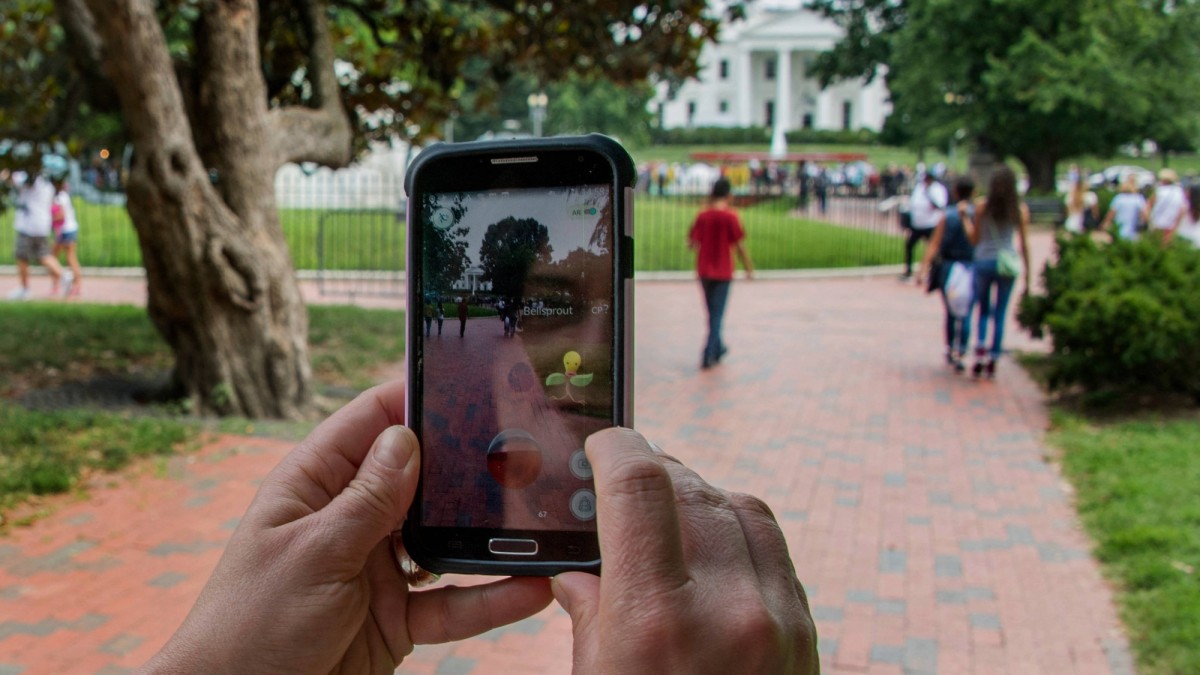
For years, Pokémon Go captivated millions with its augmented reality gameplay, turning city streets into digital hunting grounds. Players wandered, cameras raised, chasing virtual creatures superimposed on the real world. Now, a decade later, that very activity is quietly powering the next generation of delivery robots. Niantic Spatial, the team behind Pokémon Go, has partnered with Coco Robotics to equip their short-distance delivery bots with a highly accurate navigation tool called the Visual Positioning System (VPS).
The Unexpected Utility of Crowdsourced Data
The VPS isn’t just another GPS alternative; it uses visual landmarks to pinpoint location with centimeter-level precision. The key? It was trained on over 30 billion images captured by Pokémon Go users. This means that all those hours spent scanning parks, parking lots, and even dimly lit alleyways for Pikachus and Charizards have now been repurposed to help robots deliver your takeout.
This is a striking example of how seemingly unrelated data collection can yield unforeseen applications years down the line. As Niantic Spatial CEO John Hanke put it, “getting Pikachu to realistically run around and getting Coco’s robot to safely and accurately move through the world is actually the same problem.”
How Pokémon Go Data Fuels Robot Navigation
The VPS works by analyzing surroundings instead of relying solely on GPS. Pokémon Go players physically traveled to specific locations, pointing their phones at various angles, creating a massive mapping effort. Niantic further boosted this data collection in 2020 with “Field Research,” encouraging players to scan real-world statues and landmarks for in-game rewards.
The sheer volume of data—fueled by a peak of 230 million monthly active players in 2016 and still hovering around 50 million today—ensures accuracy across varying conditions: weather, lighting, angles, and heights. This constant influx of data creates a continuously improving model.
The Last-Mile Robotics Challenge
Autonomous robots often struggle with GPS limitations in dense urban environments where tall buildings interfere with signals. Coco’s robots, equipped with four cameras, will use VPS to navigate precisely, ensuring faster and more reliable deliveries. The stakes are high; delays in food delivery can cost businesses money and frustrate customers.
As Hanke notes, “the promise of last-mile robotics is immense, but the reality of navigating chaotic city streets is one of the hardest engineering challenges.”
Data Repurposing: A Growing Trend
Niantic’s repurposing of Pokémon Go data isn’t isolated. Google’s CAPTCHA tests, long suspected of training AI vision models, and law enforcement’s alleged access to Waze data for investigations demonstrate a broader trend. While Niantic hasn’t indicated plans to share its VPS data with authorities, the potential is clear: a tool that accurately pinpoints locations could be invaluable for surveillance.
The “Living Map” and Continuous Data Collection
Niantic envisions a “living map” that evolves as new data is collected. Once VPS-equipped delivery robots hit the streets, they will contribute to this model, further improving its accuracy. This continuous real-world data collection mirrors the approach taken by self-driving car companies like Waymo and Tesla, where constant refinement through real-world testing is central to progress.
In essence, the next time you see someone in a park engrossed in Pokémon Go, remember that their digital scavenger hunt may be quietly shaping the future of food delivery.