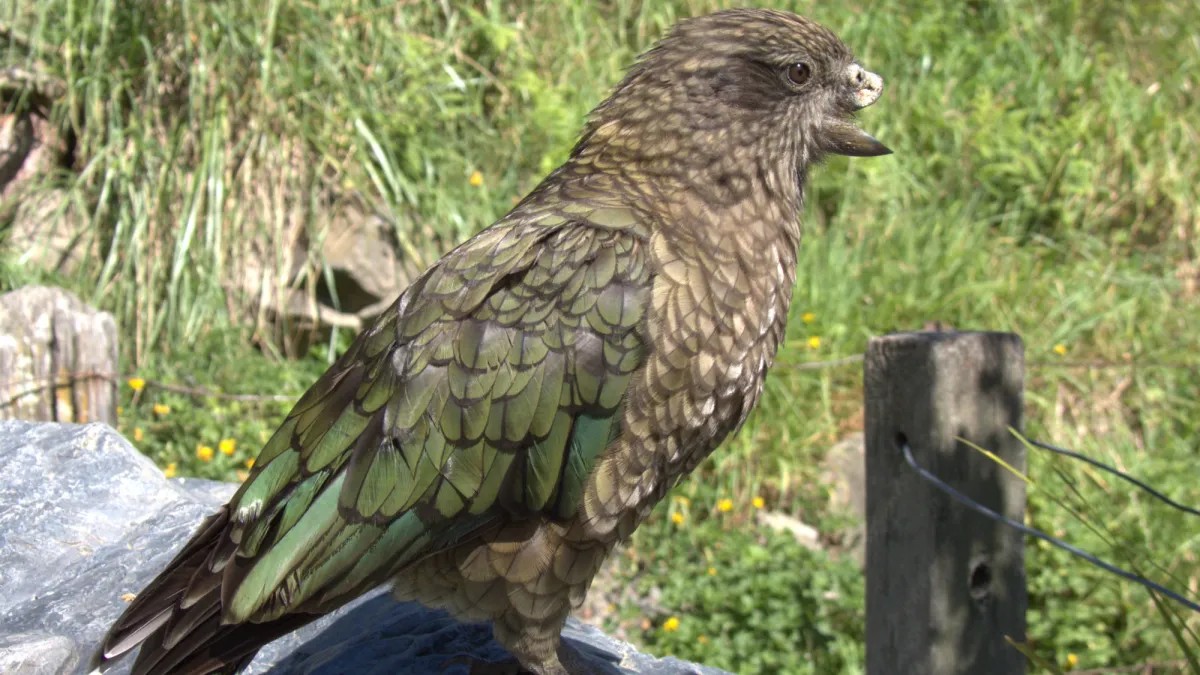
In the natural world, physical perfection is often seen as a prerequisite for dominance. However, a rescued kea parrot in New Zealand is rewriting the rules of social hierarchy. Despite lacking an upper beak, a male named Bruce has ascended to the position of alpha male at the Willowbank Wildlife Reserve, using a unique combat style that his peers cannot replicate.
A Unique Path to Dominance
Bruce’s journey began in 2013 when conservationists rescued him as a juvenile. He was already missing his upper beak—an injury suspected to have been caused by an animal trap. While such a physical deficit would typically hinder a bird’s ability to compete for resources or status, Bruce demonstrated remarkable behavioral flexibility.
Rather than being sidelined by his disability, Bruce innovated two distinct survival strategies:
– Tool Use: He was the first kea recorded using small pebbles to assist in preening himself.
– Beak Jousting: He developed a specialized fighting technique to compensate for his missing anatomy.
The Mechanics of “Beak Jousting”
A study published in the journal Current Biology details how Bruce utilizes his exposed lower beak as a weapon. Biologist Alexander Grabham and his team observed that Bruce employs a “jousting thrust,” using his lower beak to strike opponents at both close and long ranges.
To increase the impact of these strikes, Bruce often uses physical momentum, running or jumping to propel his beak directly at rivals. The effectiveness of this method is striking:
– In 73% of interactions, Bruce’s jousting moves caused his opponents to retreat immediately.
– Other keas in the group were unable to mimic this technique, leaving Bruce with a tactical advantage that intact birds could not counter.
– Out of 36 observed interactions with other males, Bruce emerged victorious in every single one.
The Benefits of Alpha Status
Bruce’s dominance is not merely about winning fights; it translates into significant biological and social advantages. As the alpha male, he maintains priority access to food sources and dominates social rituals like allopreening (grooming used to form social bonds).
Interestingly, his status appears to have a positive effect on his physiological well-being. Researchers found that Bruce had the lowest levels of corticosterone (a stress hormone) in the study group. This suggests that his successful social position has resulted in a more stable, less stressful life compared to his peers.
Why This Matters: Intelligence and Welfare
The case of Bruce provides profound insights into how intelligence and cognitive flexibility influence survival in the wild. It demonstrates that for highly intelligent species, innovation can bypass physical disability.
This discovery also raises provocative questions regarding animal welfare and conservation:
“Sometimes the animal can do better without help,” says Grabham.
His findings suggest that in some cases, providing prosthetics or medical interventions for disabled animals might not be the most effective way to improve their quality of life. If an animal possesses the cognitive capacity to adapt and innovate, their “disability” may not be a barrier to a successful, dominant life in the wild.
Conclusion: Bruce’s ability to reinvent his combat and self-care methods proves that cognitive flexibility can be just as vital to survival as physical strength, even redefining the traditional meaning of dominance in the animal kingdom.