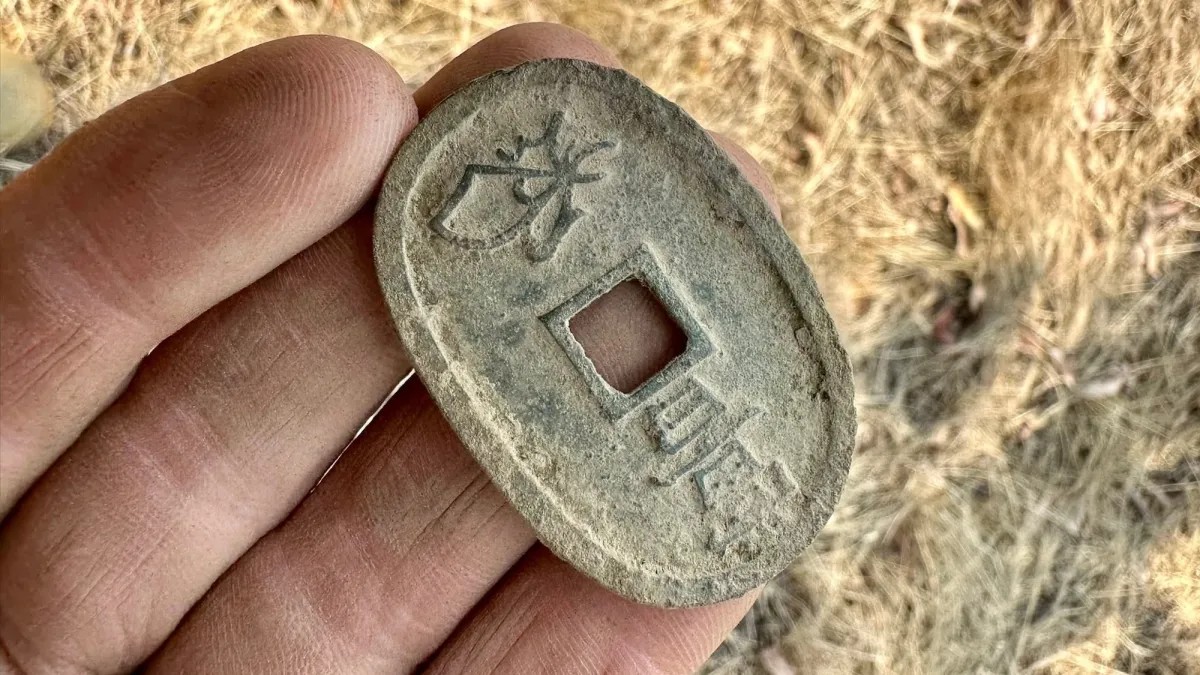
A metal detectorist in Victoria, Australia, recently unearthed a remarkably preserved 100 Mon Tenpō Tsūhō – a Japanese coin dating back to the 1800s. The discovery highlights a little-known facet of Australia’s history: the influx of non-European migrants during the gold rush era.
The Australian Gold Rush: More Than Just Europeans
Australia’s gold rushes, starting in 1851, dramatically reshaped the country. What is often remembered as a European phenomenon actually drew fortune seekers from across the globe, including Japan. The population surged from roughly 430,000 to over 1.7 million in just two decades.
This rapid growth wasn’t limited to European immigrants; it included people from Asia and beyond seeking their own stakes in the goldfields. The Japanese were among them, often using low-denomination Tenpō Tsūhō coins for everyday transactions.
The Coin Itself: A Window into History
The Tenpō Tsūhō coins were minted by the Tokugawa government in 1835 and circulated for forty years until the introduction of the yen during the Meiji Restoration. Today, these coins are sought after by collectors, and in Japan, they’re sometimes sold as lucky charms.
Interestingly, the coin’s design shows clear influence from Chinese monetary systems, reflecting the broader cultural exchange of the time. The characters on the coin translate to “Tenpō” (the era of government) and “Tsūhō” (roughly, “circulating treasure”).
Why This Matters
This discovery reminds us that Australia’s history is more diverse than often portrayed. The gold rush wasn’t just a European story, but a global phenomenon that brought people from many nations to its shores. The coin serves as a tangible reminder of that overlooked chapter.
The find underscores the broader global impact of the Australian gold rushes and the diverse communities that shaped the country’s early development.