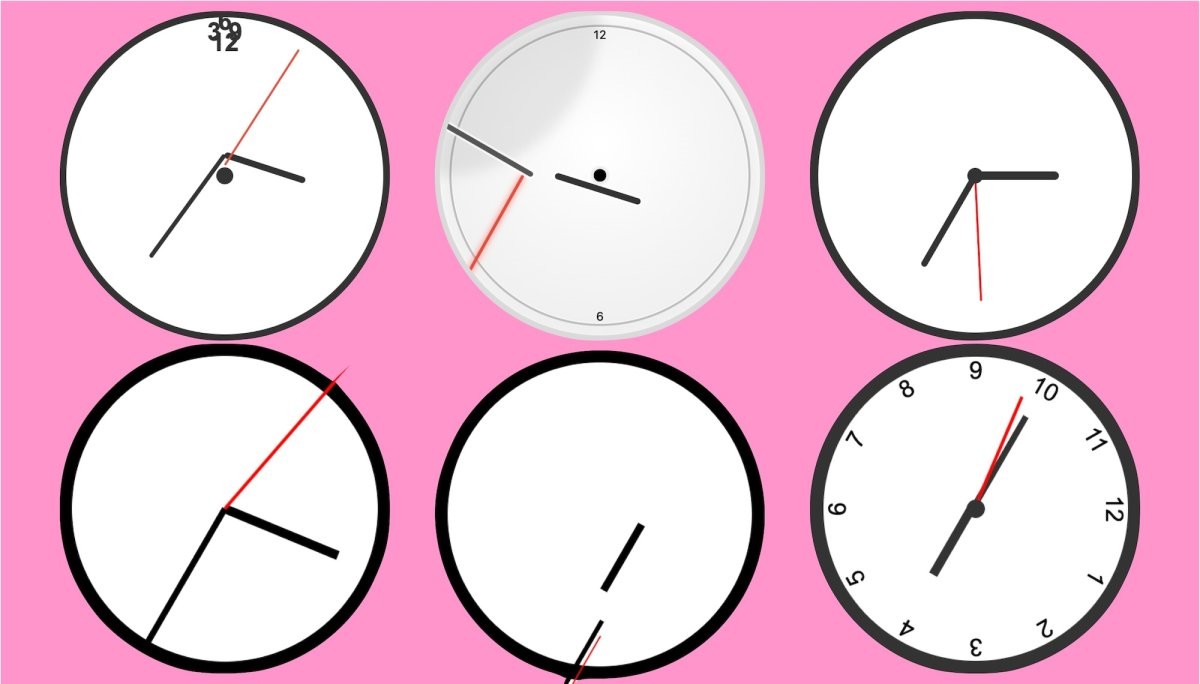
Artificial intelligence (AI) is making strides in many areas, but there’s a surprising blind spot: telling time. A new website, AI World Clocks, showcases this limitation by tasking various AI models with coding or generating images of clocks. The results are often comically inaccurate, with hands floating in space or numbers placed haphazardly. This isn’t just a quirk; it reveals fundamental weaknesses in how AI learns and processes information.
The Problem with Pattern Recognition
Modern AI isn’t built on logic like traditional computers; it relies on pattern recognition. When asked to create a clock, the AI doesn’t calculate the positions of the hands, it guesses based on the data it has been trained on. This means that if the training data is skewed, the results will be too.
One key skew is that many images of watches and clocks on the internet are set to 10:10. This is a marketing trick; watch companies set clocks to this time in advertisements because the hand positions resemble a smile, making the product more appealing. Consequently, AI models trained on these datasets often default to 10:10, even when asked for a different time.
Data Skew and Logical Reasoning
A 2025 study found that humans are 89.1% accurate at telling time on analog clocks, while the top-rated AI is only 39.4% accurate. The reasons are complex:
- Insufficient Data: There may not be enough high-quality images of clocks in AI datasets for accurate learning.
- Ambiguous Language: Describing clock faces accurately in language is difficult for AI, which primarily processes text.
- Lack of Logical Inference: AI systems struggle with the combination of visual perception, numerical computation, and logical reasoning required to tell time.
The Dementia Dataset
Another issue is the presence of inaccurate clock drawings in AI training data. Clock-drawing tests are used to diagnose dementia, meaning that many of the images used to train AI models include incorrect or incomplete clock faces. This further reinforces the AI’s inability to grasp the concept of time.
The Illusion of Intelligence
The struggle with clocks highlights a broader point: AI doesn’t “understand” concepts in the same way humans do. It mimics intelligence based on patterns, but lacks true reasoning abilities. The people who build AI systems don’t even fully understand how they work, making this a fun and frustrating glimpse into the limitations of artificial intelligence.
The AI clock website is a reminder that AI is still very much a tool, not an oracle. It excels at pattern matching but fails when faced with tasks requiring genuine understanding.
In essence, AI can’t make a clock because it doesn’t know what a clock is supposed to do. It can only imitate based on flawed and biased data, resulting in the hilariously inaccurate clocks showcased on AI World Clocks.