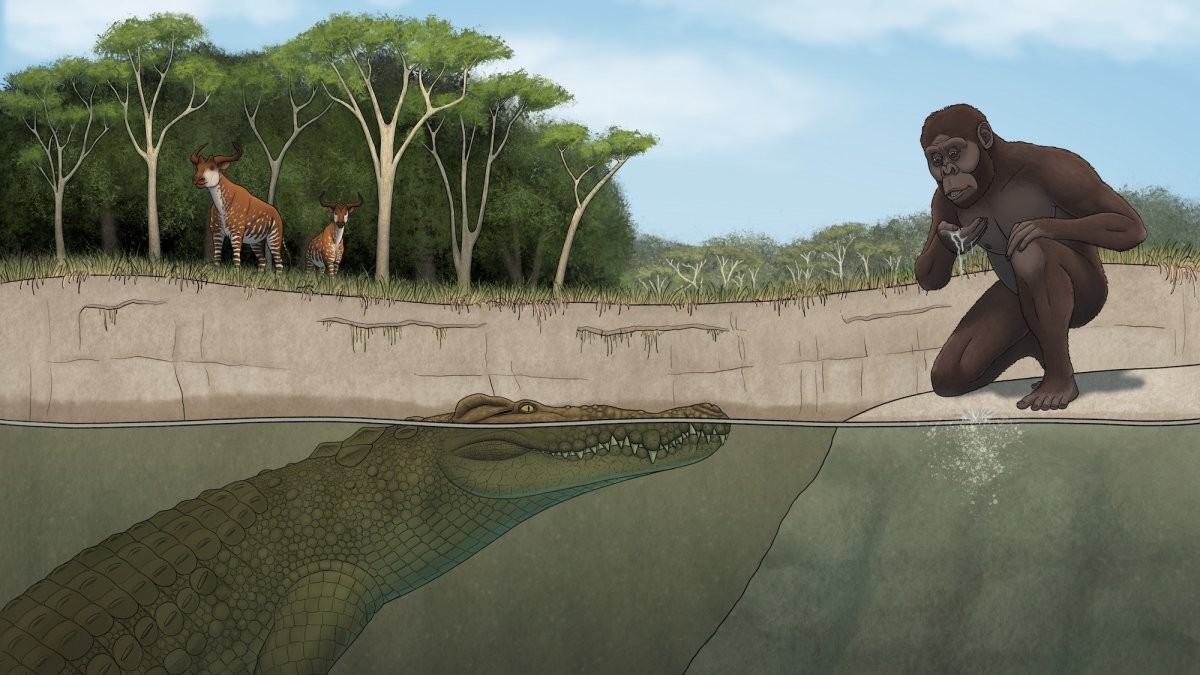
Paleontological discoveries confirm that a massive, uniquely snouted crocodile species coexisted with Australopithecus afarensis – the hominin species best known from the Lucy fossil – and likely preyed upon them. The new research, published in the Journal of Systematic Palaeontology, unveils Crocodylus lucivenator, a 15-foot-long apex predator that stalked the wetlands of Ethiopia between 3.4 and 3 million years ago.
A Prehistoric Threat
The discovery, based on analysis of museum specimens from Addis Ababa, reveals that C. lucivenator was larger and more aggressive than contemporary crocodile species. Weighing up to 1,300 pounds, it dominated the ecosystem alongside early hominins, lions, and hyenas. The crocodile’s most striking feature was a large bony hump on its snout – a structure not seen in all modern African crocodiles but present in the American crocodile. This feature likely served a display function, possibly for attracting mates.
Confirmed Predator
Researchers believe C. lucivenator posed a direct threat to early humans. The study’s authors named the species “Lucy’s Hunter” (lucivenator means “Lucy hunter”) due to the high probability that it actively hunted A. afarensis. Although no fossil evidence directly links the crocodile to Lucy’s remains, their shared habitat and overlapping timelines make predation virtually certain.
“It’s a near certainty this crocodile would have hunted Lucy’s species,” stated Christopher Brochu, a co-author of the study. “Whether a particular crocodile tried to grab Lucy, we’ll never know, but it would have seen Lucy’s kind and thought, ‘Dinner.’”
Why This Matters
The discovery highlights the brutal realities of early hominin life. Our ancestors weren’t just competing with other mammals for survival; they were also vulnerable to large, ancient predators. The presence of C. lucivenator suggests that early humans evolved in an environment where constant vigilance was necessary for survival, shaping behaviors and survival strategies. This research is crucial to understanding the challenges faced by our ancestors, and the pressures that drove our evolution.
The fossil record now confirms that early hominins lived alongside formidable predators, making their journey toward becoming modern humans even more remarkable.