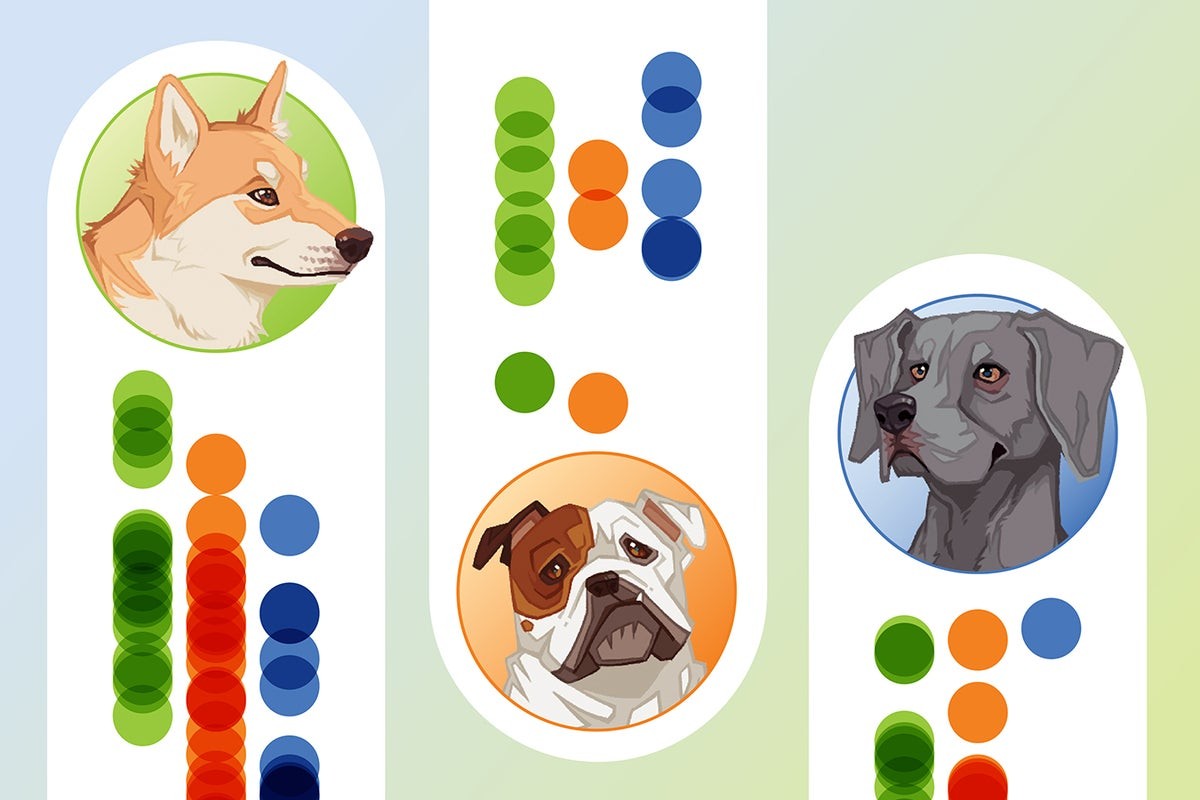
Canine personalities vary significantly, but long-term studies now confirm that certain breed-related trends in behavior do exist. The Dog Aging Project, analyzing data from over 50,000 owners, reveals predictable differences in trainability, excitability, and aggression levels based on size and breed purity. This isn’t about reinforcing stereotypes, but understanding how to improve human-dog compatibility, as dogs rely entirely on their owners for well-being.
Size Matters: Small Dogs vs. Large Dogs
Small and toy breeds consistently score higher in owner-reported aggression, fear, and excitability while being less trainable. Conversely, large and giant breeds exhibit the opposite pattern: lower aggression and anxiety, with greater trainability. This isn’t simply a matter of genetics. Veterinarian Audrey Ruple suggests that societal expectations play a role. Owners may tolerate problematic behaviors in small dogs more readily than in larger ones, where such behavior could be dangerous or unmanageable.
This dynamic is important because a mismatch between a dog’s temperament and its owner’s expectations can be detrimental to both. An aggressive or untrainable dog placed in a home unprepared to handle it will likely suffer, and so will its owners.
Purebred vs. Mixed Breed: Early Life Experiences
The study also shows that purebred dogs tend to score higher in trainability compared to mixed-breed dogs. However, this isn’t necessarily due to genetics. Ruple points out that many mixed-breed dogs come from shelters or rescues, often with a history of trauma or neglect. These experiences can impact their ability to learn and trust, making them appear less trainable.
In contrast, purebreds raised by reputable breeders are usually socialized early, increasing their comfort around people and eagerness to learn. This highlights that early experiences are just as crucial as breed when predicting a dog’s behavior.
Why This Matters
Understanding these patterns is more than academic. It informs responsible pet ownership. Knowing a breed’s tendencies allows owners to provide appropriate training, socialization, and enrichment. Moreover, it emphasizes the need for better screening practices in shelters to ensure that dogs with behavioral challenges are matched with experienced owners prepared to address them.
Ultimately, while individual variation exists, breed and early life experiences significantly shape canine behavior. Recognizing these factors is crucial for building positive relationships between humans and their dogs.