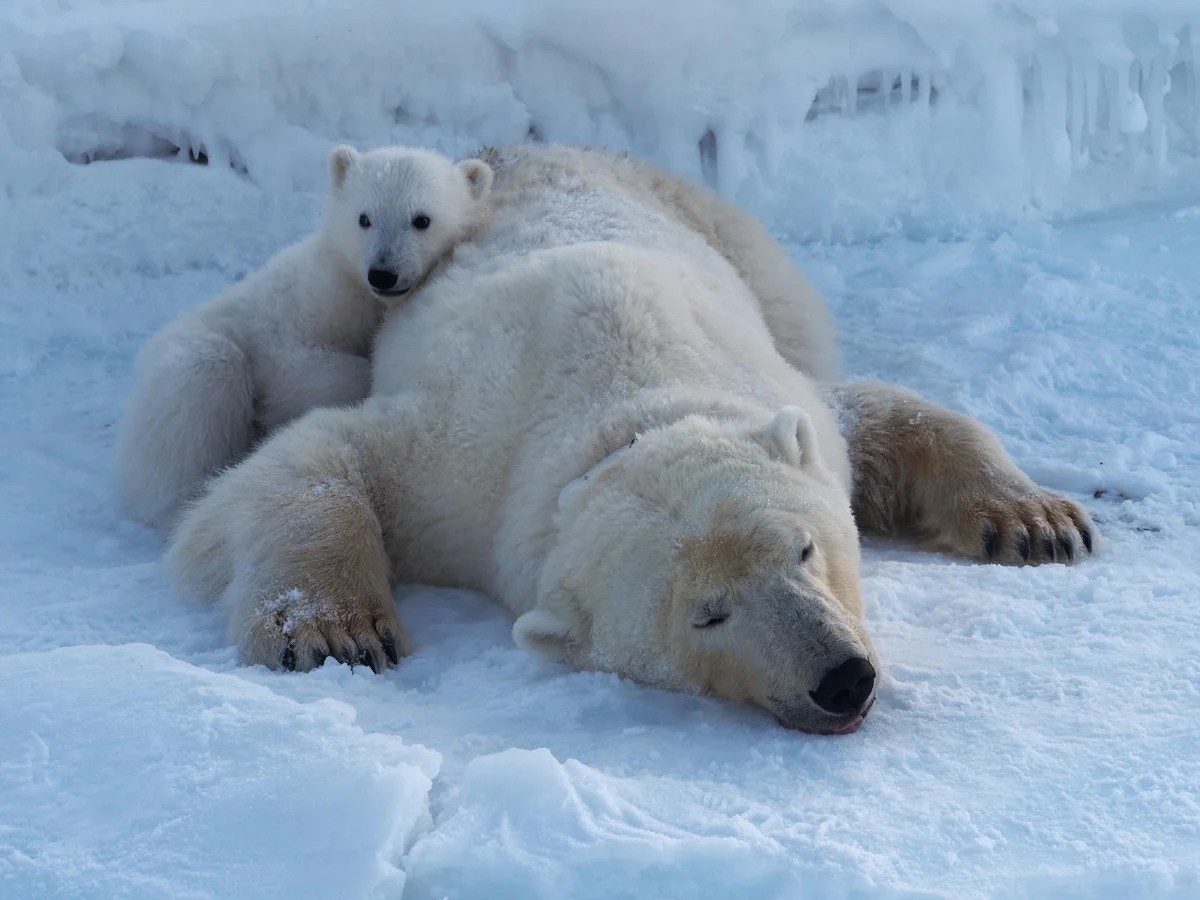
Despite rapid Arctic sea ice decline, polar bears in the Svalbard archipelago are demonstrating a surprising ability to maintain their body condition, challenging previous expectations about the species’ vulnerability to climate change. A new study spanning 24 years reveals that these bears haven’t experienced a decline in overall health, even as their icy habitat shrinks at an alarming rate.
The Study: Monitoring a Changing Arctic
Researchers from the Norwegian Polar Institute tracked over 770 polar bears around Svalbard, taking more than 1,000 body measurements between 2000 and 2019. The region has experienced a dramatic reduction in sea ice duration—over two months shorter than it was just two decades ago. This rapid change in the Arctic environment is a critical indicator of global warming’s impact on high-latitude ecosystems.
Despite this loss of habitat, the bears’ body condition index (BCI) remained stable, even recovering from a dip observed in the 1990s. The findings, published in Scientific Reports, initially surprised the research team, who expected to see a clear correlation between ice loss and declining bear health.
Why This Matters: Beyond Svalbard
The resilience of the Svalbard polar bears highlights the complexity of predicting species responses to climate change. While the broader Arctic population faces serious threats, this localized adaptation suggests that some groups may be more flexible than previously assumed. This observation doesn’t negate the overall danger to polar bears, but it does raise questions about the mechanisms allowing some populations to cope.
Researchers believe dietary shifts may play a role: with less sea ice, seals concentrate in remaining areas, making them easier to hunt. Bears may also be increasingly relying on alternative food sources like walrus carcasses or reindeer.
The Bigger Picture: What We Still Don’t Know
Lori Quakenbush, a researcher at the Alaska Department of Fish and Game, points out that polar bear survival depends on a complex interplay of habitat, prey availability, and the bears’ ability to store energy. Similar resilience has been observed in other subpopulations, such as those in the Chukchi Sea.
However, Svalbard’s unique conditions don’t guarantee similar outcomes elsewhere. The long-term outlook remains uncertain: continued sea ice loss will eventually push these bears past a tipping point, but for now, they’re defying expectations. The study emphasizes the need for continuous monitoring to understand the full capabilities of polar bears as a species in a rapidly changing world.
The findings suggest that polar bears are more adaptable than previously thought, but this resilience is not a guarantee against long-term decline. The future of these animals still depends on mitigating climate change and preserving their remaining habitat.