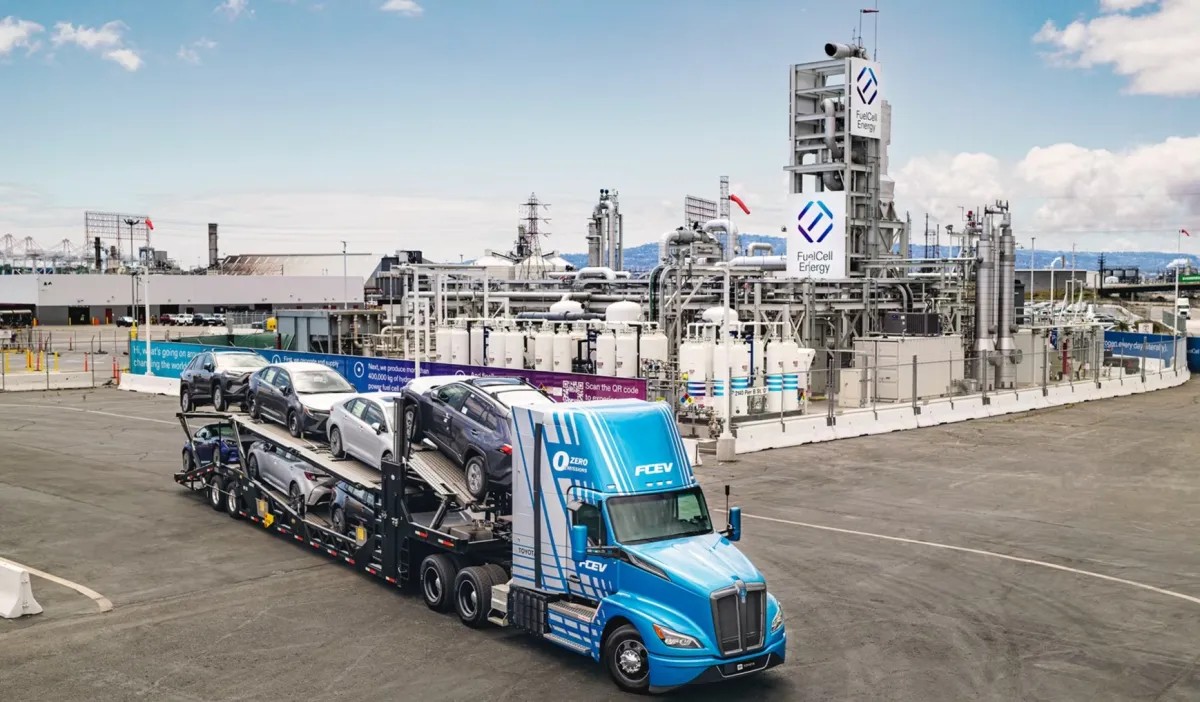
Toyota isn’t just building cars; it’s making a long-term bet on hydrogen as the next major energy source. While electric vehicles dominate headlines, the automaker is quietly accelerating development and testing of hydrogen fuel-cell technology, even drag racing hydrogen-powered trucks against diesel counterparts in the Arizona desert to prove its viability. This isn’t a fringe experiment: Toyota has dedicated three decades to hydrogen research, culminating in a full-fledged North American Hydrogen Headquarters (H2HQ) in California.
The Hydrogen Advantage: Speed, Cleanliness, and Scalability
The key appeal of hydrogen lies in its refueling speed. Unlike EVs that require significant charging time, hydrogen tanks fill nearly as quickly as gasoline. This is a critical advantage for long-haul trucking and other applications where downtime matters. But the benefits don’t stop there. Toyota’s testing shows hydrogen trucks are faster and cleaner than their diesel equivalents, emitting only water vapor instead of pollutants. The technology itself is simple: a fuel cell combines hydrogen and oxygen to generate electricity, with water and heat as byproducts. There are no moving parts, meaning less maintenance and longer lifespans compared to internal combustion engines.
Infrastructure Challenges Remain, but Toyota is Investing
The biggest hurdle for hydrogen isn’t the technology itself, but the lack of widespread infrastructure. Currently, hydrogen fueling stations are almost exclusively in California. Toyota is tackling this directly by investing in FirstElement Fuel, the largest retail hydrogen provider in the state. The company’s commitment goes beyond funding; it’s actively building out hydrogen production and distribution networks. Toyota also sees hydrogen as a potential solution for industries beyond transportation. Their “Tri-gen” system, co-developed with FuelCell Energy, uses biogas from wastewater treatment plants to produce renewable electricity, hydrogen, and clean water. The result is a closed-loop system that reduces carbon emissions and conserves resources.
Skepticism Persists, but Toyota is Doubling Down
Despite the potential, hydrogen faces skepticism. Some question its energy efficiency, while others cite the cost of production and storage. Toyota acknowledges these concerns but argues that ongoing advancements in renewable hydrogen production (using solar, wind, and biowaste) will address them. The company is even exploring innovative applications like capturing and filtering water produced by fuel cells for non-potable uses – a concept showcased in their H2-Overland vehicle unveiled at SEMA.
Toyota isn’t just waiting for hydrogen to become viable; it’s actively pushing the technology forward. The company’s long-term vision is clear: hydrogen isn’t just an alternative fuel; it’s a foundational element of a sustainable energy future.