Below the ocean, the planet breathes.
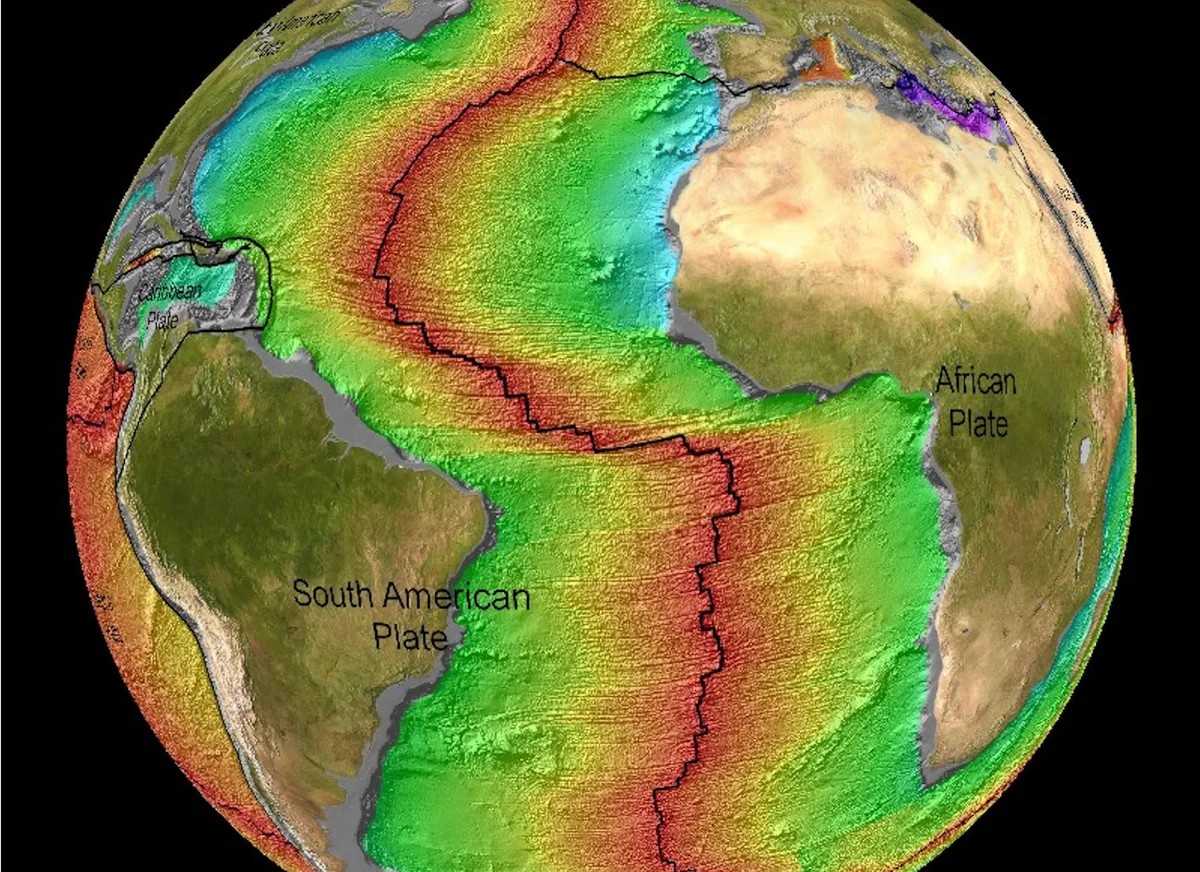
It’s a slow process, mostly. Tectonic plates grind away from each other along those massive underwater mountain ranges. We call them mid-ocean ridges. Magma bubbles up to fill the gaps. The lava cools. New crust forms. It is literally the largest game of “The floor is lava” on the planet.
We knew how it worked in the abstract. Millions of years of geology books tell the story. We never really watched it happen though. Not really. Not with cameras and sensors staring right at the wound as it opens.
Until now.
In the Indian Ocean, researchers got lucky. They deployed a whole arsenal of tech. Acoustic transponders. Pressure gauges. Geodetic beacons. Hydrophones, those underwater ears for listening to seismic tremors. They set it up and waited.
Two months is an eternity in human time. In geology, it’s a blink.
The earth moved.
Less than six weeks after installation, a swarm of quakes tore the ridge apart. The seafloor didn’t just shift; it dropped four meters. Twelve feet. The plates ripped apart by a whole meter. And then came the fire. One hundred and sixty million cubic meters of lava flooded the seabed. That is enough rock to build sixty Great Pyramids of Giza. Sixty.
“We were expecting to measure a few millimeters, maybe.”
That’s Jean-Yves Royer from the Laboratoire de Planétologie et de Géodynamique de Nantes. He was lead on the study published in Nature. The team thought they’d see inches. They saw a lifetime’s worth of movement in one violent weekend. Nearly forty years of tectonic drift happened instantly.
This matters because it disproves the “slow and steady” myth. Plates don’t slide like gliding pucks. They stick. They strain. They snap.
Here is the deeper mystery they solved.
Scientists always wondered how these faults moved without shaking the ground. There is “aseismic slip.” It’s a sneaky term. It means the rock is moving, grinding past its neighbor, but there is no earthquake. No bang. No shake. Just silent sliding.
Is that silent sliding triggered by magma? We didn’t know.
The new data says yes.
The fault line shifted about two meters. The earthquakes? They only account for ten to twenty centimeters. The rest of that two-meter jump? It happened silently. After the rocks had cracked.
It’s not just that the slip exists. It happens when the magma arrives.
Hannah F. Mark, who wasn’t on the study but watches closely from Columbia University, nailed the point. The slip is causally linked to the melt.
Why does this change things?
Because it explains the silence of the deep sea. Mid-ocean ridges should be noisier. If you just added up all the plate movements, you’d expect constant shaking. Instead, some of it goes quietly into the abyss. Too quiet to notice.
Unless you drop a listening post on the bottom of the world and wait.
And then maybe, just maybe, you get a show. 🌋