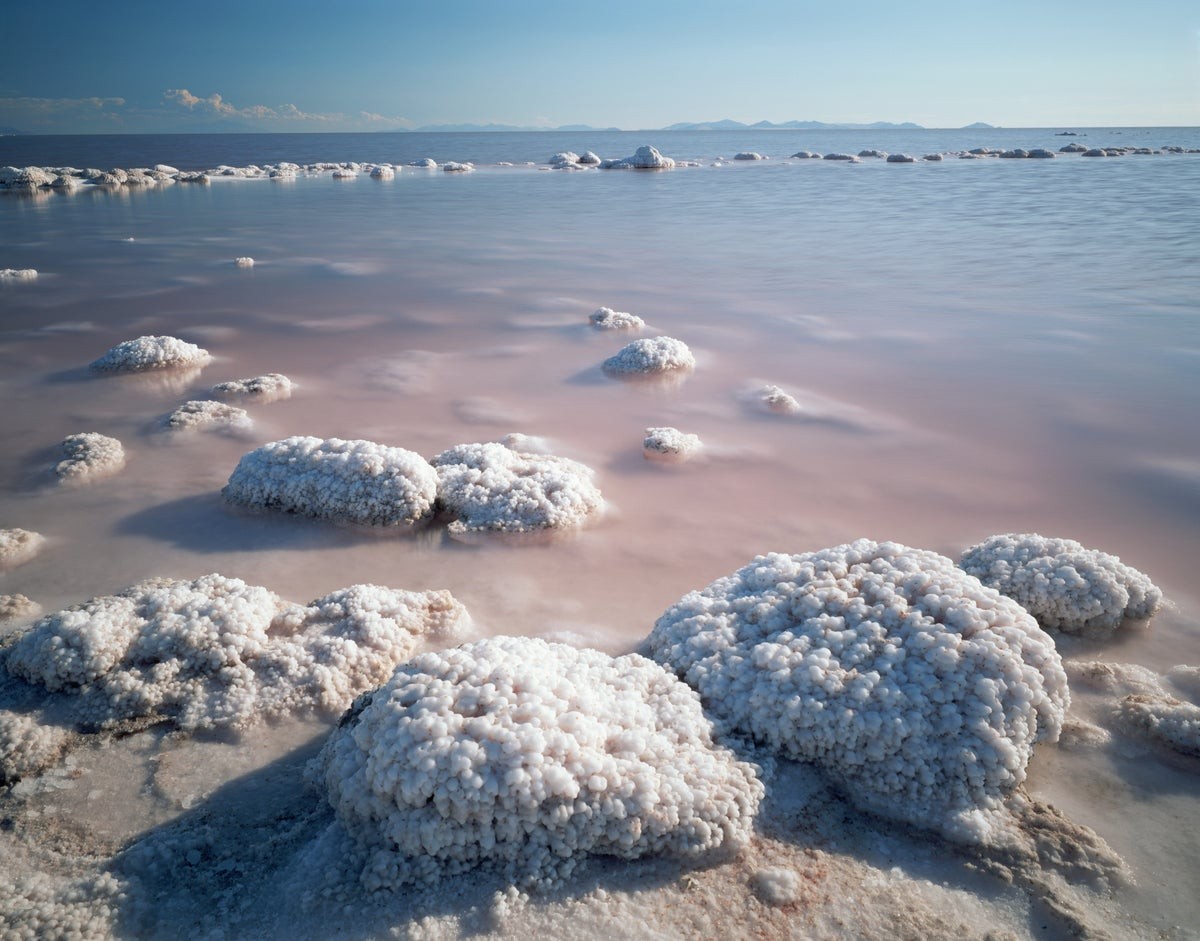
The Great Salt Lake, the largest saltwater lake in the Western Hemisphere, may conceal a surprisingly large reservoir of freshwater deep beneath its bed. Recent research suggests the existence of saturated bedrock or sediment as deep as two miles (three to four kilometers) below the lake floor. This discovery comes as water levels in the lake have plummeted to historic lows, revealing mysterious reed-covered mounds that now appear to be indicators of rising freshwater plumes.
How the Discovery Was Made
Researchers led by Michael Zhdanov from the University of Utah used a helicopter equipped with electromagnetic sensors, combined with magnetic measurements, to map the subsurface structure of the lake. This method allowed them to pinpoint a freshwater plume beneath one of the sampled mounds. According to Zhdanov, determining the depth and spatial extent is crucial for calculating the potential freshwater volume.
Why This Matters
The existence of a significant freshwater reserve beneath the Great Salt Lake is far from a mere scientific curiosity. The lake’s rapid decline is already causing toxic dust storms to plague nearby Salt Lake City. The lakebed contains high concentrations of arsenic, a deadly toxin linked to cancers, respiratory issues, and heart disease when inhaled as dust.
The discovery could one day help mitigate the problem of toxic dust spewing from the drying lake bed.
The freshwater reservoir, if confirmed on a larger scale, could potentially provide a resource for stabilizing the lake or even mitigating the health risks posed by its shrinking size.
What’s Next
The current study is preliminary, focusing on only a small section of the Great Salt Lake. The team emphasizes the need for full-lake surveys to determine the true extent of any underground freshwater reserves.
“This is why we need to survey the entire Great Salt Lake. Then we’ll know the top and the bottom.” – Michael Zhdanov
Until then, the exact size and usability of this potential freshwater source remain unknown. However, the initial findings highlight a critical opportunity to understand and potentially address the ecological and public health crises unfolding at the Great Salt Lake.