



Упродовж десятиліть астрономи знали, що чорні дірки — це не просто гравітаційні пастки, а справжні «архітектори» нашого Всесвіту. Коли матерія притягується до чорної дірки, вона поглинається в повному обсязі. Натомість частина цієї речовини з величезною силою викидається з полюсів, утворюючи парні джети (струмені) плазми, які з неймовірною швидкістю пронизують космічний простір.
Хоча вчені давно розуміли, який вплив ці струмені надають на галактики, їм ніяк не вдавалося безпосередньо виміряти їх реальну потужність. Ситуація змінилася з виходом нового дослідження в журналі Nature Astronomy, яке представило рідкісну можливість прямого вимірювання енергетичної віддачі чорної діри.
Лабораторія Лебідь X-1
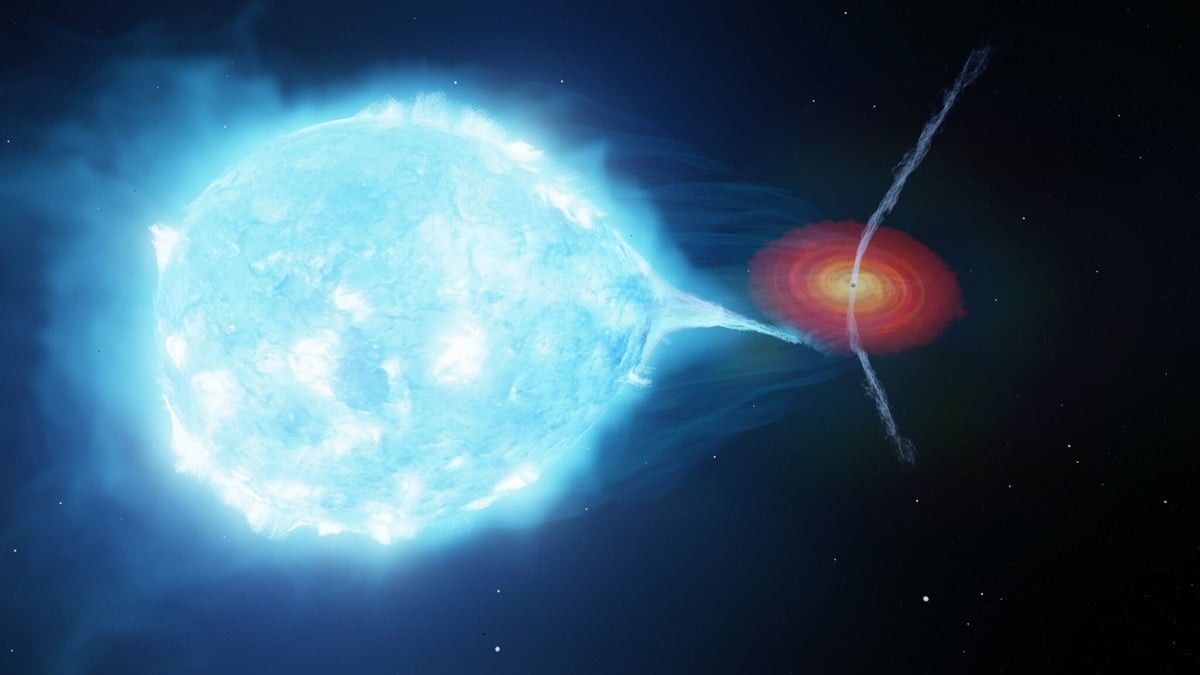
Прорив став можливим завдяки вивченню Лебідь X-1 (Cygnus X-1) — чорної діри зоряної маси, розташованої приблизно за 7200 світлових років від Землі. Ця система унікальна тим, що чорна дірка обертається навколо масивного надгіганта, постійно «поїдаючи» газ, який її витягає.
Об’єднавши дані за два десятиліття, отримані від двох міжнародних мереж радіотелескопів — американської системи VLBA (Very Long Baseline Array) і європейської мережі EVN (European VLBI Network), — дослідники змогли спостерігати феномен, який вони назвали «танцюючими струменями».
Чому «танець» має значення
Струмені в системі Лебідь X-1 не б’ють по ідеально прямій лінії; натомість їх постійно збивають з курсу і згинають потужні зоряні вітри, що походять від сусіднього надгіганта. Цей «згинальний» рух став тією самою ключовою зачіпкою, яка була необхідна дослідникам. Спостерігаючи за тим, як джети рухаються та реагують на ці вітри, команда вчених змогла нарешті розрахувати їхні фізичні властивості з безпрецедентною точністю.
Основні результати: швидкість і масштаби
Дослідження виявило разючі показники енерговиділення системи Лебідь X-1:
– Швидкість: струмені рухаються зі швидкістю приблизно половини швидкості світла.
– Енергетична віддача: Джети переносять близько 10% всієї енергії, що виділяється матерією, що падає в чорну дірку.
– Порівняння із Сонцем: ця потужність еквівалентна енергії 10 000 Сонців.
Чому це змінює наше розуміння космосу
Це відкриття має велике значення, оскільки воно переводить науку з області припущень в область прямих спостережень. Раніше астрономам доводилося лише здогадуватися про силу струменів чорних дірок, оцінюючи «збитки», які вони завдавали навколишнім галактикам протягом мільйонів років. Ці припущення часто ґрунтувалися на припущеннях про щільність простору або склад самих струменів.
Оскільки середовище навколо Лебідь X-1 дуже добре вивчено, дослідники змогли усунути ці невизначеності. Це дає «золотий стандарт» вимірювань, який можна використовувати для калібрування моделей решти всіх чорних дірок.
Від малих до надмасивних
Наслідки цього відкриття виходять далеко межі однієї системи. Вважається, що фізичні процеси, що управляють чорною діркою масою в 20 Сонців, подібною до Лебідь X-1, фундаментально схожі з процесами в надмасивних чорних дірах, що знаходяться в центрах галактик.
Ці гіганти здатні створювати настільки потужні струмені, що ті впливають на цілі скупчення галактик: або провокуючи народження нових зірок за допомогою ударних хвиль, або «гасячи» зіркоутворення, здаючи необхідні запаси газу. Спираючись на прямі виміри Лебідь X-1, вчені тепер можуть точніше моделювати те, як ці космічні двигуни формували структуру Всесвіту протягом мільярдів років.
Висновок: Безпосередньо вимірявши «танцюючі» струмені Лебедя X-1, астрономи отримали найважливіший орієнтир, який дозволить уточнити наше розуміння того, як енергія чорних дірок керує еволюцією галактик у всьому космосі.