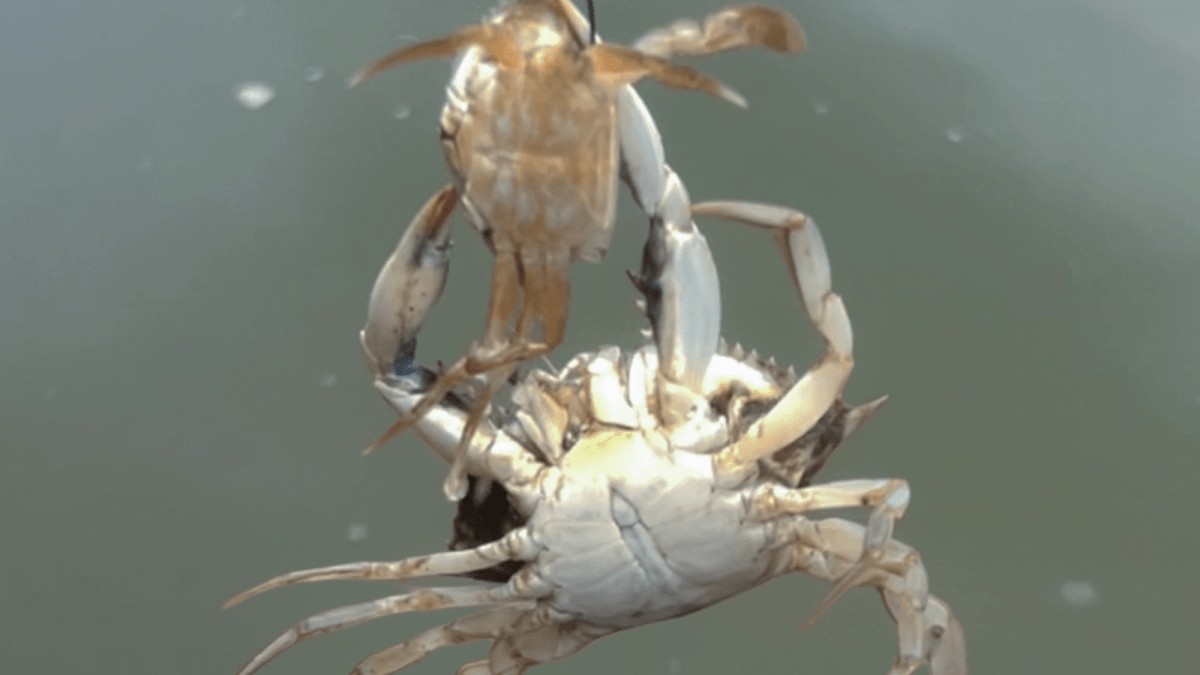
The Chesapeake Bay’s blue crab population faces a significant threat not from external predators, but from within its own species. A new 37-year study reveals that cannibalism is the primary cause of death for juvenile blue crabs in mid-salinity waters. This grim reality underscores the critical role of shallow-water habitats as a refuge, yet these areas are increasingly threatened by human development and invasive species.
The Brutal Reality of Crab Life
Blue crabs (Callinectes sapidus ) undergo a dramatic life cycle, starting as ocean-drifting larvae before settling in the Chesapeake Bay as juveniles. While sea grass provides some protection from predatory fish, larger crabs pose a far more consistent danger. As marine biologist Anson “Tuck” Hines notes, blue crabs are “notoriously cannibalistic,” and long-term data on this behavior has been lacking until now. The research, published in the Proceedings of the National Academy of Science (PNAS), provides the first quantified assessment of cannibalism’s impact on juvenile survival.
The Experiment: Tethered Crabs and Cannibalistic Attacks
Researchers at the Smithsonian Environmental Research Center (SERC) tracked juvenile crabs in the Rhode River, a mid-salinity tributary of the Chesapeake Bay, over nearly four decades. They tethered crabs to allow for movement while minimizing predation by fish. The results were stark: 42% of crabs showed signs of cannibalistic injury, and cannibalism accounted for all observed predation. High-resolution sonar recordings confirmed that larger crabs, rather than fish, were the sole attackers.
Shallow Water as a Critical Refuge
The study revealed a clear pattern: juvenile crabs are significantly safer in shallow water. Crabs in depths of half a foot or less had a roughly 30% chance of being cannibalized, compared to 60-80% in deeper waters (1.3-2.5 feet). This suggests that the nearshore shallows are a vital refuge for young crabs. Smaller crabs were more than twice as likely to be eaten than larger ones, reinforcing the importance of growth as a survival strategy.
Threats to the Refuge: Habitat Loss and Invasive Species
However, this refuge is shrinking. Seawalls, shoreline hardening projects, and the spread of invasive species like blue catfish are encroaching on the shallow-water habitats where juvenile crabs find protection. The findings will be integrated into a new stock-assessment model for blue crabs in the Chesapeake Bay, emphasizing the need to account for cannibalism in fishery management.
Protecting these nearshore shallows is now critical for stabilizing blue crab numbers and ensuring the long-term viability of the blue crab fishery. Without these crucial habitats, the cycle of cannibalism will continue to decimate juvenile populations, threatening the future of this economically and ecologically important species.