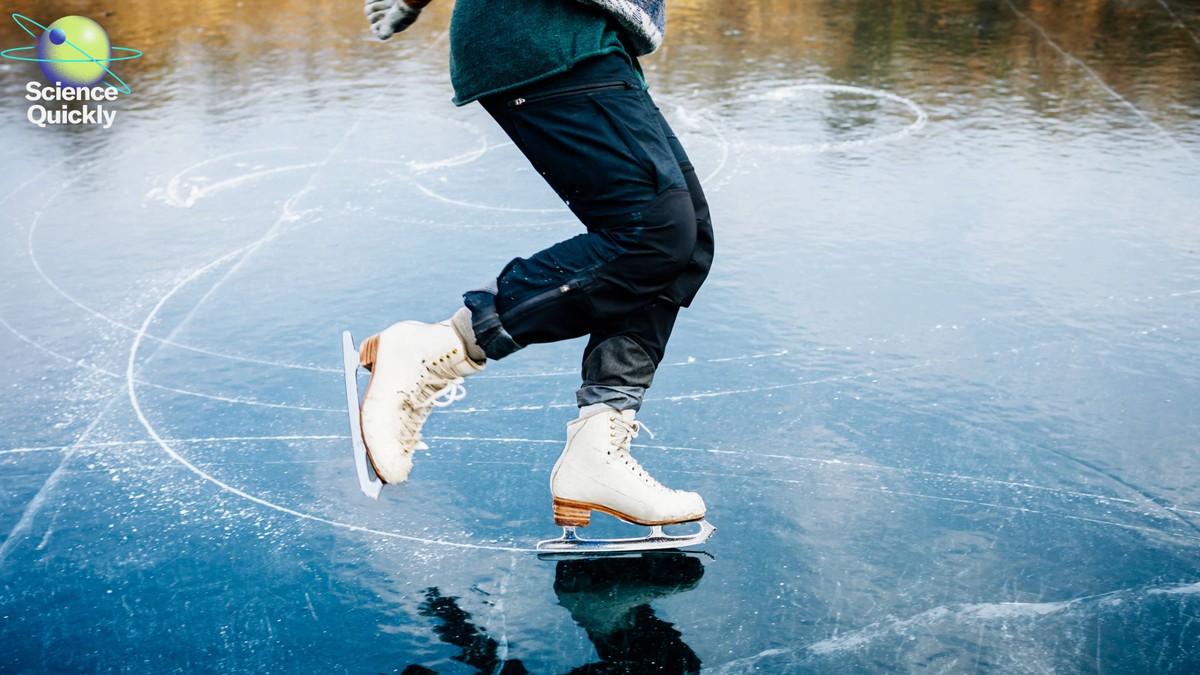
For centuries, humans have puzzled over a seemingly simple question: why is ice slippery? From Olympic athletes gliding across frozen tracks to everyday slips on sidewalks, the phenomenon is universally experienced, yet scientifically elusive. Despite long-held assumptions, a definitive answer has remained out of reach – until recently.
The Long-Standing Theories
Scientists have traditionally proposed three main explanations. The first, dating back to the 19th century, suggests that pressure from an object (like a skate blade) melts the ice, creating a lubricating layer of water. However, this theory falls short; humans don’t weigh enough to generate sufficient pressure for significant melting. The second hypothesis points to frictional heating: friction between the surface and ice generates heat, causing localized melting. While this explains slipperiness after movement begins, it doesn’t account for the initial ease of sliding. The third theory posits a pre-melted layer of water on the ice surface due to structural differences between solid and liquid water. But even this explanation struggles to fully account for the extreme slipperiness observed.
The Role of Energy Consumption and National Pride
The quest to understand ice slipperiness isn’t purely academic. Dutch scientists, driven by a desire to maintain their nation’s dominance in speed skating, see practical applications. Beyond sports, a comprehensive understanding of ice friction could have global implications. Friction accounts for roughly 25% of the world’s energy consumption, meaning unlocking the secrets of ice’s low friction could lead to significant energy savings in various industries.
A New Perspective: Amorphous Layers and Molecular Disruption
Recent research suggests the answer may lie in the ice’s surface structure itself. Instead of relying solely on melting, scientists now propose that the act of stepping onto ice disrupts its crystalline structure, creating an “amorphous layer” – a disordered state between solid and liquid. This layer isn’t fully melted water, but a chaotic arrangement of molecules that provides minimal resistance to movement.
This theory, published in Physical Review Letters, suggests that even at extremely low temperatures, misaligned ice crystals can quickly become disordered under pressure, causing slipperiness. The breakdown of the crystalline structure allows for easier molecular movement, reducing friction.
Why This Matters
For over a century, scientists have debated the slipperiness of ice. The latest research suggests the truth is not one single explanation, but a combination of factors. Pressure, friction, and structural disruption all play a role. This discovery could unlock innovations in friction reduction across industries, from transportation to manufacturing. The mystery of ice might finally be solved, promising real-world benefits far beyond the skating rink.