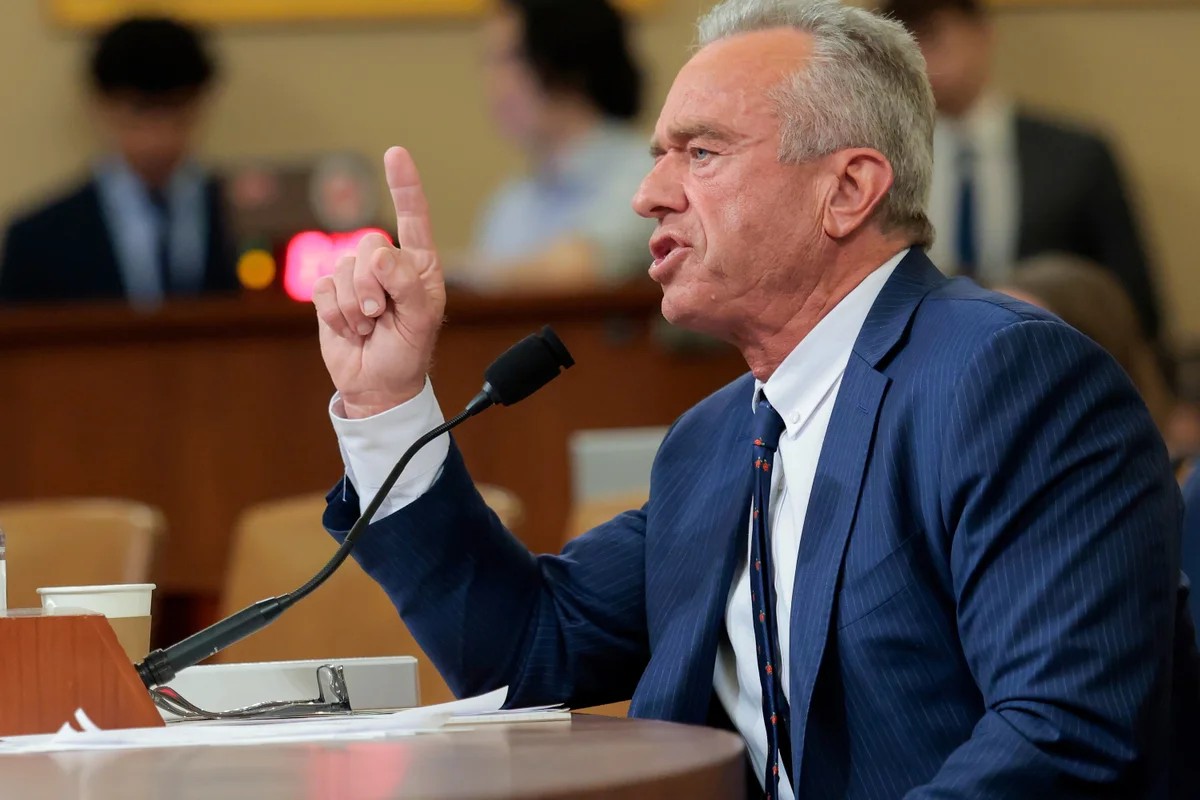
Health and Human Services (HHS) Secretary Robert F. Kennedy, Jr. appeared before the House Committee on Ways and Means this Thursday, marking the start of a high-stakes series of congressional hearings. The session served as a battlefield for two competing visions of American public health: Kennedy’s focus on nutrition and chronic disease prevention versus Democratic lawmakers’ concerns over vaccine skepticism and sweeping cuts to scientific research.
A Pivot Toward Nutrition
Throughout his testimony, Kennedy attempted to shift the narrative away from his controversial history with vaccine policy. Instead, he centered his message on the link between diet and long-term wellness.
“We cannot hope to make America great again without first making Americans healthy again,” Kennedy stated, arguing that addressing the chronic disease epidemic requires a fundamental overhaul of national nutrition.
Kennedy highlighted several departmental priorities, including the introduction of new dietary guidelines, the removal of certain food dyes, and efforts to accelerate drug approval timelines. This shift reflects a broader strategic move by the Trump administration to rebrand Kennedy around food safety —a more politically palatable topic—as they prepare for upcoming midterm elections.
The Battle Over Scientific Funding
The hearing also served as a probe into the administration’s 2027 Presidential Budget Request (PBR), which proposes aggressive reductions to the nation’s scientific infrastructure. The proposed cuts are substantial:
– 32% reduction for the Centers for Disease Control and Prevention (CDC).
– 13% reduction for the National Institutes of Health (NIH).
Kennedy defended these cuts by suggesting they would not hinder scientific outcomes, arguing instead for a pivot toward preventative research. However, critics warned that defunding these “colossus” institutions could have long-term consequences.
Democratic lawmakers, such as Representative Brad Schneider, argued that these cuts—combined with administration policies affecting immigrant scientists—threaten to drive American talent abroad, potentially fueling research and drug development in rival nations like China.
Vaccine Controversy and Public Health Messaging
The most contentious moments of the hearing arose when Democratic members challenged Kennedy’s record on immunization. With measles cases seeing a significant resurgence, lawmakers questioned whether Kennedy’s past skepticism could be reconciled with the need for robust public health responses.
Representative Linda Sanchez (D-CA) criticized Kennedy’s public persona, questioning the efficacy of his unconventional media appearances compared to traditional public health messaging. The tension highlighted a growing divide:
– The Administration’s View: Focus on “wellness,” food quality, and disease prevention as the primary levers of health.
– The Opposition’s View: A fear that de-emphasizing vaccines and cutting scientific agencies will lead to a resurgence of preventable diseases and a weakened medical infrastructure.
Looking Ahead: The Appropriations Test
While the Ways and Means Committee handles tax policy, the real battle over the department’s survival lies with the House Committee on Appropriations, which Kennedy attended in the afternoon.
Last year, Congress largely resisted a proposal to slash the federal science budget by 40%. The central question for lawmakers now is whether they will allow these significant proposed cuts to the CDC and NIH to stand, or if they will protect the scientific agencies that underpin American medical leadership.
Conclusion: The hearings underscore a fundamental tension in U.S. policy: whether to prioritize the funding of established scientific institutions and immunization programs, or to aggressively redirect resources toward nutritional reform and disease prevention.