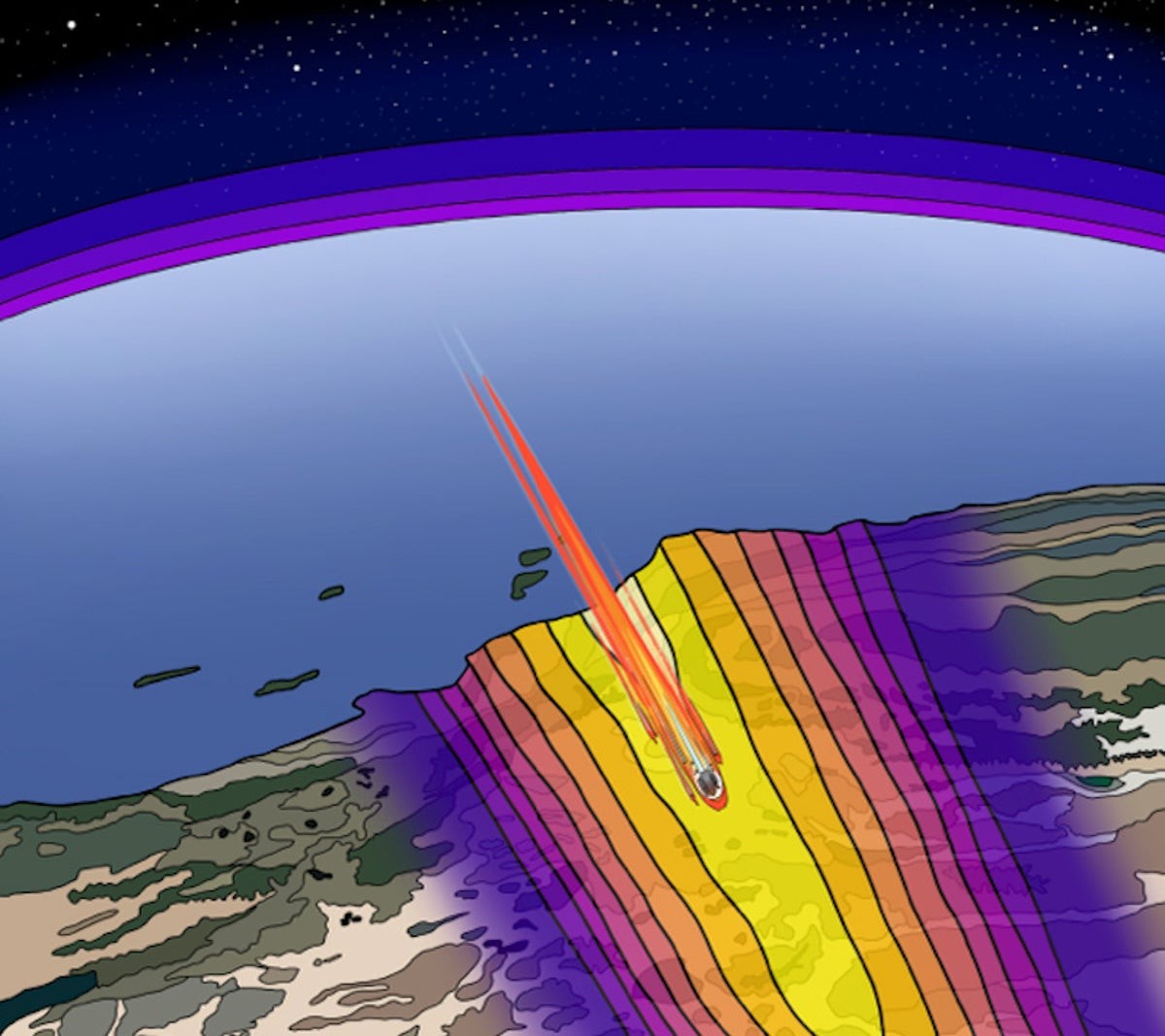
The surge in space activity is creating an escalating risk from uncontrolled reentries of space debris, but a surprising new method may offer a low-cost solution for tracking these hazards. Scientists have discovered that sonic booms, picked up by existing earthquake monitoring networks, can be used to reconstruct the descent paths and potential impact zones of falling spacecraft and large debris fragments. This technique provides a critical, near-real-time method for monitoring objects as they break apart in the atmosphere – something traditional radar and optical systems struggle to do.
The Growing Problem of Space Debris
The number of space launches is rising dramatically, inevitably increasing the amount of debris falling back to Earth. While most small pieces burn up harmlessly, larger objects pose a real threat. Currently, agencies like NASA often perform “controlled” reentries, guiding debris into remote areas. However, the increasing volume of launches means more uncontrolled reentries – unpredictable descents that raise the risk of debris landing in populated regions.
How Sonic Booms Provide Tracking Data
Led by Benjamin Fernando at Johns Hopkins University and Constantinos Charalambous at Imperial College London, a recent study published in Science demonstrates the effectiveness of this new approach. The researchers analyzed data from the April 2, 2024, uncontrolled reentry of a 1.5-ton module from China’s Shenzhou-15 mission. By analyzing the arrival times of sonic booms at over 120 seismometer stations, they were able to accurately reconstruct the module’s trajectory, speed, and breakup pattern.
As astrophysicist Jonathan McDowell explains, this method is especially useful because sonic booms are detectable day or night, unlike optical tracking, and can be implemented with existing infrastructure, making it a cost-effective solution. “You could get this almost ‘for free,’ once you know how to do the analysis.”
Implications for Safety and Environmental Concerns
The implications of this technology go beyond simply locating debris. The data gathered from sonic boom analysis can help refine models of how objects break apart during reentry, which is crucial for designing spacecraft that disintegrate more effectively. More importantly, it can aid in understanding the environmental impact of vaporized aerospace materials on the upper atmosphere and the potential for hazardous materials, like radioactive isotopes or toxic rocket fuel, to reach the ground.
While sonic booms won’t prevent mid-air collisions, they can significantly improve recovery and remediation efforts on the ground. The broader issue, however, remains the lack of proactive measures. As McDowell points out, “For 60 years, we’ve been letting things reenter uncontrolled…Eventually we’re going to run out of luck.”
Future Development: Scaling Up the System
To maximize the impact of this technique, Fernando proposes two key strategies. The first involves leveraging existing seismic networks, particularly in areas like the U.S. West Coast, where reentry events are common. The second suggests building custom-built networks in regions facing increased debris risks, such as near launch sites like Hainan, China, where debris often falls over sensitive ecosystems like Australia’s Great Barrier Reef.
“I fear space debris isn’t going to get the attention it deserves until something truly catastrophic occurs—and I’d guess the probability of that happening is 100 percent.”
This new method offers a vital tool for monitoring space debris, but its full potential relies on investment and proactive implementation. The rising threat of uncontrolled reentries demands immediate attention to prevent future disasters.