The footer sits at the bottom of a page. It is not the main text. It holds the extra details that support the content above. Without this section, reading academic papers or formal documents becomes messy. You lose context fast.
This area usually serves two distinct purposes. First, it helps you organize your reading. Second, it handles the heavy lifting of citations.
How Page Numbers Organize Your Reading
Think of the footer as your anchor. When you are reading a thick report or a textbook, pages shift. You flip back and forth. The footer keeps you grounded. It displays the page number.
This seems simple. It is not trivial. Without a page number in the footer, you have to hunt for the end of a chapter or section. It breaks flow. It forces you to stop and think rather than just read.
For students and researchers, this is key. You need to know exactly where you are. You need to know how much is left. The footer provides that spatial awareness. It is a navigational tool disguised as text.
Where Footnotes and Citations Live
Now look at the text body. See those small numbers? Like a superscript 1 or 2? They are markers. They point to the footer.
This is how footnotes work. The number in the text links directly to a note in the footer. The note explains the reference. It cites the source. It might offer a brief comment that would clutter the main paragraph.
This system keeps the main story clean. You get the argument. You get the evidence. But you can skip the detail if you want. The link is there when you need it.
Here is why this matters for your writing. If you are citing a book, a law, or a quote, you put the number in the text. The footer contains the full bibliographic info.
The footer acts as a bridge between the main argument and the evidence supporting it.
This separation allows for deeper analysis without interrupting the flow. A reader interested only in the main point can ignore the footer. A researcher looking for sources can go straight there. It serves both audiences.
Why This Structure Exists
Academic and formal writing demands precision. You cannot just mention a fact. You must prove it. The footer handles this proof.
It tracks every claim. It shows where the information came from. This builds trust. It shows you did the work. It allows others to verify your sources.
For students, this is a lesson in responsibility. You are not just stating opinions. You are standing on the shoulders of others. The footer gives them credit. It also protects you from plagiarism.
Parents and teachers should know this distinction. Teaching kids to use footers correctly teaches them to value sources. It teaches them to separate their voice from the voices they quote. It is a foundational skill for critical thinking.
Which Method Fits Your Needs
Not all documents need footers. A blog post might not. A quick email definitely does not. But a thesis? A legal brief? A history paper? Yes. These require the rigor that footers provide.
If you are formatting a document, choose the footer space wisely. Keep it clear. Do not clutter it with unnecessary design. The page number should be easy to find. The citations should be easy to read.
What footnotes actually do
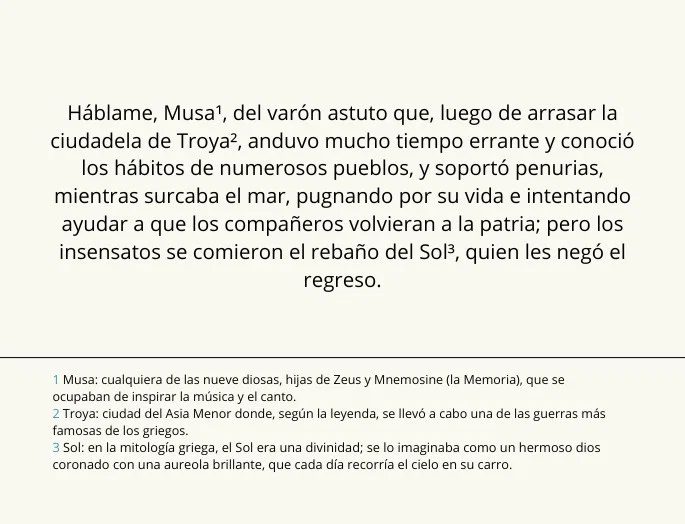
You’ve seen them. That faint horizontal line cutting off the bottom of the page. The text drops to a smaller font size behind it. This visual break is your cue that you are looking at a footnote.
Footnotes sit at the bottom of the sheet for a reason. They are not the main event. They are supplementary. Think of them as side doors. You can walk through them, but you don’t have to.
Their job is simple: provide extra context without cluttering the main argument. Maybe you need to explain a specific term. Maybe there is a historical nuance that would otherwise bloat the paragraph. Perhaps it is a translation note. That is all fair game.
Here is the key difference. These notes enrich the text. They add flavor. But they are not essential. If you delete them, the core narrative still holds up. The main discourse continues uninterrupted.
Consider this example:
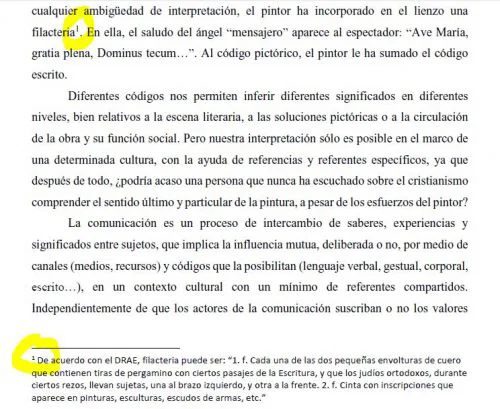
Footnotes as bibliographic anchors
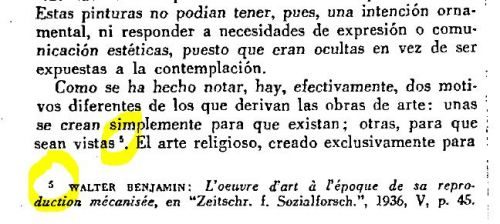
Sometimes a footnote is just a citation. It points back to the source of the text or argument developed in the main body. This keeps the narrative clean while giving credit where it is due.
The Science Behind Why You Forget (And How to Hack It)
You study for hours. You highlight every third line. You re-read your notes until the words blur. And then you sit down for the exam. Your mind goes blank.
It’s not because you’re stupid. It’s because you’re fighting human biology.
Here is the uncomfortable truth: memory is not a video recorder. It’s a reconstruction project. Every time you recall something, you are essentially rewriting it. This is called the reconsolidation effect. And if you’re using standard study habits, you’re probably reinforcing the wrong neural pathways.
The Forgetting Curve: Your Enemy and Your Ally
Hermann Ebbinghaus, a German psychologist, figured this out over a century ago. He discovered the forgetting curve.
Without reinforcement, you lose about 50% of new information within an hour. By the next day, it’s gone. By the week’s end, you’re left with a ghost of what you learned.
Most students panic here. They cram. They try to force it all in. That’s inefficient. The brain doesn’t need more input. It needs retrieval practice.
Retrieval is the act of pulling information out of your head, not putting it in. It feels harder. It feels frustrating. That friction? That’s where the learning happens.
Active Recall: The Anti-Cram Strategy
Passive review is a trap. Reading a textbook feels like learning. It’s not. It’s recognition. You see the answer and think, “Oh yeah, I know that.” But you can’t produce it from scratch.
Try this instead.
Close the book. Ask yourself: “What were the three main causes of the French Revolution?”
Struggle through it. Write down what you remember. Get it wrong. That’s good. The error creates a “knowledge gap” that your brain will work to fill when you check the answer. This process strengthens the neural connection.
Active recall beats passive re-reading every time.
Spaced Repetition: Timing Is Everything
You don’t need to study for 10 hours straight. You need to study for 10 minutes, spread out over time.
This is spaced repetition. The idea is to review material right before you’re about to forget it.
- First review: One day after learning.
- Second review: Three days later.
- Third review: One week later.
- Fourth review: One month later.
Each time you successfully retrieve the information, you extend the interval. The curve flattens. The memory becomes durable.
Apps like Anki or Quizlet automate this. They show you cards you’re likely to forget. You can also do it manually with a simple calendar. Mark the days. Stick to the schedule. It’s boring. It works.
Interleaving: Mixing It Up
Most people study one topic at a time. Block A, then Block B. Then Block C.
This creates a false sense of fluency. You get good at solving Type A problems because you just did ten of them in a row. But real life isn’t like that. Exams mix topics. Work mixes tasks.
Interleaving means mixing different types of