A theorem is a mathematical statement that has been proven true. It doesn’t just sit there as a guess. It stands on solid ground built from axioms, postulates, or other theorems. The process requires strict logical rules. If you follow the steps correctly, the result must be true.
Think of it this way: axioms are the starting points. They are accepted as true without proof. Postulates are similar but often specific to certain systems. From these basics, mathematicians apply logic to derive new truths. Each new truth becomes a theorem. And each theorem can become a building block for the next.
This structure creates a chain of certainty. You don’t prove everything from scratch every time. You build on what’s already established. That’s why understanding definitions is key. A theorem isn’t just an idea. It’s a proven fact within a mathematical system.
“A theorem is a proposition that has been demonstrated as true based on axioms, postulates, or previously established theorems using logical inference rules.”
This definition matters because it separates proof from belief. In math, belief isn’t enough. You need evidence. You need steps. You need logic. That’s what makes a theorem different from a conjecture. A conjecture is a hypothesis. It hasn’t been proven yet. A theorem has. It’s done. It’s solid.
So when you see a theorem cited in a textbook or research paper, you’re looking at something finished. Not a work in progress. Not a theory. A theorem is a conclusion that has survived rigorous testing. It’s true within its own framework. And that framework is built on logic.
Theorems are not just abstract lines in a textbook. They are the bedrock of geometry, algebra, and number theory. They help us establish concrete relationships between concepts or values. Think of the link between the legs and the hypotenuse of a right triangle. That is a theorem in action.
In mathematical logic, a theorem is a proposition derived using inference rules within an axiomatic system. It is distinct from an axiom, which is a truth assumed without proof. It is also different from a postulate, which is a specific statement within a mathematical theory.
Then there is the corollary. This is a result that follows directly from a theorem. It requires no complex proof to understand or use.
The Pythagorean Theorem explained simply
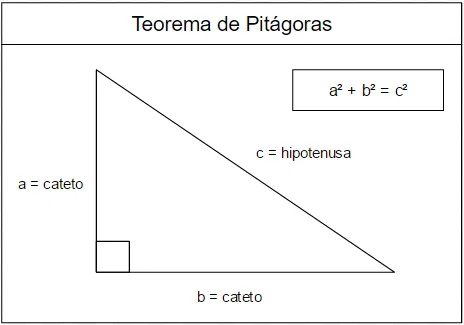
One of the most famous theorems is the Pythagorean theorem. It applies to any right triangle (a triangle with one 90-degree angle). It allows you to calculate the hypotenuse length based on the other two sides. These other sides are called legs (or catetos in Spanish contexts).
The theorem states that the square of the hypotenuse equals the sum of the squares of the legs.
Here is how it works in practice.
- Take a triangle with legs of 3 and 4.
- Square each leg: 3 x 3 = 9. And 4 x 4 = 16.
- Add them: 9 + 16 = 25.
- The square root of 25 is 5. So, the hypotenuse is 5.
Remember, squaring means multiplying a number by itself. 5 x 5 = 25. This simple rule lets you solve for missing side lengths in countless real-world scenarios.
More than Just Parallel Lines
Take Thales’ theorem, for instance. It’s not just a dusty rule from ancient Greece. It’s a practical tool. When two transversal lines cut across two or more parallel lines, the segments created on each line are proportional.
Think of it like slicing a loaf of bread. If the cuts are parallel, the ratio of the slices on the left side matches the slices on the right. Simple. Direct. Useful for calculating distances you can’t measure directly.
But geometry isn’t the only game in town. The list of theorems stretches far beyond shapes and lines.
The Heavy Hitters in Math and Logic
Consider Bayes’ theorem. This one is huge in probability. It updates the probability of a hypothesis as more evidence or information becomes available. You see it in spam filters. You see it in medical diagnostics. It’s how we quantify uncertainty.
Then there’s Lagrange’s mean value theorem. If you’re dealing with differentiable functions, this is your go-to. It links the average rate of change over an interval to the instantaneous rate of change at a specific point. Essential for calculus. Essential for understanding how functions behave.
And we can’t ignore Gödel’s incompleteness theorems. These shook the foundations of mathematics. They proved that in any sufficiently complex mathematical system, there are true statements that cannot be proven within the system. It’s a humbling reminder of the limits of formal logic.
Why These Theorems Matter
You don’t need to memorize every proof to benefit from these ideas. Understanding what they do is often more valuable than knowing how to derive them step-by-step.
- Thales’ theorem helps with scaling and indirect measurement.
- Bayes’ theorem drives modern data science and risk assessment.
- Lagrange’s theorem underpins optimization and engineering.
- Gödel’s theorems challenge our understanding of truth and proof.
Each theorem offers a different lens. One helps you measure the world. Another helps you predict outcomes. A third helps you understand limits.
This isn’t about rote learning. It’s about having the right tool for the job.
Want to dig deeper into the basics? Check out resources on axioms and exercises for the Pythagorean theorem. They’re the building blocks. Master those, and the rest starts to make sense.