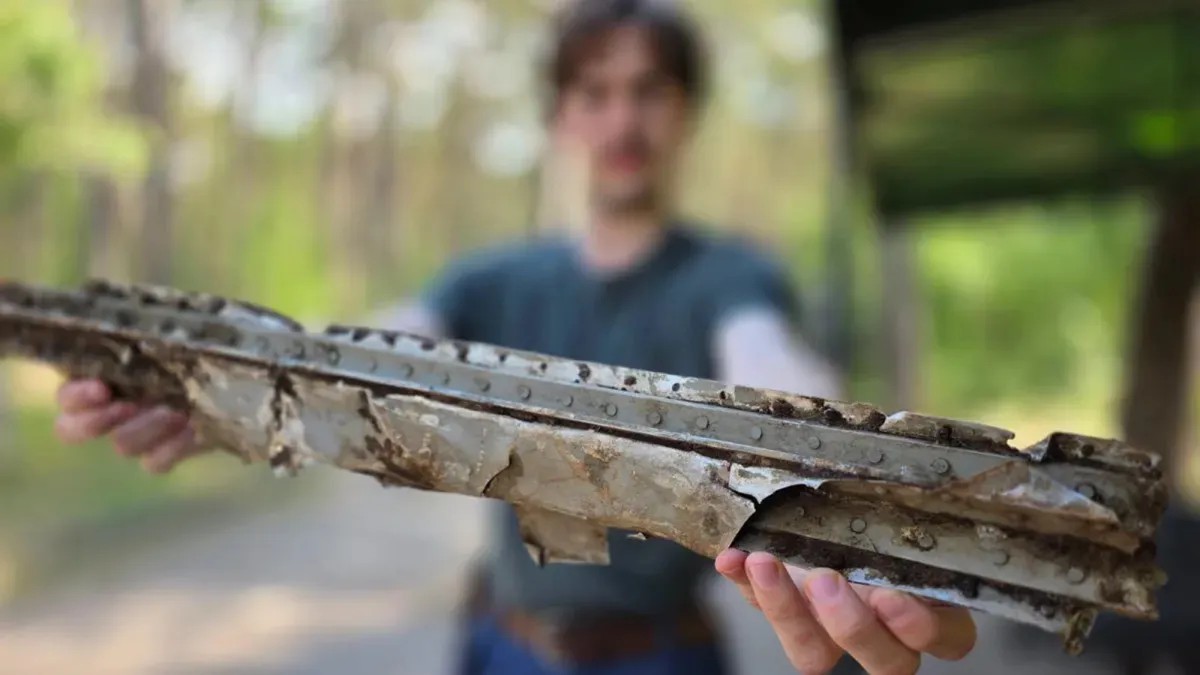
The woods near Świnoujście in northern Poland are known for wild raspberries. They are not usually known for history. But a hiker recently proved those woods hold more than just fruit.
During a simple berry-picking trip along the northern Polish-German border, the visitor stumbled upon metal fragments hidden among the trees. Local historians and museum officials say these aren’t just pieces of scrap. They are likely remnants of an Allied airplane that crashed during World War II.
Why This Find Matters
Wiktor Czeszewski works at Poland’s Coastal Defense Museum. He inspected the site after the initial find. His conclusion was immediate.
“The very first inspection indicated that this was no common piece of scrap,” Czeszewski told TVP World. “The nature of the sheet metal riveting, traces of the aircraft structure, and even spent ammunition point to these being fragments of an aircraft.”
His team rushed to the location. They found more wreckage than the hiker could have managed alone. They also found bullets. The ammunition matched types used in British airplane machine guns from the war era.
One specific artifact changed the conversation. A small tube bore an identification number. It might link to a Rolls-Royce Merlin engine, Czeszewski notes. The Merlin powered the Spitfire. It powered the Hurricane. It powered the Lancaster bomber. Developed in the 1930s in the UK, this V12 liquid-cooled piston engine was the heart of Allied air power.
The History Behind the Crash
Świnoujście had a different name back then: Swinemünde. The city sat in occupied Germany during the conflict. It was a combat zone. Allied forces bombed industrial targets in the region heavily during the final months of the war. Casualties were high. Planes crashed.
Historians believe this specific crash involved an aircraft shot down by coastal anti-aircraft batteries near Świnoujście. The condition of the metal suggests a violent end, likely in the water or a coastal forest during a defensive sweep.
What Happens Next?
Nothing is confirmed yet. The identification numbers need verification. The connection to a specific Merlin engine requires technical analysis. Pilot remains might still be buried nearby.
Museum officials are urging local authorities to protect the area. They want it treated as an official crash site. This means stopping casual digging. It means bringing in experts who know how to excavate war sites without destroying evidence.
“We still have many questions,” says museum official Milan Litwinowicz. “We likely have more surprises ahead of us.”
The berries were good this year. But the history they hid might be bigger. More fragments are waiting. We just have to be careful how we pull them out.